
Lieferung heute & morgen

Qualitätsgarantie

Willkommens-Angebote freischalten: KOSTENLOSE Lieferung | Bis zu 80 % RABATT | Kostenlose 30-Tage-JoyPlus-Testphase
App herunterladen
A carpet and upholstery cleaner can lift spilt drinks, food, pet accidents and deeply embedded dirt from water-resistant fabrics. Unlike a dry vacuum cleaner, this type of carpet cleaner usually uses water or cleaning solution: it sprays the liquid onto the surface, works it in with brushes, then sucks it back up. It can be useful for carpets, sofas, mattresses, stairs and car seats, but you’ll need the right technology and a suitable surface.
Figures such as 12, 15 or 18 kPa describe suction pressure or power under specific conditions. On their own, they don’t tell you how dry a sofa will be after cleaning. The nozzle, airflow, hose design and number of suction passes all matter too.
A carpet cleaner with spray and suction functions should collect dirty water effectively. After washing, it’s a good idea to vacuum the surface several times without spraying any more water, then ventilate the room well. If too much moisture remains in the fabric, it can take a long time to dry and unpleasant smells may develop.
An upholstery steam cleaner uses heated water or steam. This can be useful for suitable, heat-resistant and water-resistant materials. However, heat and moisture can damage delicate covers, coated surfaces, natural fibres or materials held together with adhesive.
Before using the cleaner for the first time, check the fabric’s care label and test it for colourfastness and material compatibility in an inconspicuous area. With steam cleaners, you should also keep a safe distance from skin, pets and electrical equipment.
Larger tanks mean fewer refills, but they also make the machine heavier. For a small flat or spot-cleaning a car seat, a compact, portable carpet cleaner may be more practical than a large machine. Look for a separate tank system: clean and dirty water should be kept in different containers.
Check whether the tanks can be removed, how easy they are to clean and whether the maximum fill line is clearly visible. A dirty water tank that’s difficult to reach can make routine maintenance unnecessarily awkward.
The combination of a spray function, brush head and wet vacuum provides the basis for stain cleaning. Spraying loosens the dirt, the brush works it out of the fibres, and suction removes the liquid along with the loosened dirt. A 3-in-1 system is therefore more versatile for sofas, carpets and car seats than a machine with suction alone.
For pet hair, remove loose hairs and crumbs with a vacuum cleaner before wet cleaning. A pet hair and stain remover doesn’t automatically replace pre-cleaning, particularly if hairs could block the suction channel or brush.
Suction power is often quoted in kPa. However, figures from different product descriptions aren’t always directly comparable, as testing conditions may not be provided. Use the number as a guide and also check:
A higher wattage doesn’t automatically mean proportionally better stain removal. For everyday use, the right nozzle, controlled spraying and an easy-to-handle design are often just as important.
A sufficiently long hose and cable are useful for stairs, car interiors and tall sofas. For example, the OMESER W07 has a 4.26-foot hose and a 9.84-foot mains cable. The ROUNY U2 is listed with a 1.1-metre hose and a 3-metre cable. Figures like these help you assess the machine’s reach before you buy.
After each use, empty the clean and dirty water tanks, rinse the brushes, and let the filters and hose dry completely. The same applies to a portable carpet cleaner. A machine that’s easy to clean is better suited to regular use.
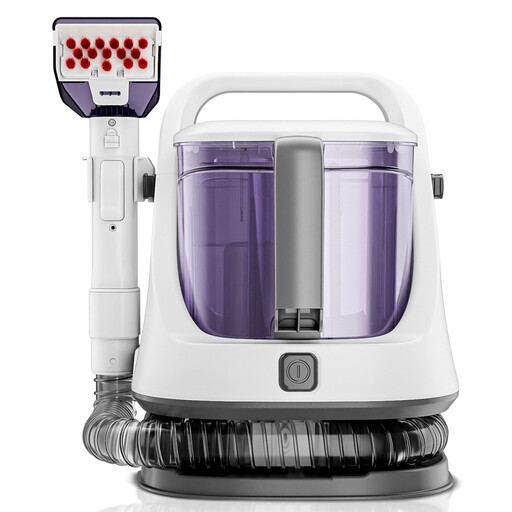
Why this product suits this profile: This compact model is designed for smaller cleaning jobs on sofas, stairs, upholstery and car seats. Its 1.4-litre clean water tank, 1.2-litre dirty water tank and 12 kPa suction power are sensibly sized for spot cleaning.
Separate tanks keep clean and dirty water apart. The hose and cable length specifications make it easy to assess the machine’s reach before you buy.
650 watts, 12 kPa suction power, a 1.1-metre hose and a 3-metre mains cable.
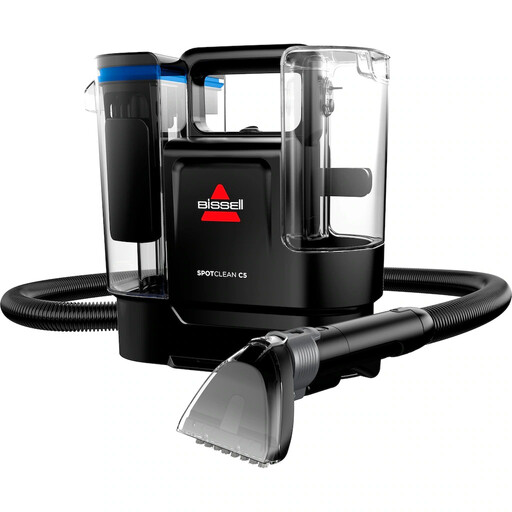
Why this product suits this profile: This model combines spraying, scrubbing and suction, with a 0.9-litre clean water tank and a 0.8-litre dirty water tank. The 1.7-metre hose and HydroRinse tool make it a practical choice for regular cleaning.
The self-cleaning aid tackles a frequently overlooked task: maintaining the hose and tool. Its compact design also takes up less space.
Over 15 kPa suction power, a 4.3-metre mains cable and a HydroRinse tool.
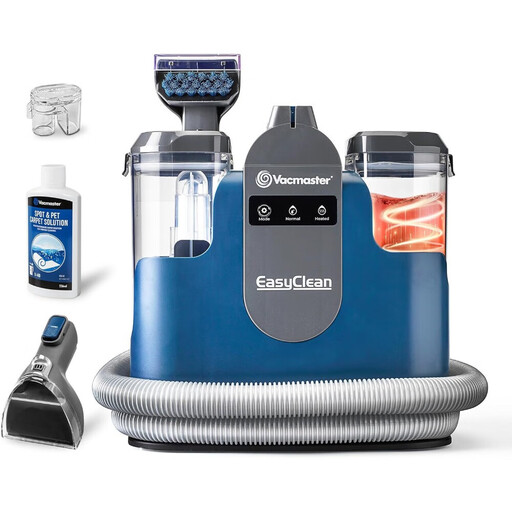
Why this product suits this profile: Alongside its normal setting, the heated cleaning function offers another option for suitable, stubborn dirt. With 1.6 litres of clean water and 0.95 litres of dirty water, the machine can handle several smaller areas.
The two operating modes mean you don’t have to use heat every time. The self-cleaning nozzle helps keep the 1.8-metre hose clean.
500-watt motor, two cleaning modes, separate tanks and an integrated self-cleaning nozzle.
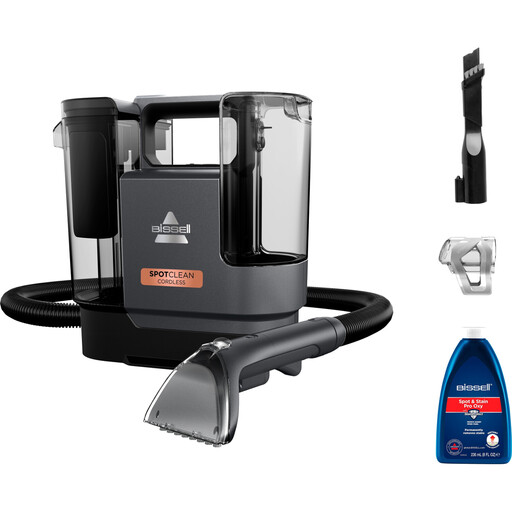
Why this product suits this profile: The battery-powered design is handy for cleaning car seats, stairs and areas without a nearby socket. With a stated runtime of 20 to 25 minutes per charge, it’s best suited to short cleaning jobs.
The limited battery runtime is clearly stated, so you won’t expect it to deep-clean large areas in one go.
18-volt lithium-ion battery, 0.9-litre clean water tank and 0.8-litre dirty water tank.
We’ve put together a complete, regularly updated list of products that meet these strict selection criteria and fully comply with the safety regulations in force in the EU.
No. The material must be suitable for cleaning with water or moisture. Check the care label and test the cleaning solution on a hidden area. Delicate fabrics, leather, non-colourfast covers and water-soluble adhesives may not be suitable.
Drying time depends on the material, the amount of water used, room temperature, humidity and suction power. Several slow suction passes without spraying more water, good ventilation and using a modest amount of cleaning solution can help reduce residual moisture. Don’t use the area heavily again until it’s completely dry.
As well as electricity, you’ll need to factor in the cost of water, cleaning solution and, where necessary, replacement filters or brushes. Electricity use depends on the machine’s power consumption and how long you use it. With a battery-powered model, you’ll also need to allow for charging time. A separate tank system and easy-to-access components can make ongoing maintenance simpler.