
Lieferung heute & morgen

Qualitätsgarantie

Willkommens-Angebote freischalten: KOSTENLOSE Lieferung | Bis zu 80 % RABATT | Kostenlose 30-Tage-JoyPlus-Testphase
App herunterladen
A carpet washer combines spraying, brushing and suction. This makes it suitable not only for carpets but, depending on the attachment, also for sofas, mattresses, stairs and car seats. For households, families and pet owners, a portable carpet cleaner can be a practical addition to a standard vacuum cleaner.
However, impressive performance figures or a wide range of accessories don’t automatically mean a product is the right choice. What matters is its design, the jobs it is intended for and the work involved in cleaning it afterwards.
Figures such as 12, 15 or 17 kPa describe the vacuum pressure, but on their own they reveal little about cleaning performance. An effective spray function, a suitable brush head and a short route from the nozzle to the dirty water tank are just as important. A carpet washer with a high rating but an unsuitable nozzle may be impractical for narrow gaps or delicate upholstery.
A large clean water tank means fewer breaks to refill it. However, the dirty water needs to be emptied and the tank rinsed after every use. A compact spot cleaner often has a more limited capacity, but is easier to carry and store. For spot-cleaning car upholstery or stairs, this may be more practical than choosing a larger model.
A carpet washer won’t leave textiles completely dry. Using too much cleaning solution or allowing the material to dry too slowly can cause watermarks, odours or changes to the material, especially on items that aren’t water-resistant. Before using it for the first time, test the colour fastness in an inconspicuous spot. After use, clean the tank, nozzle, brush, filter and hose, then allow them to dry completely.
A good machine should let you carry out these three steps with as much control as possible:
An upholstery cleaner with separate clean and dirty water tanks helps prevent water that has already been collected from being returned to the surface. According to the product information, the OMESER W07 and C688A models have a two-tank system.
Compact tanks are often sufficient for individual stains. If you regularly clean several sofa cushions, sections of carpet or car seats, check the capacity and hose length. The Vacmaster SCC1201H is listed with a 1.6-litre clean water tank and a 0.95-litre dirty water tank. Its integrated hose is 180 centimetres long.
The power cord length and handle also affect how easy a machine is to use day to day. A longer hose makes it easier to clean stairs and car interiors, while a compact body is easier to store at home or in a utility cupboard.
Not every fabric can be cleaned with water. Check the care label and manufacturer’s instructions, and take the material’s construction into account. Extra care is needed with wool, delicate blended fabrics, coated textiles and bonded materials.
Basic safety features are also relevant in Germany and the EU, including a suitable mains plug, clear instructions and details of the responsible party. The machine must not be immersed in liquid. Flammable liquids, sharp objects and hot ash should never be put into a carpet washer.

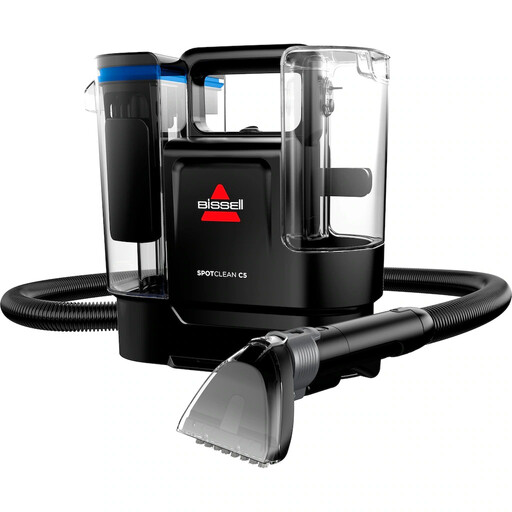
Why it suits this profile: This compact machine is designed for spot-cleaning carpets, sofas, mattresses and car seats. Its stated clean water capacity of 1.5 litres and dirty water capacity of 0.8 litres are suited to small and medium-sized jobs.
The three-in-one system combines spraying, brushing and suction. Separate tanks help reduce the risk of clean and dirty water mixing.
Stated suction power of 15 kPa, a 4.26-foot hose and a 9.84-foot power cord; includes two brush heads.
Why it suits this profile: This model is for people who value clearly stated technical specifications and maintenance accessories, for example when regularly cleaning carpets, upholstery and car seats.
The specifications list separate tanks with capacities of 0.9 and 0.8 litres, along with a HydroRinse tool for flushing the system. This makes after-use care clear and straightforward.
Stated suction power of over 15 kPa, a 1.7-metre hose, a 4.3-metre cable and a weight of 4 kilograms.
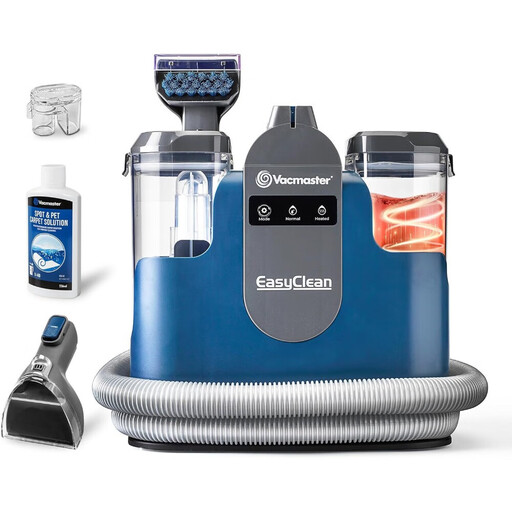
Why it suits this profile: Its range of features is well suited to households that regularly deal with stains on sofas, carpets, stairs or car upholstery. The product description lists two cleaning modes.
The separate tanks and self-cleaning attachment address two common maintenance concerns: keeping dirty water separate and looking after the hose.
Stated 500-watt motor, 1.6-litre clean water tank, 0.95-litre dirty water tank and 180-centimetre hose.
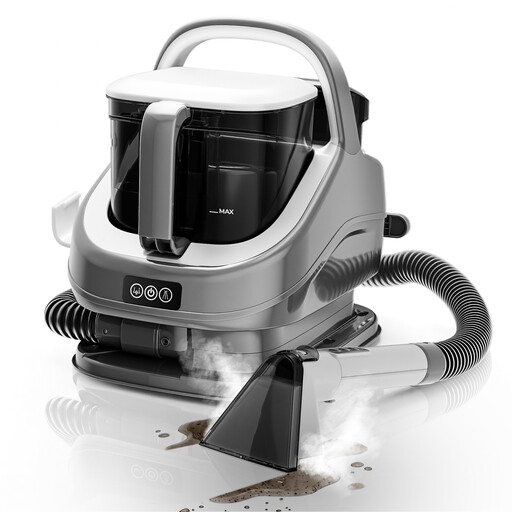
Why it suits this profile: Its three stated modes for cold water, hot water and steam may appeal to people who want to tackle different fabric-cleaning jobs with one machine.
The product information specifically states that the machine isn’t suitable for surfaces that aren’t water-resistant. Bear this limitation in mind before buying.
Stated clean water tank capacity of 1,400 millilitres and dirty water tank capacity of 1,200 millilitres, a 1.1-metre hose and a 3-metre cable.
We’ve put together a complete, regularly updated list of products that meet these strict selection criteria and fully comply with the safety regulations applicable in the EU.
It depends on the material, the amount of water used, the room temperature and air circulation. Small areas of upholstery usually dry faster than a whole carpet that has been cleaned. Going over the surface several times without spraying more water, and ventilating the room regularly, can help reduce residual moisture.
A pet hair and stain cleaner can collect liquid and loosened dirt. However, dry pet hair that is deeply embedded should be removed with a suitable vacuum cleaner or brush before wet cleaning. Suitability depends on the attachment and the upholstery in question.
Electricity use depends on the motor’s power and how long you use the machine. A 500-watt model would use 0.5 kilowatt-hours if it ran for an hour; in practice, spot-cleaning usually takes less time. You’ll also need to factor in the cost of water and, where applicable, a suitable cleaning solution.