
Lieferung heute & morgen

Qualitätsgarantie

Willkommens-Angebote freischalten: KOSTENLOSE Lieferung | Bis zu 80 % RABATT | Kostenlose 30-Tage-JoyPlus-Testphase
App herunterladen
A carpet washer can lift spilt drinks, everyday dirt, pet stains and other liquids from carpets, sofas and car seats. However, models vary considerably in spray performance, suction power, tank capacity and ease of use. A high wattage alone tells you little about how practical a model will be around the home.
Before buying, it’s also worth checking whether you actually need a washer. A wet and dry vacuum cleaner picks up liquids, while a carpet washer also sprays water or cleaning solution onto the surface, brushes the dirt and then vacuums up the liquid.
A motor rating of 1,700 watts or a figure of 18 kPa might sound impressive. But these values describe different things, and they aren’t always directly comparable between manufacturers. Actual cleaning performance also depends on the nozzle, airflow, hose, brush and distance from the fabric.
So look at the complete spray, brush and suction system. For spot cleaning, a carpet cleaner with both spray and suction is usually more suitable than a machine that only picks up liquids.
Large clean- and dirty-water tanks mean fewer pauses to refill and empty the machine. However, filling them also adds weight. For stairs, car seats or small areas of upholstery, a compact machine with smaller tanks may be easier to handle.
A separate tank system is important: clean and dirty water should not end up in the same container. This makes it easier to keep track of what’s in each tank and clean the machine after use.
Steam cleaners use high temperatures, but they aren’t automatically suitable for carpets. Delicate fabrics, bonded materials, some mattress covers and non-water-resistant surfaces can be damaged by heat or moisture.
Check the care label, test the machine on an inconspicuous area and let the cleaned surface dry completely. With a conventional upholstery cleaner that sprays and vacuums, you can control the amount of water more precisely.
For carpets, sofas and car seats, the machine should support cleaning in several stages:
For most household tasks, this combination is more useful than a vacuum cleaner designed purely to pick up liquids. When dealing with pet stains, remove any solid residue first, then use a cleaning product that’s suitable for the material.
Product specifications often list kPa, watts or motor power. Several portable carpet cleaners have a stated suction power of 13 to over 17 kPa. Treat these figures as a technical guide, rather than as the sole indicator of quality.
Other factors that help reduce drying time include:
For larger carpeted areas, separate tanks with a clean-water capacity of more than one litre are useful. For individual stains, a smaller, lighter portable carpet cleaner is often enough. A hose around 1.1 to 1.8 metres long can give you more freedom of movement when cleaning sofas, stairs and car seats.
Check whether the machine comes with a narrow upholstery nozzle, a brush for larger areas and a way to clean the hose or nozzle. After each use, empty both tanks, then rinse and dry all removable parts.

Why this product suits this type of household: This compact machine is designed for spot cleaning carpets, sofas, mattresses and car seats, and can be stored away neatly after use.
Separate 1.5-litre and 0.8-litre tanks keep clean and dirty water apart, while the 3-in-1 function does more than simply vacuum up liquids.
Stated suction power of 15 kPa, two brush heads, a 4.26-foot hose and a 9.84-foot power cable, according to the product description.
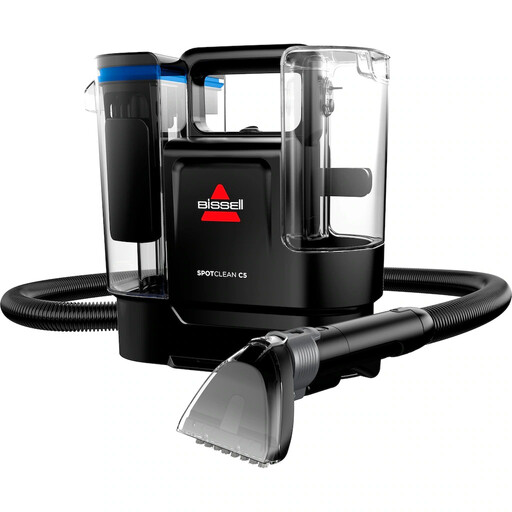
Why this product suits this type of household: This portable model is designed for households that want to spot-clean carpets, upholstery, stairs and car interiors regularly.
The system combines spraying, scrubbing and suction, and includes a HydroRinse tool for cleaning the hose.
According to BISSELL: over 15 kPa suction power, a 0.9-litre clean-water tank, a 0.8-litre dirty-water tank and a 1.7-metre hose.
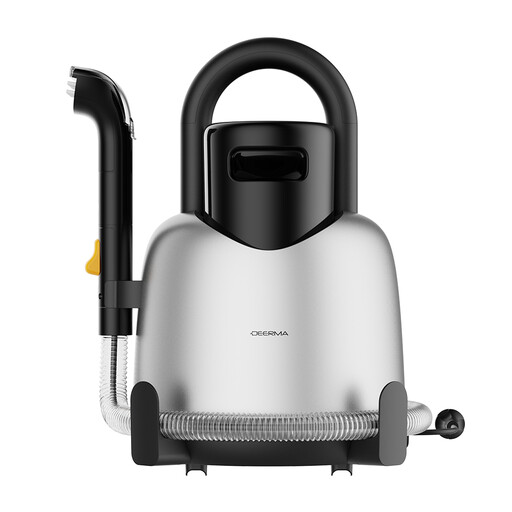
Why this product suits this type of household: Families and pet owners with several upholstered surfaces may benefit from the different water and brush settings.
The product description lists three cleaning modes and a self-cleaning function. You should still check the care label and the maximum water temperature suitable for the surface.
According to the manufacturer: 1,700-watt power, 13 kPa suction power, a 1.7-litre clean-water tank and a 1.4-litre dirty-water tank.
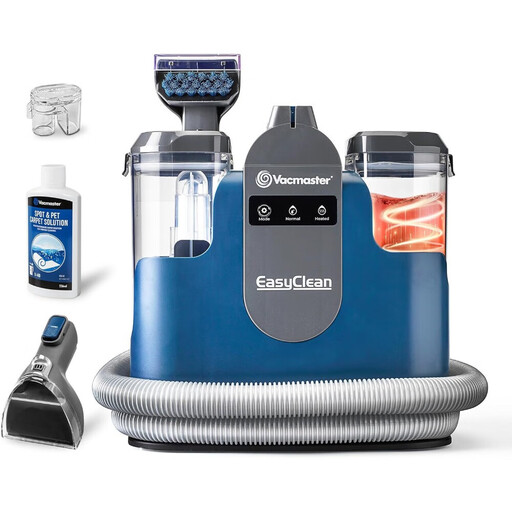
Why this product suits this type of household: This model may suit people who regularly want to clean carpets, sofas, stairs and car seats using either standard or heated cleaning.
The heating function is listed as a switchable mode, so you can also choose standard cleaning for less delicate materials.
According to the manufacturer: a 1.6-litre clean-water tank, a 0.95-litre dirty-water tank, a 500-watt motor and a 1.8-metre hose with a self-cleaning attachment.
We’ve put together a complete, regularly updated list of products that meet these strict selection criteria and fully comply with the safety regulations in force in the EU.
Vacuum up loose hair, crumbs and dry dirt before wet cleaning. Then fill the machine with only the amount of water permitted by the manufacturer, and use a suitable low-foaming cleaning solution where possible. Work in small sections and move the suction nozzle slowly over the fabric.
After cleaning:
When cleaning car seats, mattresses or delicate upholstery, always test for colourfastness and material compatibility on a hidden area first. Don’t use a carpet washer on non-water-resistant fabrics.
It depends on the pile density, how much water you use, the room temperature, airflow and how thoroughly you vacuum up the moisture. Using less water, vacuuming slowly and opening the windows can help the carpet dry. Don’t use the area heavily again until it’s completely dry.
A portable model can be useful for individual pet stains and upholstery that gets regular use. Remove solid residue first, and only use cleaning products that are suitable for both the fabric and the machine. If you often have to clean up messes, easy-to-reach nozzles and a straightforward tank-cleaning process are especially useful.
As well as electricity, you’ll need to budget for water, suitable cleaning solution and, where necessary, replacement filters or brushes. The actual cost depends on the motor rating, cleaning time, size of the area and how much cleaning solution you use. A machine with a larger tank may mean fewer refills, but it won’t necessarily use fewer resources overall.