
Lieferung heute & morgen

Qualitätsgarantie

Willkommens-Angebote freischalten: KOSTENLOSE Lieferung | Bis zu 80 % RABATT | Kostenlose 30-Tage-JoyPlus-Testphase
App herunterladen
A carpet cleaner should do more than simply vacuum textile surfaces. It should apply cleaning solution or water, loosen dirt and then extract the liquid again. This combination can be useful for households with children or pets, allergy sufferers, car owners and anyone who regularly looks after carpets, sofas, stairs or car seats. However, these appliances vary considerably in tank capacity, manoeuvrability, maintenance requirements and intended uses.
Figures such as 12, 13, 15 or 23 kPa describe negative pressure or suction power under specific conditions. They are not automatically comparable across all manufacturers. It is also important to consider how well the nozzle, hose, airflow system and brush work together. A compact spot cleaner with 12 kPa may be practical for upholstery, while a large wet-and-dry vacuum is more likely to be designed for high collection capacity.
A large clean-water tank reduces interruptions, but usually makes the appliance heavier and bulkier. For individual stains on the sofa or car seats, a portable upholstery cleaner is often easier to handle. Larger tanks can, however, save time when cleaning several carpets or large areas.
A self-cleaning carpet cleaner can rinse the hose, brush or internal lines. The dirty-water tank, filters and attachments still need to be emptied, rinsed and dried thoroughly. Otherwise, residue, odours or restricted airflow may develop. Self-cleaning is therefore a maintenance aid, not a complete replacement for cleaning by hand.
A carpet cleaner combines spraying, brushing and extraction. For carpets and upholstery, it is important to have a nozzle that sits firmly against the surface and extracts the dirty water again. Consider suction-power figures together with the intended material and the supplied accessories.
A wet vacuum or wet-and-dry vacuum without a spray function can collect liquids, but does not wash textiles in the same operation. For carpets and upholstery, look specifically for a stated washing or spray function.
A carpet cleaner with a water tank should have separate containers. This prevents clean water from mixing with water that has already been collected. Check:
Compact appliances, for example, may have tank capacities of around 1.2 to 1.7 litres. Larger models can hold considerably more, but also require more storage space.
A battery-powered carpet cleaner gives you greater freedom of movement, but you should check its runtime and charging time. The Vacmaster Cordless Washing Vacuum Cleaner is supplied with a 24-volt lithium battery and offers up to 55 minutes of runtime. Actual runtime depends on the operating mode and how the appliance is used.
Mains-powered models are suitable for longer cleaning sessions without needing to stop and recharge. Check the cable and hose lengths, particularly when cleaning stairs or car interiors. Some appliances may offer a heating or steam function. The Deerma BY700 S offers three operating modes using steam, hot water and room-temperature water. Before use, however, check whether the particular carpet or upholstery material is suitable for heat and moisture. No medical or hygienic effect should be inferred from this feature.
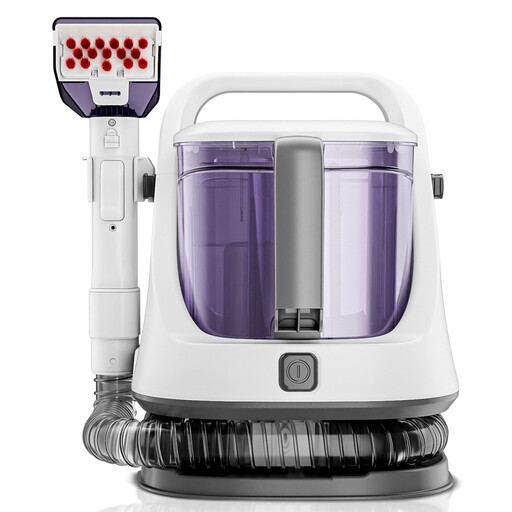
Why this product suits this profile: This compact appliance is designed for individual stains and smaller textile areas around the home or in the car. With a 1.4-litre clean-water tank and a 1.2-litre dirty-water tank, its overall setup remains manageable.
Separate tanks and removable containers make it clear when the dirty water needs emptying and the appliance needs rinsing.
650-watt motor, 12 kPa, 3-metre cable and 1.1-metre hose; suitable for carpets, sofas, stairs and car seats.

Why this product suits this profile: The two suction levels of 8,000 and 12,000 Pa allow you to adjust the appliance for light soiling or more heavily used textiles.
The stated self-cleaning function for the line and brush head helps address residue in the hose; the tank and attachments still need to dry separately.
1.8-litre clean-water tank, 1.6-litre dirty-water tank, 5-metre cable and 1.5-metre hose; operating noise of up to 65 dB according to the product information.

Why this product suits this profile: Cordless operation makes spontaneous cleaning on stairs, upholstery, carpets and in the car easier when there is no socket nearby.
Runtime of up to 55 minutes and separate tanks make the operating limits clearer than a general claim about mobility.
15 kPa, 1.6-litre clean-water tank, 0.8-litre dirty-water tank, 6-foot hose and a self-cleaning tool for the hose.
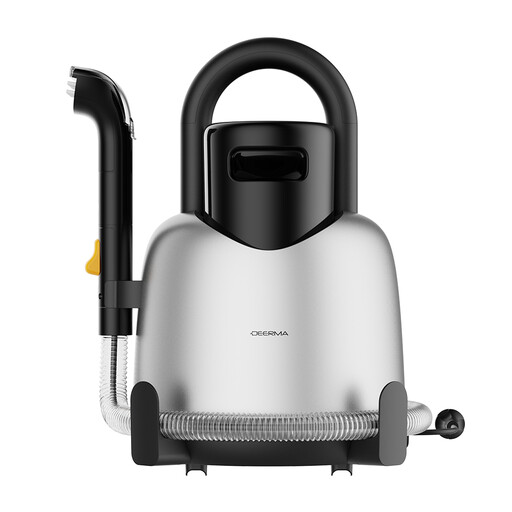
Why this product suits this profile: This mains-powered appliance is aimed at users who need several operating modes and accessories for different textile surfaces.
The three water types are clearly identified. This makes it possible to check before buying whether the heating function is genuinely suitable for the intended fabric.
1,700-watt power consumption, 13 kPa, 1.7-litre clean-water tank and 1.4-litre dirty-water tank, plus five brush attachments.
We have put together a complete, regularly updated list of products that fully meet these strict selection criteria and the safety regulations applicable in the EU.
A carpet cleaner sprays water or cleaning solution onto the surface and extracts the soiled liquid again. A wet-and-dry vacuum can collect dry dirt and liquids, but does not necessarily have a spray and washing function.
Its service life depends on how frequently it is used, filter maintenance, tank cleaning and proper storage. Dirty water and residue should be removed after every use. Battery-powered models also require the battery and charger to be handled appropriately.
In addition to electricity consumption, you may incur costs for cleaning products, filters, brushes or replacement parts. Battery-powered appliances also involve long-term battery use. Before buying, it is worth checking which consumable parts are available and which cleaning products are recommended.