
Lieferung heute & morgen

Qualitätsgarantie

Willkommens-Angebote freischalten: KOSTENLOSE Lieferung | Bis zu 80 % RABATT | Kostenlose 30-Tage-JoyPlus-Testphase
App herunterladen
A carpet cleaner can remove stains, spilled liquids and deeply embedded dirt from textile surfaces. However, devices vary considerably in suction power, tank capacity, ease of use and intended applications. If you focus only on a high wattage or Pascal rating, you may end up with a device that is difficult to store, leaves surfaces wet for too long or is unsuitable for delicate fabrics.
This buying guide explains what households, families, pet owners and car owners should consider before making a purchase.
Motor power initially describes electricity consumption or rated power. On its own, it does not indicate how effectively a carpet cleaner removes dirty water from fibres. Airflow, nozzle design, spray volume and actual suction power are also important.
A 1,700-watt device may also generate more heat and noise than a compact upholstery cleaner with lower power consumption. For individual stains on sofas, stairs or car seats, a portable carpet cleaner is often more practical than a large combination appliance.
A large tank often reduces the need for frequent refilling. At the same time, the device becomes heavier once it is filled with water. Check whether the tanks can be removed, carried, emptied and rinsed easily.
Separate clean- and dirty-water tanks are useful in everyday use because the collected water does not flow back into the clean-water tank. If there are no clear markings showing the maximum fill level, suction performance may be affected or liquid could enter areas not designed to hold it.
Hot-water or steam functions can be useful for suitable, water-resistant textiles. However, they are not automatically suitable for wool, silk, delicate coatings or carpets with glued backings. Before use, check the material’s care label and carry out a colourfastness test in an inconspicuous area.
Additional safety rules apply to mattress cleaners and devices with a UV-C lamp. Do not look directly at the lamp. Statements about sterilisation or germ-reduction rates should be understood solely as manufacturer claims and do not constitute a medical guarantee.
Suction power is specified in kPa, depending on the product. Values such as 12, 13, 15, 17 or 18 kPa provide a rough technical comparison within the relevant product category. A higher figure alone does not guarantee better results. It is important that the device can spray, brush and collect dirty water at the same time.
A 3-in-1 cleaning system is suitable for carpets, upholstery, car seats and stairs. To remove loose pet hair before wet cleaning, you will generally also need a dry vacuum cleaner or a suitable brush. A carpet cleaner for pet hair is therefore not automatically a replacement for a conventional vacuum cleaner.
Compact tanks are sufficient for individual stains. Larger tanks are more convenient when cleaning several sofa cushions, a large carpet or multiple car seats. Look for:
A longer hose makes it easier to clean corners, stair treads and car interiors. For large areas, a wet-and-dry vacuum with a larger collection container may be more suitable than a handheld device.
After wet cleaning, as little residual moisture as possible should remain in the fabric. Work slowly, but do not hold the nozzle over the same spot for unnecessarily long. Ventilate the room and allow upholstery to dry completely before using it again.
Only use cleaning products that the operating instructions confirm are suitable for the device. Foaming or aggressive products can put additional strain on tanks, seals and filters. For unfamiliar textiles, follow these steps: read the care label, test in a concealed area and avoid soaking the surface completely.
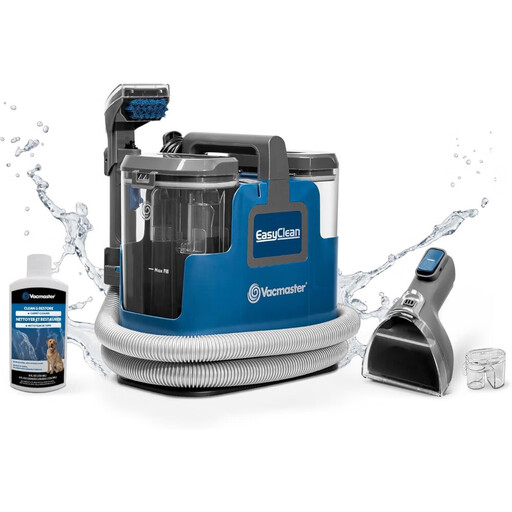
Why this product suits this profile: Weighing 3.4 kg and featuring a 500-watt motor, 1.8-metre hose and separate tanks, this compact device is designed for spot cleaning around the home and in vehicles.
The removable water tanks make emptying and rinsing easier. The stated suction power of 17 kPa provides a clear technical reference point for comparison.
Portable design, separate dirty-water tank and cleaning solution included according to the product description.
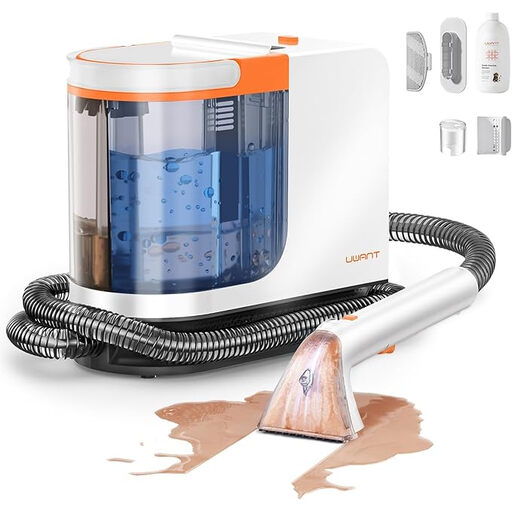
Why this product suits this profile: With stated suction power of 18 kPa, plus cleaning tools and solution, this device is aimed at households that regularly clean carpets, sofas, car seats and pet stains.
The product specifications state a maximum water temperature of 60 °C. This allows you to adapt use to the device’s specified limits.
Stated 18-kPa suction power, portable design and accessories for several textile surfaces according to the product description.
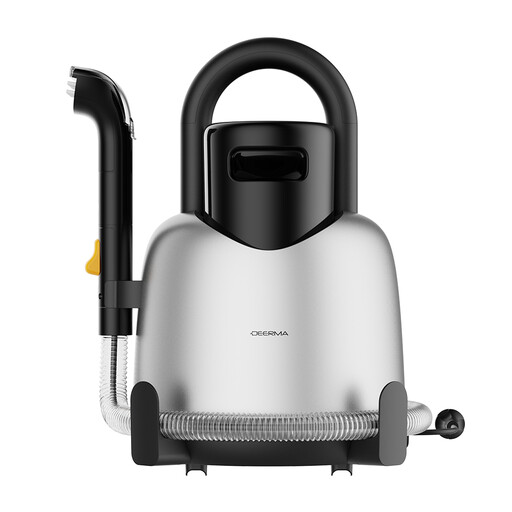
Why this product suits this profile: The device offers three cleaning modes, a 1.7-litre clean-water tank, a 1.4-litre dirty-water tank and five brush attachments for frequently changing tasks.
The product description explicitly states the permitted types of water and the available operating modes. This lets you select steam, warm water or water at room temperature as required.
1,700-watt rated power, stated suction power of 13 kPa and large separate tanks according to the product specifications.
We have put together a complete, regularly updated list of products that fully meet these strict selection criteria and the safety regulations applicable in the EU.
A small spot cleaner or sofa cleaner is sufficient for occasional mishaps. If you regularly clean large carpets or extensive areas of upholstery, you should give greater priority to tank capacity, reach and accessories. A separate mattress cleaner with dry-vacuuming capability belongs to a different category from a carpet washer and wet vacuum when it comes to cleaning beds.
This depends on the material, how it is used and the level of soiling. Spot treatment is sufficient for individual stains. Full wet cleaning should not be carried out unnecessarily often, as repeated moisture can put strain on delicate fibres or backing materials. The care instructions provided by the carpet or upholstery manufacturer are the key reference.
There is no fixed drying time that applies in every case. It depends on the amount of water used, room temperature, air circulation, fabric thickness and suction power. Ventilate the area well, use only as much cleaning solution as necessary and do not walk on or use the surface until it is completely dry.
Running costs mainly consist of electricity, water, cleaning product and, where applicable, replacement filters. Electricity consumption can be estimated roughly from the rated power and operating time. A higher wattage may lead to higher energy costs with frequent use, so the key consideration is whether the power is appropriate for your intended application.