
Lieferung heute & morgen

Qualitätsgarantie

Willkommens-Angebote freischalten: KOSTENLOSE Lieferung | Bis zu 80 % RABATT | Kostenlose 30-Tage-JoyPlus-Testphase
App herunterladen
A carpet cleaner wet vacuum can lift spilled drinks, dried-on dirt and pet hair from fabric surfaces. However, models vary considerably in terms of spray technology, suction power, tank capacity and maintenance requirements. If you focus solely on a high wattage or Pascal rating, you may end up buying a machine that is impractical for everyday use or leaves fabrics excessively wet.
This buying guide from the Joybuy Product Recommendation Officer explains the most important features objectively and shows which machine may suit each type of user.
Figures such as 13,000 Pa, 15,000 Pa or 17,000 Pa describe the maximum vacuum pressure or suction power under specific conditions. They do not automatically indicate how dry a carpet will be after cleaning. Other important factors include:
A carpet cleaner with a spray function should apply the cleaning solution in a controlled manner and recover the dirty water as directly as possible.
A wet and dry vacuum is not always a carpet cleaner wet vacuum. Many models can pick up liquids but do not spray water and have no brush or extraction nozzle. For carpets, upholstered furniture and car seats, you need a model with spray, brush and suction functions, as well as separate tanks for clean and dirty water.
After every use, the dirty-water tank, hose and brush head must be emptied or rinsed. If water or cleaning-solution residue remains inside the machine, it can cause unpleasant smells. A larger tank reduces interruptions but often increases the weight. Easily accessible components, clear MAX markings and removable tanks are practical features.
For spot cleaning, a compact machine with a stated suction power of around 13 to 17 kPa is usually sufficient, provided that the nozzle and spray system are suitably designed. A wider brush head can save time when cleaning larger carpeted areas. Also pay attention to the motor power: this is not the same as suction power. It mainly describes the electrical energy requirement or power consumption.
A dual-tank system keeps clean and dirty water separate. This is useful for hygienic cleaning and makes emptying easier. Compact tanks are sufficient for individual stains. If you regularly clean sofas, carpets and car upholstery, larger capacities can be beneficial, although you should also consider the machine’s weight and storage requirements.
Before cleaning, check whether the upholstery or carpet is water-resistant and colourfast. Test the cleaning solution on a concealed area first. Sensitive materials such as certain natural fibres, coated fabrics or non-water-resistant mattresses are not automatically suitable.
To reduce drying time:
A fabric cleaner is therefore not automatically suitable for every mattress. With mattresses, pay particular attention to the manufacturer’s instructions regarding moisture. A car upholstery cleaner should also only be used on water-suitable seat coverings.

Why this product suits this profile: This handheld, corded machine is suitable for individual stains on carpets, sofas, stairs and car seats.
The separate water tanks prevent clean and dirty water from mixing. The stated suction power is 17 kPa.
600-W motor, flexible hose and wet cleaning for fabric surfaces.

Why this product suits this profile: This model is designed for repeated use on carpets and upholstery. It offers a 1.2-litre clean-water tank and a 1.3-litre dirty-water tank.
The technical specifications state a suction power of 12,000 Pa, a 14-cm brush and a maximum water inlet temperature of 60 °C.
450-W motor, stated noise level of 69 dB and machine weight of 3.5 kg.
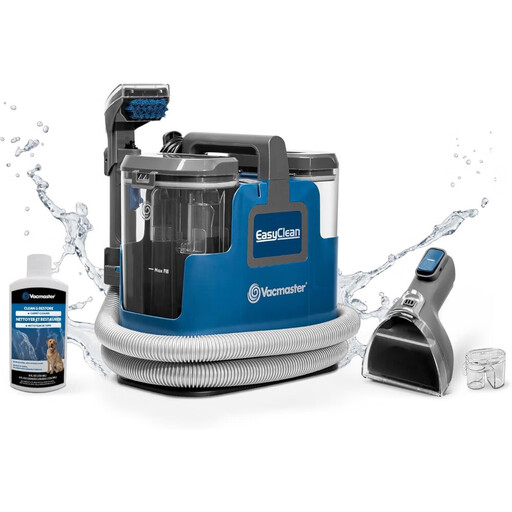
Why this product suits this profile: With a 1.8-metre hose and separate water tanks, this machine is suitable for sofas, stairs, car seats and fabric surfaces around the home.
The dual-tank system and removable tank make it easier to keep clean and dirty water separate.
500-W motor, stated suction power of 17 kPa and a weight of 3.4 kg.
We have put together a complete, regularly updated list of products that fully meet these strict selection criteria and the safety regulations applicable in the EU.
A pet-hair and stain remover can be useful for removing pet hair from dry surfaces. For liquids, food residue or dried-on stains, however, a wet vacuum with a spray function is the more suitable type of machine.
This depends on the fibre material, amount of spray, room temperature and air circulation. Allow several hours and ventilate the room. Wait until the surface is completely dry before using it again or putting furniture back in place.
Yes, provided the upholstery fabric is suitable for water-based cleaning according to its care label. Use a suitable upholstery nozzle and test the process on a concealed area first. Avoid wet cleaning sensitive or non-water-resistant fabrics.
Running costs consist of electricity, water, cleaning solution and, where applicable, replacement filters or brushes. Corded machines require mains electricity during operation; with battery-powered models, charging time and potential long-term loss of battery capacity also need to be considered. Regular rinsing and drying can help prevent unnecessary follow-on costs caused by unpleasant smells or blocked hoses.