
Lieferung heute & morgen

Qualitätsgarantie

Willkommens-Angebote freischalten: KOSTENLOSE Lieferung | Bis zu 80 % RABATT | Kostenlose 30-Tage-JoyPlus-Testphase
App herunterladen
Spilled drinks, muddy paw prints and stains on the sofa are usually difficult to treat sufficiently with a standard vacuum cleaner. A carpet cleaner wet vacuum sprays water or cleaning solution onto the textile surface, loosens dirt with a brush and then vacuums up the dirty water. This makes the appliance suitable as an upholstery cleaner, stain remover and wet vacuum for sofas and carpets.
However, it is easy to develop unrealistic expectations when buying one. A high wattage does not automatically guarantee suitable cleaning performance, and not every appliance is suitable for all textiles.
Motor power in watts mainly indicates the appliance’s electrical energy consumption. For practical dirty-water extraction, the design of the airflow path, the nozzle and the specified suction power in kPa are also important. A 1,300- or 1,700-watt appliance may have different characteristics from a compact upholstery cleaner with 600 watts.
You should therefore consider the overall combination of motor power, suction power, spray function and brush attachment. Treat these figures as manufacturer specifications rather than comparing them across brands without a standardised measurement method.
A steam cleaner for upholstery works with hot steam. A wet vacuum, by contrast, applies liquid and then extracts it again. Some models combine both functions or offer a hot-water option. Steam is not suitable for every surface, however: delicate, glued or non-water-resistant materials can be damaged by heat and moisture.
Always check the care label before use and test the method on an inconspicuous area. Leather sofas require different care from water-resistant textile upholstery.
An appliance with separate fresh-water and dirty-water tanks is practical for everyday use. After cleaning, both tanks, the nozzle, the hose and, where applicable, the filter still need to be emptied, rinsed and dried completely. If liquid remains in the system, unpleasant odours may develop.
A self-cleaning function makes this step easier, but it does not replace emptying and drying the removable parts.
For tackling individual stains, a 3-in-1 system with spraying, brushing and suction is useful. The brush works the cleaning solution into the fibres, while the suction nozzle removes moisture and dissolved dirt. Stated values such as 12 kPa, 13 kPa, 15 kPa or 17 kPa provide a technical point of reference.
A narrow upholstery nozzle is also helpful for pet stains, spilled liquids and heavily used seating areas. It allows targeted cleaning without wetting the entire carpet.
A dual-tank system keeps fresh water and dirty water separate. This reduces unnecessary water changes during a cleaning session. Typical capacities in this selection range, for example, from 0.8 to 1.9 litres.
Larger tanks increase the possible operating time, but they also make the appliance heavier. For a flat, stairs or the car, a compact portable carpet cleaner may be more practical than a larger carpet-washing machine.
A longer hose makes it easier to clean sofas, steps and car seats. A long mains cable reduces the need to change sockets frequently. You should also check whether different brushes for carpets, upholstery and narrow areas are included.
A wet vacuum is not automatically a wet-and-dry vacuum. Many carpet cleaners are intended exclusively for water-resistant textiles and liquids. They must not be used to vacuum up sharp objects, flammable liquids or chemical substances.

Why this product suits this profile: This compact, corded appliance is designed for individual stains on carpets, sofas, upholstery and car seats.
The product data specifies separate water tanks, 600-watt power and 17 kPa suction power, rather than relying solely on general marketing claims.
Handheld design, flexible hose handling and wet cleaning for textiles and vehicle interiors.
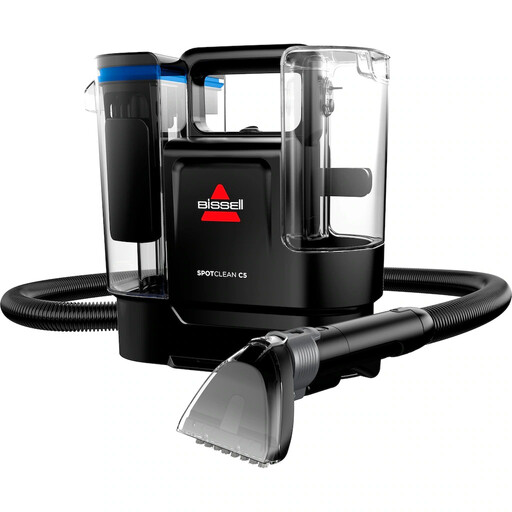
Why this product suits this profile: Weighing 4 kg and offering a 6 m operating radius, this compact model is suitable for regular use around the home and in the car.
The model combines separate tanks with a specified suction power of over 15 kPa and a HydroRinse tool for hose maintenance.
4.3 m cable, 1.7 m hose, 0.9-litre fresh-water tank and 0.8-litre dirty-water tank according to the product data.
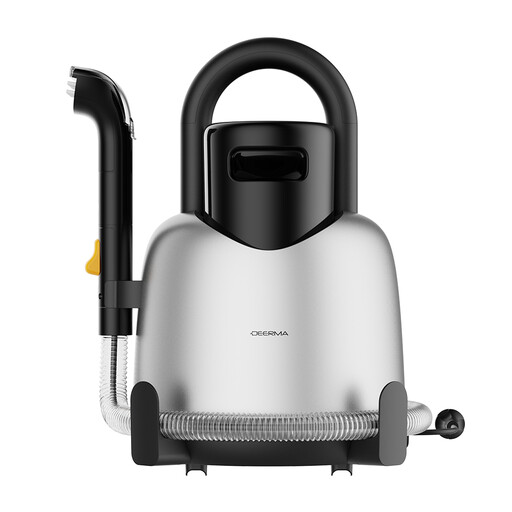
Why this product suits this profile: Three cleaning modes and five brush attachments cover a range of water-resistant textile surfaces around the home.
The choice of room-temperature water, hot water or steam allows you to adapt the method to the surface in question; material compatibility must still be checked beforehand.
1,700 ml fresh water, 1,400 ml dirty water, 13 kPa suction power and specified power output of 1,700 watts.
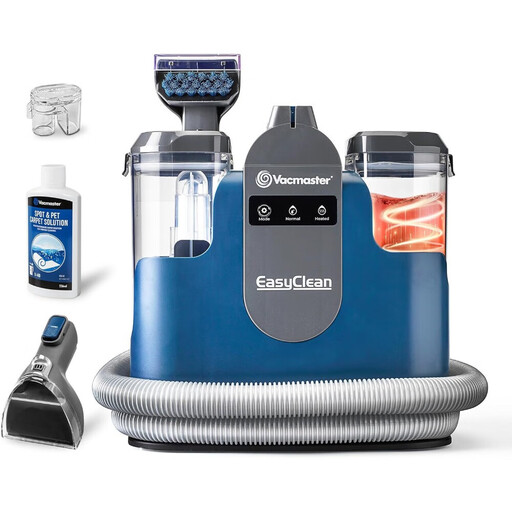
Why this product suits this profile: This appliance is designed for carpets, upholstery, stairs and car seats, and comes with a 1.8 m cleaning hose.
The heating function is specified as an additional mode, not as proof that the appliance is suitable for every fibre. Care instructions and temperature resistance remain crucial.
500-watt motor, separate tanks with capacities of 1.6 l and 0.95 l respectively, plus a hose self-cleaning attachment.
We have put together a complete, regularly updated list of products that fully meet these strict selection criteria and the safety regulations applicable in the EU.
The running costs mainly consist of electricity, water and, where applicable, cleaning solution. With corded appliances, electricity consumption depends on the stated wattage and the actual operating time. For an accurate estimate, multiply the power in watts by the usage time and your electricity price. Higher electricity consumption does not automatically mean more suitable cleaning for your needs.
Yes, provided the care instructions state that the upholstery is suitable for water-based cleaning. Use a suitable upholstery nozzle, spray sparingly and then extract the liquid thoroughly. Always test the appliance on an inconspicuous area before cleaning a larger section. Leather should not be treated like textile upholstery.
It is not possible to give a reliable fixed service life for all appliances. This depends on frequency of use, workload, maintenance, filter cleaning and correct storage. Regular rinsing, thorough drying and keeping the hose and nozzle clear can help maintain performance in everyday use. You should also follow the operating instructions and safety requirements provided by the respective manufacturer.