
Lieferung heute & morgen

Qualitätsgarantie

Willkommens-Angebote freischalten: KOSTENLOSE Lieferung | Bis zu 80 % RABATT | Kostenlose 30-Tage-JoyPlus-Testphase
App herunterladen
Owners of vehicles built before roughly 2018 know the problem: the built-in audio system is outdated, modern navigation is missing, and smartphone integration is cumbersome. A portable CarPlay display offers an attractive solution for easily retrofitting features like Apple CarPlay and Android Auto without needing a costly and permanent installation. However, the market is flooded with devices of widely varying quality. Many products promise more than they can deliver.
As your Joybuy Product Recommendation Officer, I'll help you identify the common pitfalls and make an informed decision. We will focus on the objective features that truly matter.
Before you invest, you should be aware of the three most common issues that plague low-quality devices, which often only become apparent after a few weeks of use.
Wireless CarPlay Adapter functionality. In practice, however, this often leads to connection drops, audio cutouts, or the device failing to connect automatically when the vehicle starts. The cause is often outdated Bluetooth modules or poorly implemented Wi-Fi protocols.CarPlay with Dashcam is a smart combination. However, some manufacturers advertise this feature but install low-resolution sensors (e.g., 720p for the front camera). Such recordings are often unusable in low-light conditions or for identifying license plates.To avoid these mistakes, you should check three core areas before buying. These define the longevity and user-friendliness of a portable display.
The most important feature is a stable connection to your smartphone.
Android Auto display.Size isn't everything. A 10 inch CarPlay display might look impressive, but quality is more important.
portable car screen remains easily readable even in direct sunlight.If you opt for a model with integrated cameras, check the specifications carefully.
backup camera with monitor significantly increases safety when parking. Look for a resolution of at least 1080p (Full HD) and an IP rating (e.g., IP67), which guarantees protection against water and dust.Based on these objective criteria, we have identified a few models that are suitable for different needs and vehicle types.
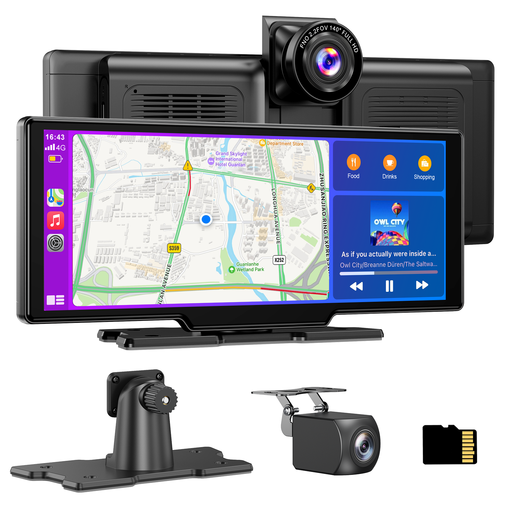
Why This Fits Their Persona: This device is designed for drivers seeking a comprehensive solution. It combines navigation, entertainment, and a complete safety package into a single, streamlined device, making separate dashcams or parking aids obsolete.
It avoids the pitfall of low-quality cameras by including a true 4K front camera and a 1080p rear camera. A stable connection is ensured by dual-band Wi-Fi.
Complete 2-in-1 system (CarPlay + Dashcam). A 64GB memory card is already included, allowing for immediate use out of the box.
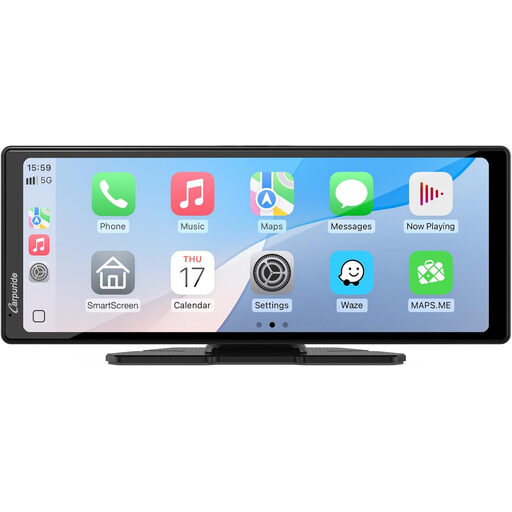
Why This Fits Their Persona: Ideal for drivers who primarily want a premium, large display for navigation and media playback without paying extra for integrated cameras. The focus is clearly on the core functionality of CarPlay and Android Auto.
This model focuses on a high-quality 1080p HD display, thus avoiding the trap of poorly readable screens. The stable connection is ensured by BT 5.0.
Generous 10.26-inch display for an excellent overview during navigation. Focuses on a stable and reliable wireless CarPlay/Android Auto experience.
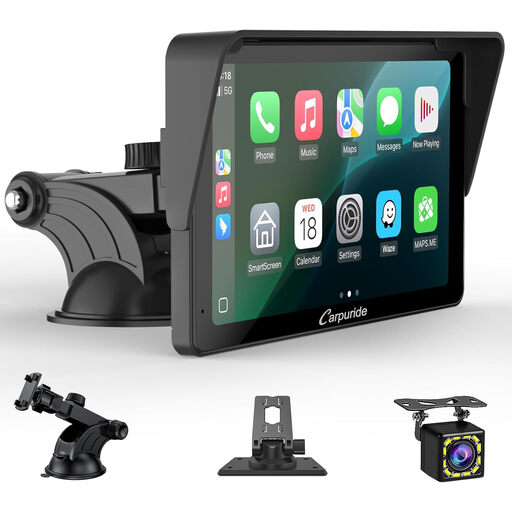
Why This Fits Their Persona: For drivers of smaller vehicles where a 10-inch display would obstruct the field of view too much. This 7-inch model offers full functionality in a more discreet form factor, while still including a backup camera.
It offers a functional overall package without skimping on core components. The 1080p display is sharp for this size class, and the inclusion of a backup camera provides real added value.
Compact 7-inch format that discreetly integrates into smaller cockpits. Despite its size, it offers a complete set of wireless CarPlay and a backup camera.
We have compiled a complete, up-to-date list of products that fully meet these strict selection criteria and German safety regulations.
Most portable displays are easily powered via the vehicle's 12V cigarette lighter. The included cable is simply plugged in, making the installation a pure plug-and-play affair. No permanent modifications to the vehicle's electronics are necessary.
Yes, there are typically three methods for this. The most stable and often best option for sound quality is connecting via an AUX cable between the display and your car stereo's AUX input. Alternatively, the sound can be broadcast to a free FM frequency using an integrated FM transmitter. Some models also support a direct Bluetooth connection to the vehicle's audio system.
Yes, mounting is generally permitted. However, according to § 23 of the German Road Traffic Regulations (StVO), the driver must ensure that their vision and hearing are not impaired by the device. Therefore, the display must be mounted in a way that it does not block the view of the road and is securely fastened so it cannot come loose while driving.