For a quick carrot juice break, a centrifugal juicer is a good choice if speed matters to you; a slow juicer may suit you better if you prefer the pressing method or a particular juice texture. The specific model is what counts: an independent test found that the Panasonic MJ-L700 produced relatively little carrot juice, and neither the type of juicer nor a manufacturer’s claim guarantees a higher yield from carrots.
Who juices during a break?
Juicers for quick breaks
If you’re juicing carrots during a short break, the whole process matters, from preparation to a finished glass — not just how long the motor runs. Bosch Home Appliances describes centrifugal juicers as an option when speed is a priority.
Less washing up
If you’d juice more often if the parts were easy to take apart and clean, check the instructions for each individual part. Bosch Home Appliances and Unold AG list dishwasher-safe parts for certain models; that doesn’t mean the whole appliance is dishwasher-safe.
Comparing carrot juice
If juice yield and texture matter more to you than the fastest preparation, look for results from specific models. The BILD buying guide test and consumer organisation Consumentenbond caution against making sweeping claims based on the type of juicer alone.
What to look for when buying
Compare preparation, juicing and cleaning as one complete process. A wide feed chute may mean less chopping, but on its own it won’t tell you how quickly you’ll have a glass of juice or how much carrot juice a model produces.
| Priority |
What to check before buying |
Who is it most important for? |
| Preparation and speed |
Check whether the instructions say the juicer is suitable for carrots, whether they fit through the feed chute and how much space the appliance needs. Bosch lists a 73 mm feed chute for the MES3500; Unold gives 110 mm for the Sam. The size of the chute alone doesn’t tell you how long it takes to make a glass of juice. |
If I only have a short break, the time from preparation to a finished glass matters most to me. Around 36% of consumers say speed is their top buying priority. |
| Cleaning after juicing |
Check which parts can be removed and which are explicitly listed as dishwasher-safe. For the Unold Sam, the manufacturer’s claim applies to non-electrical parts; the BILD buying guide test nevertheless describes cleaning the auger as time-consuming. |
If I don’t want to spend ages washing up after a glass, the number of parts to clean, how easy they are to reach and whether they’re approved for cleaning are all important to me. Around 29% of consumers say cleaning is their top buying priority. |
| Carrot juice and texture |
Look for a test involving carrots and specific details about the filter and juice texture. The BILD buying guide test found that the Panasonic MJ-L700 produced relatively little carrot juice. Hurom describes the H70ST as producing juice with little pulp; that is a manufacturer’s claim, not independent proof of its carrot yield. |
If juice yield or texture matters more to me than the quickest preparation, I want to compare results for the exact model. Around 21% of consumers put the results they get from carrots first. |
| Worktop space and appliance size |
Compare the appliance’s dimensions with the available worktop space, its height and the room needed to fill it. Bosch lists the MES3500 as 310 × 312 × 180 mm (H × W × D); Hurom gives 17.4 × 21.6 × 44.1 cm for the H70ST. |
If I have limited worktop space, the footprint and room to fill the appliance need to work for me. Around 14% of consumers say available space is their top buying priority. |
Avoiding common buying pitfalls
-
‘Slow’ doesn’t automatically mean more carrot juice
Consumer organisation Consumentenbond points out that a slow juicer doesn’t necessarily produce more juice than a centrifugal juicer. In the BILD buying guide test, the Panasonic MJ-L700 produced relatively little juice from carrots.
Compare results with carrots and how specific models perform, rather than choosing based on the pressing method alone.
-
Focusing only on the size of the feed chute
A wide chute may make chopping easier, but it won’t tell you how long juicing and cleaning will take. For the Unold Sam, the manufacturer’s stated 110 mm chute comes with an independent report that cleaning its auger is time-consuming.
Consider preparation, juicing and cleaning together, and read the instructions for the specific model.
-
Assuming the whole appliance is dishwasher-safe
Manufacturer claims about dishwasher use sometimes apply only to specific parts. For the Unold Sam, the claim covers non-electrical parts.
Check the cleaning instructions for each part individually, and keep the motor unit separate from the removable parts approved for cleaning.
Brands and models to consider
Bosch
The MES3500 is a centrifugal juicer that offers a specific point of comparison for firm vegetables and quick breaks. These details apply to this model, not the whole range.
- Bosch lists a 73 mm feed chute, two speed settings, a safety stop and dishwasher-safe parts for the MES3500.
- These manufacturer claims don’t demonstrate a carrot yield measured independently; dishwasher approval doesn’t automatically apply to every part.
Unold
The Sam slow juicer is a specific model for shoppers weighing up the size of the feed chute against the effort involved in cleaning.
- Unold lists a 110 mm feed chute and dishwasher-safe non-electrical parts for the Sam.
- The BILD buying guide test describes cleaning the auger on this model as time-consuming.
Hurom
The H70ST provides a specific point of comparison if the filter and juice texture are important to you.
- Hurom lists a 1.8 l hopper for the H70ST and describes its juice as low in pulp.
- The manufacturer’s claim isn’t independent proof of its carrot yield. The BILD buying guide test also noted that parts of this model aren’t dishwasher-safe.
Panasonic
The MJ-L700 is a specific slow juicer that illustrates the questions of how well it handles carrots and how easy it is to use.
- The BILD buying guide test describes the model tested as compact and quiet.
- The same test found that it produced a relatively small amount of juice from carrots. This result applies to this model and this test.
Philips
The HR1921/20 is another centrifugal juicer to consider when comparing juice texture and cleaning features.
- Philips lists adjustable juice consistency and dishwasher-safe parts for the HR1921/20.
- These details apply to this model. Philips also lists an operating voltage of 220–240 V; this doesn’t provide an independent comparison of carrot yields.
Juicers at Joybuy
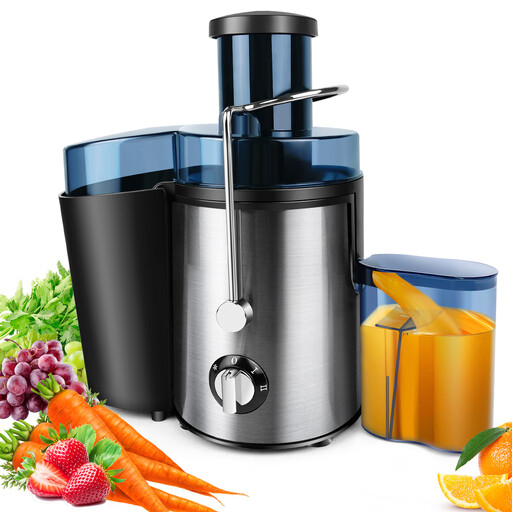
The selection includes centrifugal juicers and slow juicers for fruit and vegetables. Check the ingredients, feed chute and cleaning instructions listed for each model.
In Germany, mains-powered appliances within the scope of the EU Low Voltage Directive must meet its safety and conformity requirements, including CE marking. EU rules on food-contact materials also apply to materials intended to come into contact with carrots or juice. Check the documentation for the specific model; a CE marking alone doesn’t prove that every part that comes into contact with juice complies.
 No image available
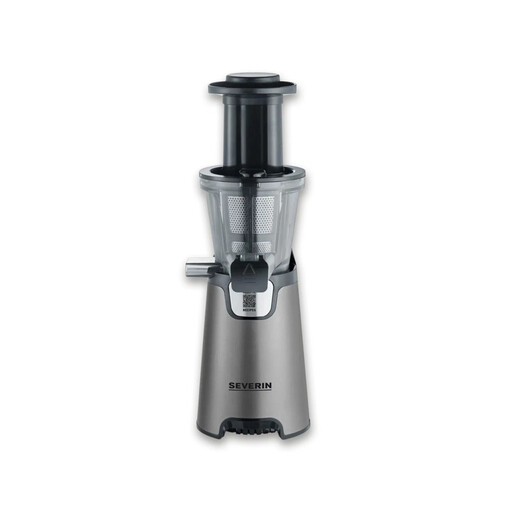
Severin ES 3571 slow juicer
For anyone looking for a slow juicer for fruit and vegetables and wanting to check whether it can be cleaned with a brush or in the dishwasher.
1-litre juice container and 150 W according to the product name. The description mentions stainless steel micro-sieves, an Easy-Clean design and removable parts.
View at Joybuy
 No image available
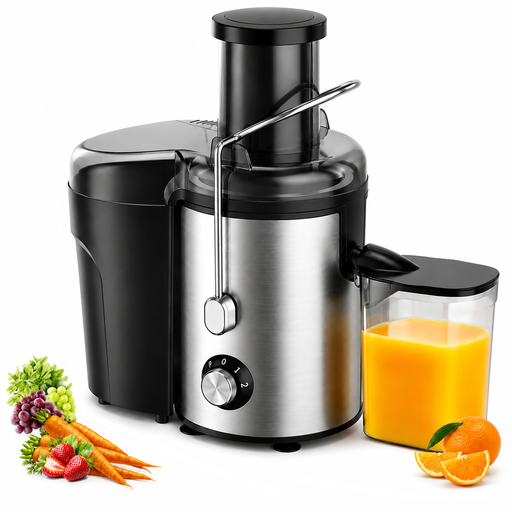
600 W centrifugal juicer with 75 mm feed chute
For shoppers considering a centrifugal juicer for carrots and other vegetables.
600 W, two speed settings and a 75 mm feed chute according to the product details. The description recommends the higher setting for firm vegetables such as carrots, and mentions a cleaning brush for the filter and corners.
View at Joybuy
 No image available
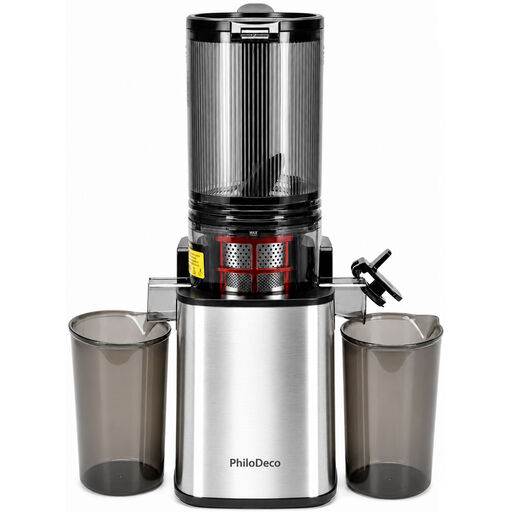
Cold-press slow juicer with 110 mm feed chute
For shoppers looking for a slow juicer for carrots, with a wide feed chute and removable parts for cleaning.
110 mm feed chute, dual filter, reverse function and 40 Nm according to the product details. The description lists carrots as a suitable ingredient and mentions removable, dishwasher-safe parts.
View at Joybuy
 No image available
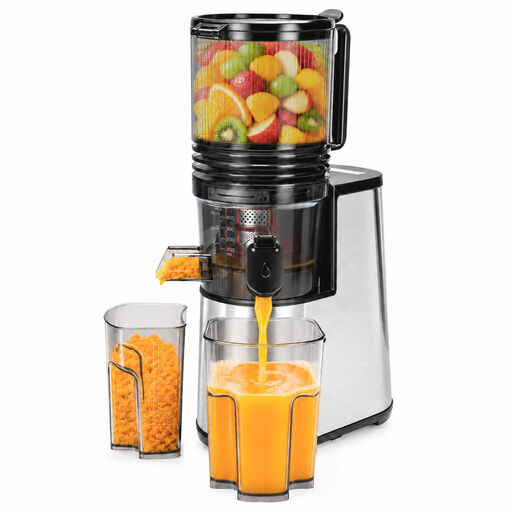
Slow-press juicer with 145 mm feed chute
For shoppers looking for a slow-press juicer with a wide chute and separate containers for juice and pulp.
145 mm feed chute, 250 W, pressing auger and reverse function according to the product details. The description mentions removable parts that should be washed by hand.
View at Joybuy
 No image available
DayPlus 1000 W centrifugal juicer
For shoppers looking for a centrifugal juicer with two speed settings and removable parts for cleaning.
1000 W, 65 mm feed chute, two speed settings and a 500 ml capacity according to the product details. The description recommends the higher setting for firmer ingredients and mentions a brush for the filter and corners.
View at Joybuy
Frequently asked questions
Is a citrus juicer suitable for carrots?
Choose a juicer that the instructions say is suitable for vegetables or carrots. Whether a specific model is suitable depends on its instructions and intended use.
How should I plan for cleaning after making a glass?
Before buying, check which parts are removable and explicitly listed as dishwasher-safe. For the Unold Sam, the manufacturer’s approval applies to non-electrical parts; the BILD buying guide test nevertheless describes cleaning the auger as time-consuming.
Is a manufacturer’s guarantee the same as your statutory rights?
No. If a product is faulty, your statutory rights are generally against the retailer; a manufacturer’s guarantee is an optional additional promise with its own terms. The consumer advice organisation Verbraucherzentrale recommends checking before buying which parts and situations are covered by the specific guarantee.
What regulations apply to an electric juicer in Germany?
EU rules on food-contact materials apply to materials intended to come into contact with juice. Mains-powered appliances that fall within the scope of the Low Voltage Directive must also meet its safety and conformity requirements, including CE marking. A CE marking alone doesn’t prove that every part that comes into contact with juice complies; check the documentation for the specific model.


