What should you look for when buying?
First decide whether processing carrots, cleaning, portability or speed matters most to you. The figures below show the one concern that consumers say is the most important in their purchasing decision.
Centrifugal juicer
A good fit if: you want to make several portions quickly and can leave the appliance set up.
Bear in mind: In a comparison of juicer types by ETM TESTMAGAZIN, centrifugal juicers were faster than slow juicers when processing larger quantities, but also noisier.
Compact slow juicer
A good fit if: you have limited worktop space or want to take the appliance with you.
Bear in mind: Check the instructions for the permitted carrot size and preparation. A compact design doesn’t tell you whether the appliance can handle hard ingredients.
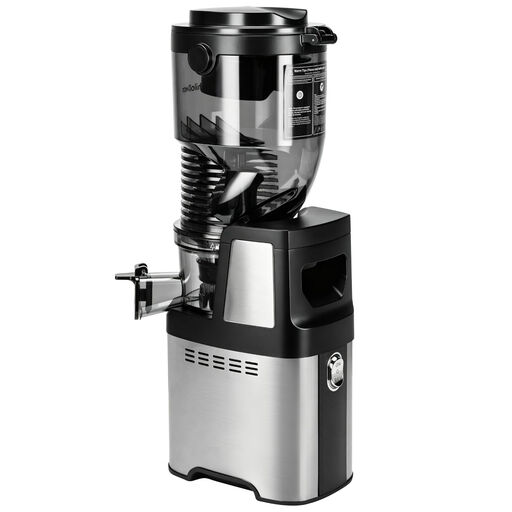
Slow juicer with a large feeding hopper
A good fit if: you regularly make juice for several people and can leave the appliance in your holiday apartment.
Bear in mind: A large hopper takes up space. Manufacturer claims about juice yield aren’t independent comparative measurements.
| Priority |
What to check |
Who it matters most to |
| Processing carrots |
Suitability for fruit and vegetables, as well as the instructions for carrots and how to operate the appliance. |
If I mainly want to juice carrots, I want to know whether the model is designed for this and how I need to prepare the vegetables. Around 36 % of consumers put carrot processing first. |
| Less washing up |
Which parts are removable and dishwasher-safe, and whether the sieve needs to be brushed by hand. |
If the facilities in my holiday apartment are limited, I want to know what cleaning is involved after juicing. Around 29 % of consumers particularly value having less washing up. |
| Space and portability |
Dimensions, weight and the size of the chamber or feeding hopper. |
If I need to take the appliance with me or store it in a small kitchen, its dimensions and weight matter more than making the largest possible quantity in one go. Around 21 % of consumers prioritise space or portability. |
| Making several glasses |
The juice and pulp containers, and the stated cleaning requirements when processing larger quantities. |
If several guests want juice at the same time, I care about how quickly I can make portions and how often I’ll need to stop. Around 14 % of consumers prioritise preparation speed. |
Joybuy products for carrot juice
The products below include centrifugal juicers and slow juicers for fruit and vegetables. Check each model’s information about processing carrots and follow the instructions.
 No image available
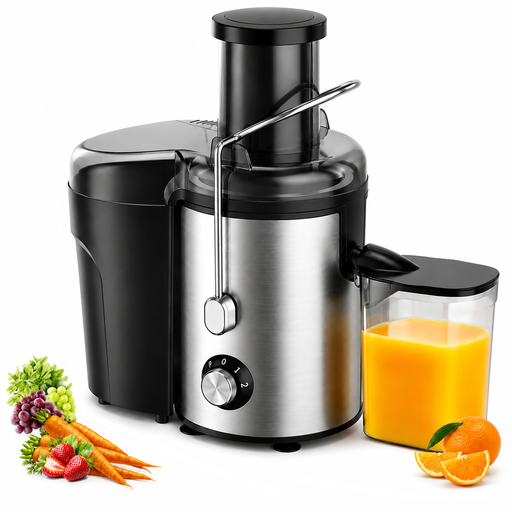
Centrifugal juicer, 600 W, 75-mm feeding chute
The product description lists carrots as a hard ingredient and recommends using a high speed setting.
75-mm feeding chute; two speed settings; juice jug with a foam separator.
View on Joybuy
 No image available
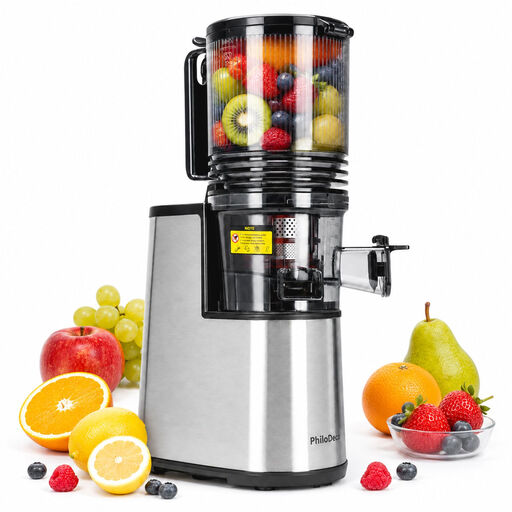
PhiloDeco JE-06 cold-press slow juicer
The description lists carrots as a fibrous ingredient and says the reverse function can help clear blockages. Check the instructions for how to prepare them.
250 W; 145-mm feeding chute; 1.000-ml pulp container; reverse function.
View on Joybuy
 No image available
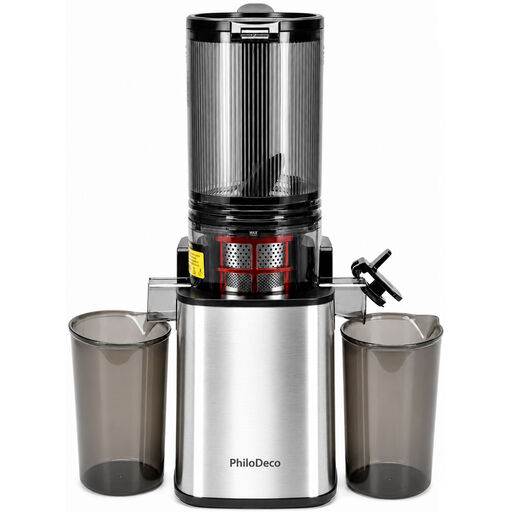
Cold-press slow juicer with a 110-mm feeding chute
The product listing describes this juicer as suitable for fruit and vegetables. Check the model’s instructions before juicing carrots.
110-mm feeding chute; dual filter; reverse function; separate juice and pulp containers.
View on Joybuy
 No image available
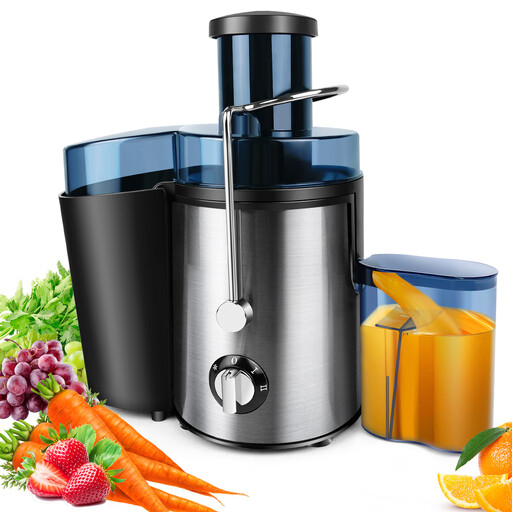
DayPlus centrifugal juicer, 1.000 W, 65-mm feeding chute
The product listing describes this model as a juicer for fruit and vegetables. Check the instructions for hard ingredients such as carrots.
65-mm feeding chute; two speed settings; 500-ml juice jug.
View on Joybuy
 No image available
JE-85 cold-press juicer, 250 W, 95-mm feeding chute
The product listing says it can be used for fruit and vegetables. Check the model’s instructions for processing carrots.
95-mm feeding chute; separate juice and pulp outlets; removable parts described as dishwasher-safe; cleaning brush for the sieve.
View on Joybuy
Frequently asked questions
What should I check before making carrot juice for the first time in a holiday apartment?
For an electric juicer, check the power supply and read the instructions. Wash raw carrots thoroughly; the German Federal Institute for Risk Assessment points out that washing reduces germs but doesn’t remove them completely. Afterwards, clean all parts that come into contact with food according to the model instructions.
Is a citrus juicer enough for carrots?
No. For carrots, choose an appliance whose product information says it can process vegetables. Bosch Hausgeräte DE and Braun Household DE describe their centrifugal models as juicers for fruit and vegetables.
What safety information matters when buying an electric juicer?
Check the product details, manufacturer’s information, the required CE marking and that a German-language instruction manual with warnings is included. The Federal Network Agency explains that CE indicates the manufacturer’s declaration of conformity. It is neither an independent test mark nor proof that a product was made in Europe.
What are my rights if the appliance is faulty or I buy it online in Germany?
When buying from a trader, statutory rights for faulty goods are separate from a voluntary manufacturer’s guarantee. EU consumer information states that you’re generally entitled to at least two years of legal protection. Online purchases usually come with a 14-day right to cancel, although exceptions apply. Check who the seller is and read the specific guarantee terms.
Does a large feeding chute mean I don’t need to prepare carrots?
No. A wide chute may mean you need to do less pre-cutting, but carrots must still be washed and cut to the size specified in the instructions for your particular model. Follow the instructions for operating the appliance, too.


