Households with different mealtimes
If everyone doesn’t eat at the same time, you’ll need to choose between keeping the soup safely hot until serving and cooling it quickly for later storage.


If you’re serving carrot soup at different times, choose a hob that suits your pan, connection and preferred number of cooking zones. A keep-warm setting is no substitute for checking the temperature: the German Federal Institute for Risk Assessment (BfR) recommends keeping heated food at a minimum of 60 °C throughout until it is eaten. For longer storage, hot food should be cooled quickly to below 7 °C.
If everyone doesn’t eat at the same time, you’ll need to choose between keeping the soup safely hot until serving and cooling it quickly for later storage.
If you want to keep using your current pan, compare the heating technology with the base of your specific pan before choosing a hob.
A portable single or double hob can provide an extra cooking zone. A built-in hob, on the other hand, requires a suitable space and connection.
Suitable if: You’re heating just one pan of soup, have limited worktop space and your pan has an induction-compatible base.
Consider: There’s no second cooking zone for a side dish.
Suitable if: You want to heat soup and another dish at the same time, and both pans are induction-compatible.
Consider: Allow for the space you’ll need and the total power output. According to CASO Design, the CASO S-Line 3500 has a maximum total output of 3500 W.
Suitable if: You want to keep using a compatible pan that isn’t induction-ready.
Consider: The hot surface and residual heat need to be taken into account. You’ll also need to check the food’s temperature.
Suitable if: You’re looking for a permanent kitchen solution with several cooking zones, and your worktop cut-out, connection and cookware are all suitable.
Consider: Installation and connection differ from a portable plug-in hob. According to the manufacturer, the Siemens EH675LFC1E must be connected by a qualified electrician.
When making carrot soup, temperature control and pan compatibility matter just as much as the number of cooking zones and the space available. If you’re choosing a hob for this dish and for serving at different times, your priorities will depend on your household.
| What matters to you | What to check when buying | Who it matters most to |
|---|---|---|
| Serving safely at different times | Check the temperature throughout the soup while keeping it hot. A keep-warm setting or timer doesn’t measure the soup’s temperature. | If everyone doesn’t eat at the same time, I want to keep the soup safely hot or cool it in good time. Around 33% of consumers put safe, staggered serving first. |
| Gentle simmering | Compare the controls and adjustable power settings of the specific model. A temperature setting doesn’t prove that the temperature will remain stable in the pan. | If the soup needs to simmer gently after coming to the boil, suitable controls are important. Around 27% of consumers prioritise controllable simmering. |
| Pan and connection | For induction, check that your pan is compatible and measure its base diameter. For built-in hobs, check the dimensions and connection type. ROMMELSBACHER specifies a pan base of 12–20 cm for the CTA 1800/IN. | If you want to keep using your existing pans and kitchen installation, check that both are compatible in advance. Around 20% of consumers put pan and connection compatibility first. |
| Available space and cooking several dishes | Measure the appliance and the space needed with pans in place. For double hobs, take the total power output into account. | If you want to heat a side dish as well as the soup, a second zone matters, along with enough space. Around 20% of consumers prioritise available space and planning for multiple zones. |
An appliance setting doesn’t measure the temperature throughout the soup. The BfR recommends keeping heated food at a minimum of 60 °C throughout until it is eaten.
Check the food’s temperature while keeping it hot. If you want to store the soup for longer, cool it quickly and refrigerate it.
Both induction hobs and radiant hobs can have a glass-ceramic surface. The term alone doesn’t tell you whether your existing pan will work.
Check the heating technology and pan base for the specific model before planning to use your cookware. With induction, you may need different cookware if your existing pan isn’t compatible.
On the CASO S-Line 3500, PowerSharing distributes a maximum total of 3500 W across both cooking zones, according to CASO Design.
Compare the total output with the power available when both zones are in use. Also allow enough space for both pans.
According to the manufacturer, the Siemens EH675LFC1E is supplied without a plug and should be connected by a qualified electrician.
Before buying, check the recess dimensions, connection type and installation requirements.
The S-Line 3500 is a portable double induction hob with two cooking zones.
The CTA 1800/IN and CT 2203/TC TM offer different portable heating technologies.
The DK 1033 is a portable double induction hob with two cooking zones.
The EH675LFC1E is a built-in induction hob for a permanent kitchen installation.
The PXX675DC1E is a built-in induction hob with flexible cooking zones.
The products below include portable single and double induction hobs, as well as built-in induction and glass-ceramic hobs. Before choosing, check that your cookware and kitchen connection are compatible with the model.
 No image available
A built-in induction option if your cookware and installation space are suitable. Induction requires cookware with a magnetic base; installation should be carried out by a qualified professional.
 No image available
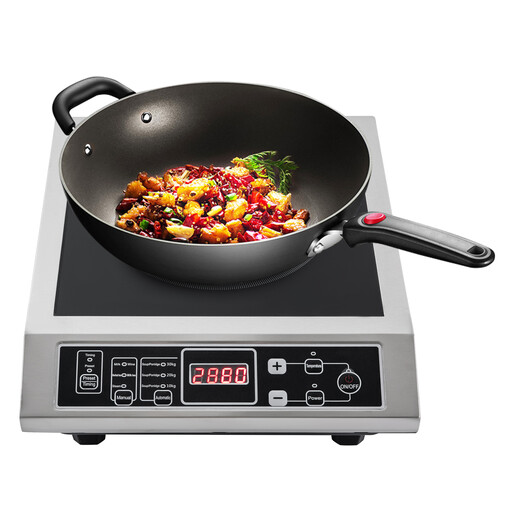
Described as a portable single hob for a compatible induction pan. The product name lists eight temperature levels, a power range of 800–3500 W, a timer function and overheat protection.
 No image available
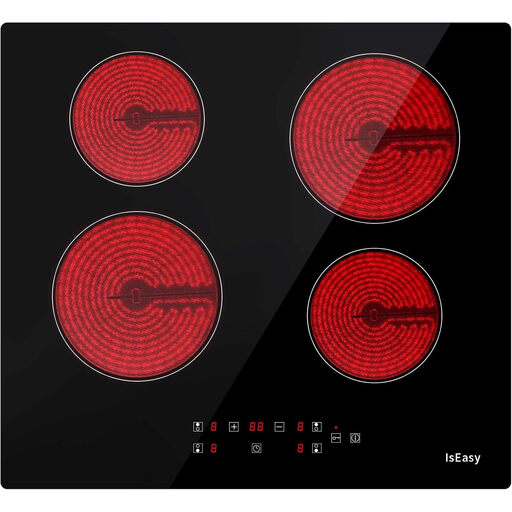
Designed for a built-in space with several cooking zones. The product name lists 6000 W, touch controls, a child lock and nine heat settings. Check the heating technology and pan compatibility of the specific model.
 No image available
A portable single hob for an induction-compatible pan. The product name lists a glass surface, nine heat settings and an 8-hour timer. According to the product information, cookware with a magnetic base is required.
 No image available
For using two pans at the same time, provided both are induction-compatible. The product name lists five temperature settings and a keep-warm function; these don’t indicate a specific temperature in the soup.
Not based on the setting name alone. The BfR recommends keeping heated food at a minimum of 60 °C throughout until it is eaten. For longer storage, hot food should be cooled quickly to below 7 °C. These recommendations aren’t a guaranteed performance feature of any hob.
Check that the pan base is induction-compatible and compare its diameter with the specifications for your particular hob. ROMMELSBACHER specifies a base diameter of 12–20 cm for the CTA 1800/IN; this range doesn’t automatically apply to other models.
No. A timer with an automatic shut-off stops the hob heating and won’t keep the soup warm afterwards. The manufacturer specifies a timer of up to 180 minutes with automatic shut-off for the SEVERIN DK 1033, so plan to keep the soup hot or cool it separately.
Check the installation dimensions and connection type before buying. According to Siemens Home Appliances, the Siemens EH675LFC1E is supplied without a plug and should be connected by a qualified electrician.
No. Glass ceramic can be the surface of both induction hobs and radiant hobs. Check the heating technology of the specific model and whether your pan is compatible.