If you have limited worktop space
If you’re only using one soup pot, make sure both the hob and the pot will fit in the space where you plan to use them.


For a single pot of soup, a portable single hob is a sensible place to start. The key considerations are whether the hob and pot will fit in the space available, and whether you can adjust the heat after bringing the soup to the boil. Induction requires a suitable pan base, as Bosch Home Appliances explains; cast-iron or radiant-heat hobs are alternatives if you have different cookware. Also compare the dimensions and controls of the specific model, and follow its installation instructions.
If you’re only using one soup pot, make sure both the hob and the pot will fit in the space where you plan to use them.
If you want to keep cooking your soup after bringing it to the boil, look for straightforward power controls and, if useful, a timer.
Before choosing a heating technology, check whether your soup pot is suitable for induction or would work better on another type of hob.
First, make sure the heating technology is compatible with your pot. Then compare the space required, the controls and the instructions for setting up the specific appliance.
| What to consider | What to look for | Who should prioritise it? |
|---|---|---|
| Space required | Check the appliance dimensions and the space needed with the pot on the hob; follow the setup instructions. | If I’m only using one pot and have little free worktop space, the hob and pot need to fit in the space available. Around 36% of consumers put space requirements first. |
| Simmer control | Compare the power settings, controls and, if useful, the timer. | After bringing the soup to the boil, I want to be able to turn down the heat as needed, rather than focus only on maximum power. Around 29% of consumers prioritise simmer control. |
| Your existing soup pot | For induction, check that the base is compatible and that the pot’s diameter is within the model’s stated limits. | If you want to keep using your existing pot, first check that its heating compatibility and size are right for the hob. Around 21% of consumers put pot compatibility first. |
| Setup and handling | Follow the instructions on setup and ventilation, and take care around hot surfaces. | In a small space, I want to set up the hob according to the instructions and be mindful of hot surfaces. Around 14% of consumers prioritise safe setup and handling. |
The surface alone doesn’t tell you how a hob heats your pan. The Rommelsbacher CT 2200/E has a ceramic glass surface and, according to the manufacturer, is heated by a HiLight radiant heating element.
Check the product description for the heating technology and make sure it’s compatible with your cookware.
The space where you plan to use the hob needs to accommodate your soup pot too, and meet the instructions for the specific appliance.
Check the available space with the pot on the hob, and read the model’s setup instructions before use.
For soup, it’s not just about heating the pot; you also need to be able to adjust the heat after bringing it to the boil.
Compare the power settings, controls and, if useful, the timer instead of looking at maximum power alone.
The range includes the single induction hob KP 1032, the single cast-iron hob KP 1092 and the double induction hob DK 1031.
Rommelsbacher’s range includes the single induction hob CT 2010/IN and the portable single hob CT 2200/E, which uses a HiLight radiant heating element.
The Touch 2000 portable single induction hob is an option if your pot’s size and weight are suitable.
The SIKP 2200 B1 induction hob was included in a model test by F.A.Z. Kaufkompass.
The following Joybuy products are portable worktop hobs, including induction and infrared models. For induction, the pan base must be compatible with the heating technology.
 No product image available
Designed for cooking with one pot on the worktop; the description mentions a simmer setting.
Nine heat settings, timer up to 8 hours, touch controls and glass surface.
As an induction hob, it should only be used with compatible cookware.
 No product image available
Described as a portable single hob; its dimensions may be useful to check if space is limited.
Dimensions: 21,5 × 21,5 × 4,7 cm. Rotary control and five heat settings.
As an induction hob, it should only be used with compatible cookware.
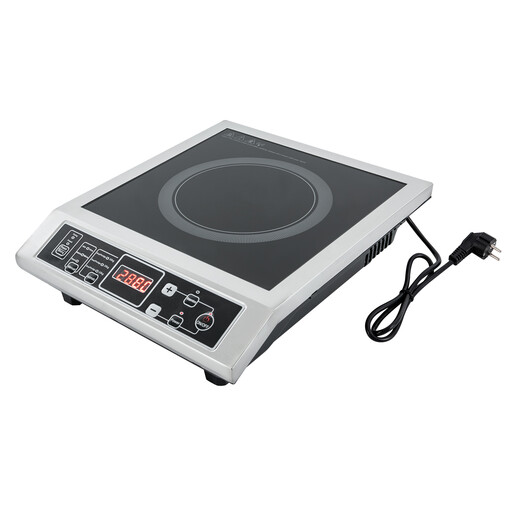 No product image available
A portable hob for making soup; the description lists eight power settings and eight temperature settings.
Timer up to 3 hours and glass surface.
According to the product description, it is suitable only for iron and stainless steel cookware.
 No product image available
An alternative if you want to use heat-resistant cookware and are looking for an infrared hob.
The description lists a soup mode, a timer with automatic shut-off, and touch and rotary controls.
Described as compatible with heat-resistant pots.
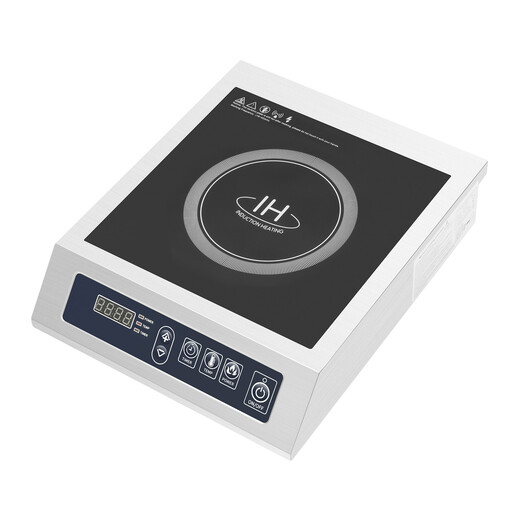 No product image available
A portable hob; the description says cookware needs to have a flat iron base.
Eleven power settings, timer up to 24 hours and EU plug.
Check that your pot has the flat iron base described.
Only if the base is suitable for induction and the pot is the right size for the hob. Check the specifications for the pot and cooking zone. For example, CASO gives a pot diameter of 12 to 24 cm for the Touch 2000.
Read the setup, safety and cleaning instructions for the specific model, and allow enough space with the pot on the hob. Pan detection doesn’t mean you can ignore hot surfaces; CASO specifically highlights surface temperatures for the Touch 2000.
The Verbraucherzentrale explains that the EU energy label for ovens doesn’t apply to hobs. A wattage rating or an oven energy label therefore isn’t a like-for-like indication of energy consumption for portable hobs.
Your statutory consumer rights are against the seller; a manufacturer’s guarantee is separate and voluntary. If there’s a fault, the first step may be to ask for a repair or replacement, as the Verbraucherzentrale explains.
New appliances covered by the Electrical Equipment Safety Regulation must meet safety and conformity requirements, including CE marking. The Federal Institute for Occupational Safety and Health outlines these requirements. However, a marking alone doesn’t tell you whether an appliance can be used safely where you plan to set it up.
Ask your healthcare professional whether an induction hob is suitable for you, and follow the guidance for your implant. The Verbraucherzentrale advises people with pacemakers against using induction cooking zones. Cast-iron and radiant-heat hobs use different heating technologies, but they’re no substitute for individual medical advice.