
Lieferung heute & morgen

Qualitätsgarantie

Willkommens-Angebote freischalten: KOSTENLOSE Lieferung | Bis zu 80 % RABATT | Kostenlose 30-Tage-JoyPlus-Testphase
App herunterladen
Choosing the right carry-on suitcase can be a challenge, given the varying luggage regulations among airlines and the vast array of materials and features available. The right cabin trolley is crucial for a smooth and efficient journey, whether for a short business trip or a weekend getaway.
This guide is designed to help you understand the key criteria and make an informed decision. We provide objective information on materials, dimensions, and functional details, and present a selection of models that stand out for their specific properties.
Three main factors determine a suitcase's functionality and durability: the material, the dimensions, and the features, such as wheels and locks.
A hard-shell suitcase offers robust protection for its contents. The most common materials differ in weight, flexibility, and resilience.
The permitted dimensions for carry-on luggage vary by airline. A common size accepted by many carriers is 55x40x20 cm. These dimensions typically provide enough volume for trips of 1 to 5 days. However, it is always wise to check your airline's specific regulations before you travel to avoid extra fees at the gate. Ensure that the stated dimensions include wheels and handles.
Modern carry-on trolley models offer a range of features that significantly enhance travel comfort.
Here is a selection of models that distinguish themselves through their specific material properties and functional design.

Why it stands out: This model combines the robustness of polypropylene with the standard 55x40x20 cm dimensions, making it a reliable piece of carry-on travel luggage for most airlines.
Pros:
Who is it for?: For price-conscious and quality-driven travellers looking for a durable and compliant onboard trolley for regular short trips.
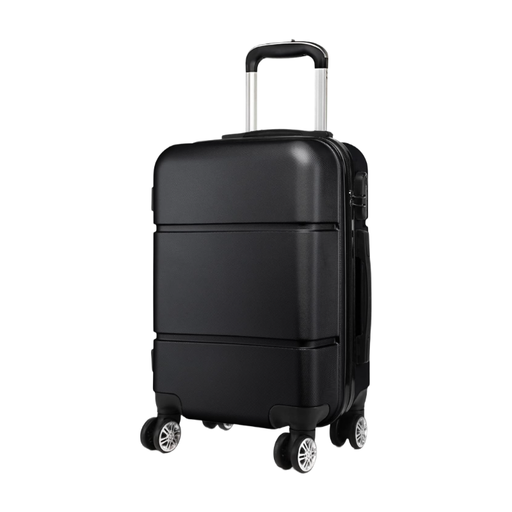
Why it stands out: Weighing only 2.35 kg, this ABS suitcase is an exceptionally light option that maximises your packing allowance.
Pros:
Who is it for?: For travellers who prioritise minimal tare weight and need a functional cabin trolley for occasional trips with airlines like easyJet or Lufthansa.
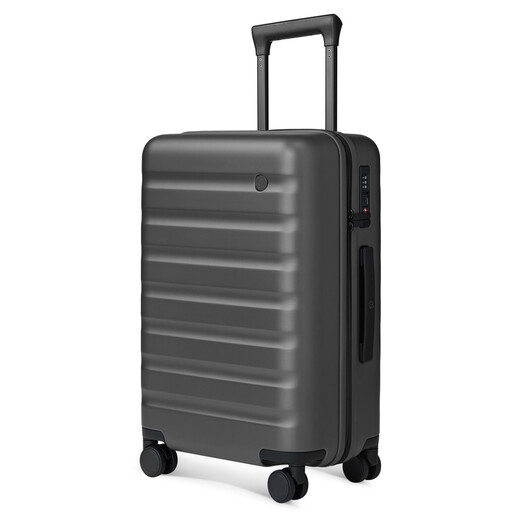
Why it stands out: This polycarbonate model is distinguished by thoughtful design features, such as a flush-mounted handle that transforms the top into a stable surface.
Pros:
Who is it for?: For business and leisure travellers who appreciate a technologically advanced and functional carry-on suitcase with innovative details for trips of 3-5 days.
The models presented offer a good starting point for various needs. However, if you wish to compare other materials, colours, or specific features, you may find the perfect model in our broader collection.
Explore our full collection of Hardside Carry-On Luggage.
A 4-wheel suitcase (spinner) can be pushed upright alongside you, which reduces wrist strain and offers better manoeuvrability in tight spaces. A 2-wheel suitcase must be tilted and pulled, which can be more stable on uneven terrain like cobblestones. For use in airports and train stations, 4-wheel models are often more comfortable.
Both types have pros and cons. Hard-shell suitcases offer better protection for fragile items and are more water-resistant. Soft-shell suitcases are often more flexible, which can make it easier to fit them into tight overhead compartments, and they frequently feature convenient exterior pockets for quick access to documents or laptops. The choice depends on your personal priorities: maximum protection (hard-shell) or flexibility and external pockets (soft-shell).
Most TSA locks are delivered with the default combination 0-0-0. To set your personal code, look for a small, often recessed button near the dials. Press this button with a pointed object (e.g., a pen) until it clicks. Then, set your desired number combination and activate the opening mechanism (slider or button) to return the reset button to its original position. Your new code is now saved.