What should you look for when buying?
First decide whether straightforward close-up shooting or a choice of different lenses matters more to you. Then check the working distance, lighting and what’s actually included in the box.
Compact camera with close-up mode
A good fit if: you want to capture small carving details without a separate interchangeable lens.
Bear in mind: A close-up distance of up to 1 cm, as specified by OM Digital Solutions for the Tough TG-7, doesn’t tell you whether there will still be enough room for lighting from the side.
Mirrorless camera with kit zoom lens
A good fit if: you mainly photograph whole spoons, different arrangements and changing compositions. The documented Canon EOS R50 kit includes an RF-S 18–45 mm lens.
Bear in mind: A kit zoom lens isn’t automatically a macro lens; check the close-up performance of the specific lens.
Mirrorless camera with close-up lens
A good fit if: you want to make carving marks appear larger and choose your lens to suit.
Bear in mind: A short working distance can make lighting more difficult, and higher magnification calls for more precise focusing. The lens specifications given apply to the particular model and camera system in each case.
| Priority |
What to look for |
Who it matters most to |
| Fine carving details |
Check the magnification ratio of the specific lens or camera mode, and the working distance, separately. |
If you want tool marks and wood grain to show as clearly as possible, close-up performance matters. Consumers whose main priority is carving details make up around 33%. |
| Whole spoons and photo series |
Check what’s included in the kit, the framing and whether you can position a tripod practically. |
If you photograph several spoons repeatedly in a similar arrangement, a stable setup helps. Consumers who prioritise whole spoons and repeatable framing make up around 27%. |
| Wood colours in table lighting |
Check the white balance and take test shots under the lighting you’ll actually be using. |
If you want wood colours to look consistent across a series, use steady lighting and suitable settings. Consumers whose main priority is true-to-life wood colours make up around 20%. |
| Simple setup |
Check your actual table space to see where the camera or tripod can go and how the light will fall on the carved surfaces. |
If there’s little room for a camera, tripod and lighting, a setup without a separate lens can be easier to manage. Consumers whose main priority is a simple table setup make up around 20%. |
Cameras at Joybuy
The Joybuy products below include mirrorless and compact cameras for a range of photography and video uses. For carved spoons, pay particular attention to whether the lens, working distance and lighting will suit your table setup.
 No image available
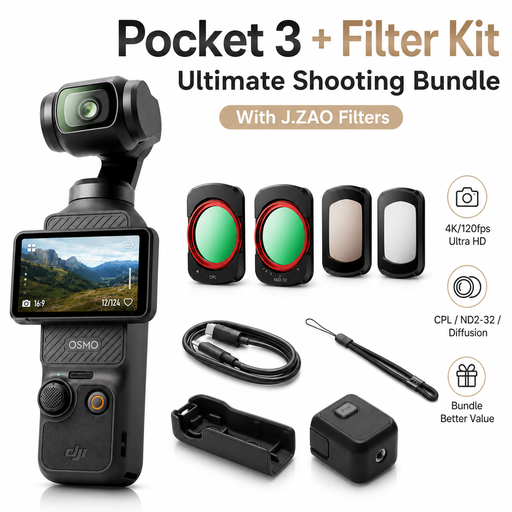
DJI Osmo Pocket 3 Standard Combo with J.ZAO Pocket 3 Camera Filter Kit
For a small table, check whether you can position the subject at the right distance and set up the lighting to suit this handheld gimbal camera.
The product title lists a 1-inch CMOS sensor, 4K/120fps video, a rotating 2-inch touchscreen and a 3-axis gimbal. The bundle includes a J.ZAO Pocket 3 Camera Filter Kit.
View at Joybuy
 No image available
Sony Alpha 6100 APS-C mirrorless camera with 16–50 mm power zoom lens
The supplied zoom lens may be useful when choosing different compositions for whole spoons. Check its close-up performance separately to see if it can capture the level of detail you want.
The product title lists a 16–50 mm power zoom lens and a tilting screen.
View at Joybuy
 No image available
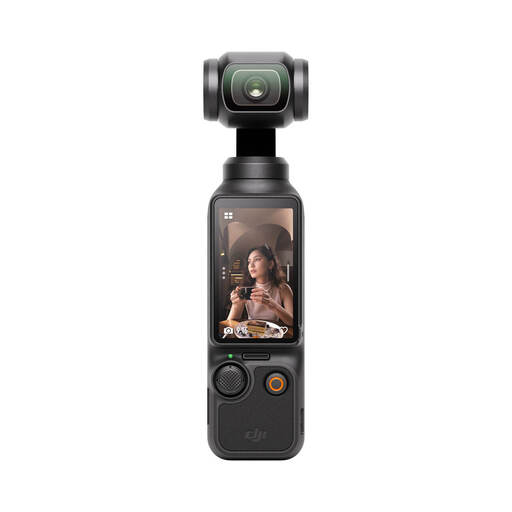
DJI Osmo Pocket 3 vlogging camera
If you’re considering it for spoon photography on a small table, first check whether you can position the camera at the right distance from your subject and set it up for your planned lighting.
The product title lists a 1-inch CMOS sensor, 4K/120fps video, 3-axis stabilisation and a rotating 2-inch touchscreen.
View at Joybuy
Frequently asked questions
Is a kit zoom lens enough to show individual carving marks?
Not just because it’s described as a “kit”. Check the close-up performance of the exact lens supplied and whether the carving mark you want to show will appear large enough at a practical working distance. The documented Canon EOS R50 kit includes the RF-S 18–45 mm; Canon’s 0.5x magnification specification, however, applies to the separate RF 35mm F1.8 MACRO IS STM.
How can I keep whole spoons and carving details in focus?
Keep the camera and subject steady, check the focus in the image and take test shots. Depth of field decreases at higher magnifications. A tripod can also help you keep the framing consistent across a series.
How can I keep wood colours as consistent as possible?
Use even lighting where possible and check the white balance using a test shot. If the lighting changes or you mix several light sources, check the setting again.
What extra equipment might I need for my camera setup?
Check whether the offer includes a camera body with a kit lens or a lens on its own. Depending on your setup, you may also need a tripod and light sources to keep the framing steady and control the lighting.
Can I cancel an online camera purchase in Germany?
Consumers generally have a statutory right of withdrawal for distance contracts; Section 355 of the German Civil Code (BGB) sets out a 14-day period. You must notify the trader that you wish to withdraw from the contract. Check whether the conditions apply to your particular contract and when the period begins. A purchase for business purposes is not necessarily a consumer contract.


