
Lieferung heute & morgen

Qualitätsgarantie

Willkommens-Angebote freischalten: KOSTENLOSE Lieferung | Bis zu 80 % RABATT | Kostenlose 30-Tage-JoyPlus-Testphase
App herunterladen
A perfectly cooked roast deserves to be carved with equal care. Anyone who has tried to cut even slices from a juicy piece of meat with an unsuitable or dull knife knows the frustration: the fibres tear, precious juices escape, and the result is an unappealing mess. A high-quality carving knife, also known as a meat knife or roasting knife, is specifically designed to master this task with precision and ease.
This article serves as your guide. It explains the essential features of a good carving knife and presents a selection of models to help you choose the right tool for your kitchen.
Choosing the right knife depends on objective criteria that determine its functionality, durability, and handling. Three key aspects are particularly important.
The blade is the heart of any knife. Most high-quality blades are made from stainless steel, which is made corrosion-resistant and able to hold an edge through alloys like chromium and molybdenum. A crucial factor is the steel's hardness, measured on the Rockwell scale (HRC). A higher HRC value generally means longer edge retention, but it can also make the blade more brittle.
Another hallmark of quality is whether the carving knife is forged or stamped. Forged knives are shaped from a single piece of steel using heat and pressure. This process densifies the material's structure, often resulting in superior balance and stability.
Carving knives are distinguished by their long, narrow, and often tapered blades. This shape minimises friction and allows you to glide through the meat with a long, clean stroke, without tearing the fibres.
A secure and comfortable grip is essential for control and safety while cutting. The handle should fit well in your hand and not cause fatigue, even during extended use. Materials like high-quality synthetic polymers, wood, or composites offer different tactile experiences and maintenance requirements. The balance between the blade and handle is also important. A well-balanced professional meat knife feels stable in the hand and allows for more precise control.
Based on the criteria above, we have curated a selection of models that cater to different needs and applications.
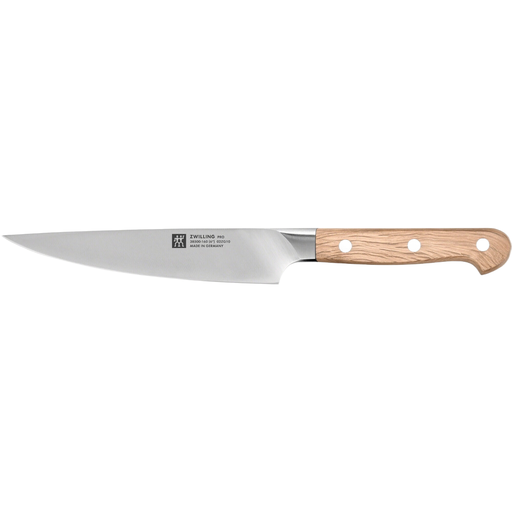
Why it stands out: This Zwilling meat knife combines traditional Solingen craftsmanship with an elegant design. Its relatively short blade makes it a versatile tool for everyday kitchen tasks, while the holm oak handle adds a sophisticated visual touch.
Pros:
Who it's for: Users looking for a compact, high-quality knife for slicing meat who also value elegant design and proven brand quality.
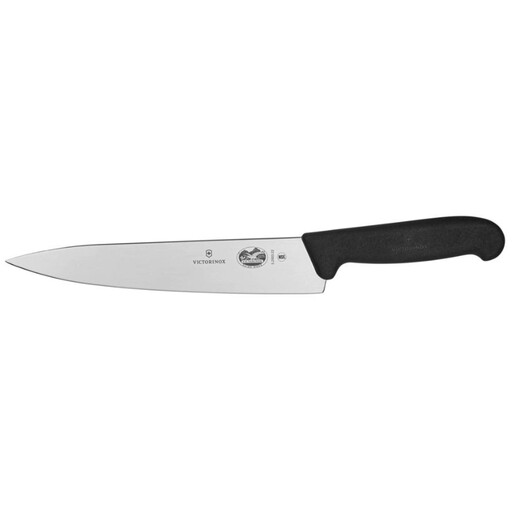
Why it stands out: The Victorinox Fibrox Carving Knife is engineered for functionality and reliability. With its 22 cm blade and non-slip handle, it is a pragmatic tool that has proven itself in professional kitchens and among ambitious home cooks alike.
Pros:
Who it's for: Cooks who need a long, functional, and low-maintenance roasting knife for large roasts or frequent use, and who appreciate excellent value for money.
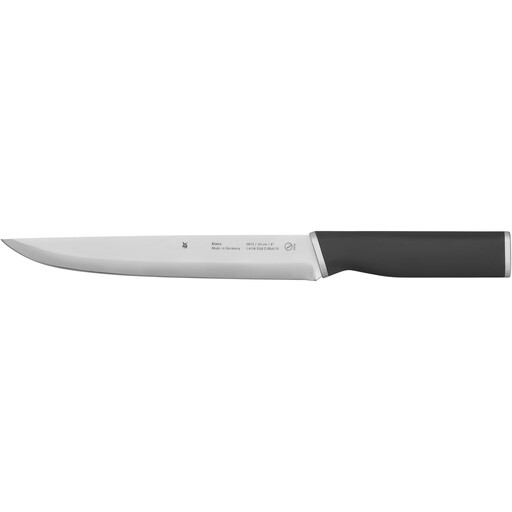
Why it stands out: The WMF carving knife from the KINEO series is notable for its modern design and the manufacturer's proprietary Performance Cut technology. It merges a contemporary aesthetic with the functional demands of a sharp kitchen tool.
Pros:
Who it's for: Users who want a knife with a modern design and a specific, manufacturer-highlighted sharpening technology, and who need a reliable tool for slicing roasted, boiled, or raw meat.
If our selection doesn't include the perfect model for your needs, you can find a wider range of options in our main category. There, you can compare different blade lengths, materials, and designs.
Discover more carving knives on Joybuy.de
The main difference is the blade shape. A carving knife has a long, narrow blade designed to glide through meat with long strokes, minimising juice loss. A chef's knife has a broader, more curved blade, making it an all-purpose tool for a variety of tasks like chopping, mincing, and slicing vegetables.
To maintain its sharpness and longevity, a high-quality knife should be cleaned by hand with warm water and mild dish soap immediately after use, then dried thoroughly. Dishwasher cleaning is not recommended, as harsh detergents and high temperatures can damage the blade and handle. Storing it in a knife block, on a magnetic strip, or with a blade guard will protect the cutting edge.
A common recommendation is that the blade should be slightly longer than the widest part of the roast you intend to slice. For most home uses, a blade length between 20 cm and 23 cm is a good compromise, suitable for both smaller poultry and larger roasts.