
Lieferung heute & morgen

Qualitätsgarantie

Willkommens-Angebote freischalten: KOSTENLOSE Lieferung | Bis zu 80 % RABATT | Kostenlose 30-Tage-JoyPlus-Testphase
App herunterladen
Anyone looking for cashews will often come across the Seeberger brand. However, the range includes several different varieties, which can make choosing difficult. Whether for a quick snack, as a cooking ingredient, or for a social evening, the requirements vary. This article introduces the main varieties of Seeberger cashews and provides a practical guide to help you find the perfect type for your individual needs.
To make an informed decision, three aspects are particularly important: the processing method, the pack size, and the nutritional information.
The way the cashews are processed has the biggest impact on their taste and how they can be used.
Seeberger offers its cashews in different weights. The choice of pack size depends on your personal consumption.
Cashews are known as a protein-rich snack. The exact nutritional values, especially the fat, carbohydrate, and salt content, differ depending on the processing. A look at the nutritional table on the back of the packaging provides precise information and helps you choose the variety that best fits your dietary habits.
Here is a detailed look at three popular varieties from the Seeberger range, each catering to different needs.
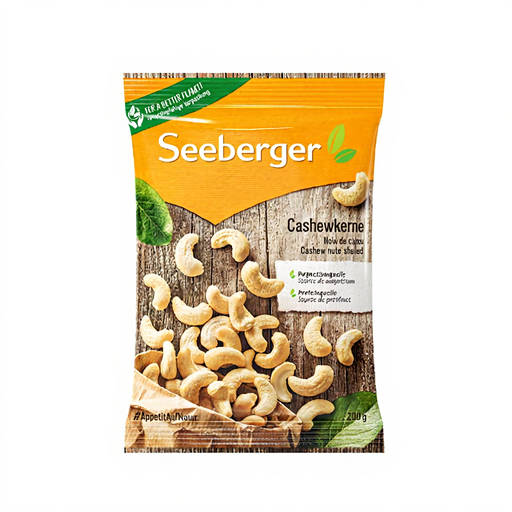
Why they stand out: These natural cashew kernels offer the pure, unadulterated taste of the nut. Their creamy texture and mild character make them a great all-rounder in the kitchen and as a snack.
Benefits:
Who are they for? For anyone who prefers ingredients in their purest form, enjoys cooking and baking, or wants to consciously manage their salt intake.
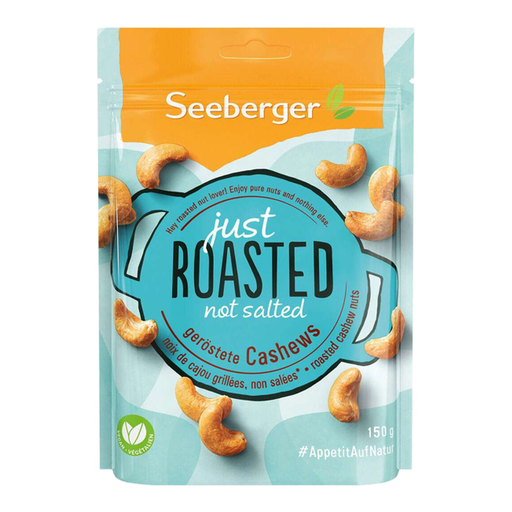
Why they stand out: The gentle, oil-free roasting process intensifies the nutty aroma of these cashews without overpowering their natural flavour. The result is an aromatic and crunchy snack.
Benefits:
Who are they for? For snack lovers who appreciate the pure, roasted nut flavour without added salt or oil and are looking for an aromatic, protein-rich snack.
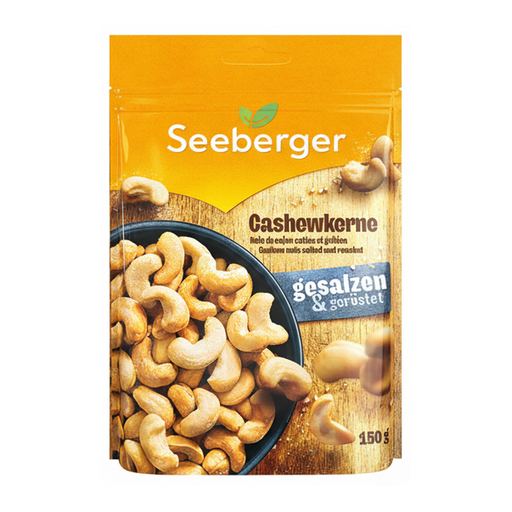
Why they stand out: This variety is the classic choice for social gatherings. The large kernels are oven-roasted and refined with a pinch of salt, creating a hearty, savoury flavour.
Benefits:
Who are they for? Ideal as a savoury snack for parties, movie nights, or as a crunchy topping for salads when a salty component is desired. Anyone looking to buy cashews that serve as a classic party snack will find a suitable option here.
If cashews aren't quite what you're looking for, or if you want to expand your snack selection, we offer a wide range of alternatives. From almonds and walnuts to more exotic options, you'll find a diverse selection of high-quality nuts with us.
Discover our full range of vegan nuts and find your favourite.
Natural cashews are raw and untreated. They have a mild, creamy taste and a softer texture, which makes them ideal for further processing in the kitchen. Roasted kernels are subjected to a dry heat process. This makes them crunchier and helps them develop a more intense, nutty aroma, making them a popular ready-to-eat snack.
To maintain their quality and freshness, cashews should always be stored away from heat and moisture. After opening the pack, it is recommended to store the kernels in an airtight container. This protects them from going rancid and preserves their crunchy texture.
Yes, cashews are a natural source of plant-based protein. For example, Seeberger's natural cashew kernels contain 21.0 g of protein per 100 g. The exact protein content can vary slightly depending on the variety (natural, roasted, salted). The precise values are listed on the nutritional table of the respective product packaging.