
Lieferung heute & morgen

Qualitätsgarantie

Willkommens-Angebote freischalten: KOSTENLOSE Lieferung | Bis zu 80 % RABATT | Kostenlose 30-Tage-JoyPlus-Testphase
App herunterladen
A casserole dish with lid needs to multitask: searing, sautéing, braising and gently finishing dishes with sauce. In British kitchens, it's especially handy when you're looking for a single piece of cookware that works on induction, gas, ceramic and electric hobs. The options range from a deep frying pan with lid to the classic sauté pan and ceramic pans.
However, flashy marketing claims don't automatically lead to the right purchase decision. What really matters are verifiable details about hob compatibility, coating, diameter, cleaning and oven suitability.
A pan that claims to work on all hob types should be explicitly approved for induction, gas, electric and ceramic hobs. For induction, a magnetic or induction-compatible base is essential. If this information is missing, the pan may not be suitable even if it has a metal body.
The size of the pan's base also matters: a 28 cm frying pan might measure 28 cm at the rim, while the actual heated base area could be significantly smaller.
A non-stick pan usually needs less oil and makes food slide out of the pan more easily. However, the coating isn't a licence for consistently high temperatures. Heating it empty, using metal utensils, abrasive sponges and sudden temperature changes can all damage the surface.
With a ceramic pan, you should also distinguish between a ceramic coating on aluminium and a fully ceramic vessel. The product description should clearly state the material.
A glass lid makes it easier to monitor the cooking process, but it can get hot and isn't oven-safe on every model. Similarly, plastic or Bakelite handles are often not designed for the oven. If you're looking for an oven-safe pan, you should check the maximum temperature for the pan, handle and lid separately.
For many households, a 28 cm casserole dish is a practical middle ground. It offers space for vegetables, meat or pasta with sauce and is often suitable for several portions. Smaller models from 20 to 24 cm are more manageable and suit smaller quantities, while larger pans need more storage space and a correspondingly large cooking zone.
Capacity is more telling than diameter alone. High sides reduce splashing and make braising easier, without liquid spilling over the edge when stirring.
Coated aluminium generally heats up quickly. When choosing, buyers should pay attention to the specific type of coating:
For all coated models, wooden, nylon or silicone utensils are recommended. Even if the pan is labelled dishwasher-safe, hand washing with a soft sponge can help preserve the coating.
The terms "induction-compatible" and "suitable for all hob types" should appear in the technical specifications. For gas hobs, you also need to ensure the pan sits stably. For the oven, temperature limits must be observed. A model might be oven-safe up to 260 °C, while the glass lid can only be used up to 148 °C.
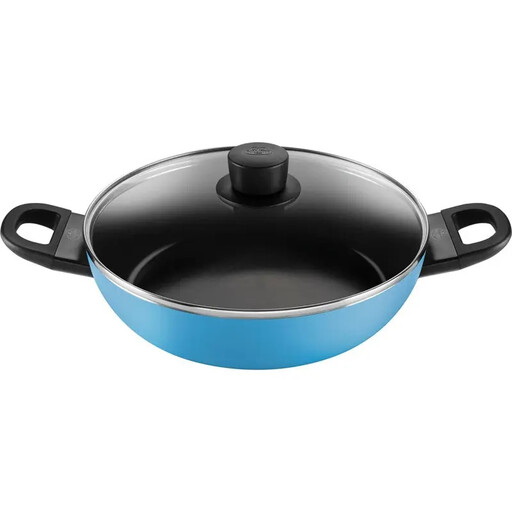
Why this product suits the profile: The 28 cm pan offers a practical everyday size and, according to the product details, is suitable for induction, gas, electric and ceramic hobs. The glass lid supports braising and steaming.
The specifications list the hob types and explicitly advise against heating the pan empty. It is not suitable for the oven, which prevents incorrect oven use.
Aluminium body, KERA-GLOSS ceramic coating, glass lid and Radiant-Induction technology according to the product description.
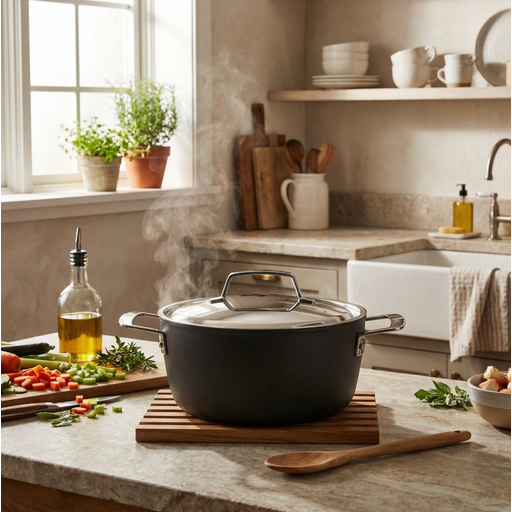
Why this product suits the profile: The 24 cm sauté pan combines a stated capacity of 4.3 litres with aluminium, titanium non-stick coating and stainless steel handles. It's ideal for smaller households and versatile dishes.
The product data lists both the maximum oven temperature of 230 °C and its suitability for all common hob types. This means important limits are clear before purchase.
Glass lid, stainless steel handles, 4.3 litre capacity and stated dishwasher and oven suitability.
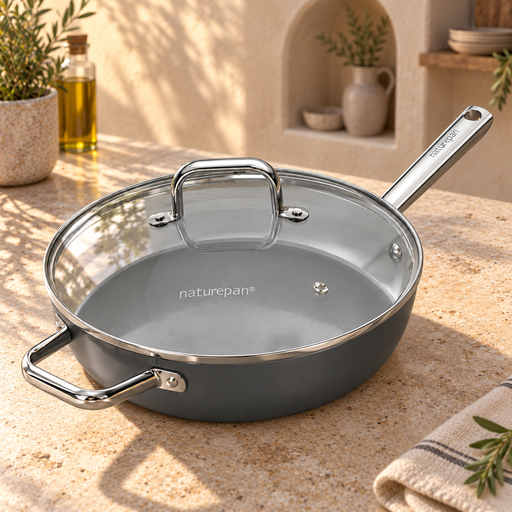
Why this product suits the profile: The deep 28 cm sauté pan is designed for braised dishes, sauces and one-pot recipes. It works on induction, gas, electric and ceramic hobs and, according to the product details, is oven-safe up to 260 °C.
The technical specifications detail the coating construction, hob types, oven temperature and cleaning. Buyers can therefore match the suitability to their own cooking routine.
Diamond-Titanium reinforced ceramic coating, glass lid, high sides and stated dishwasher suitability.
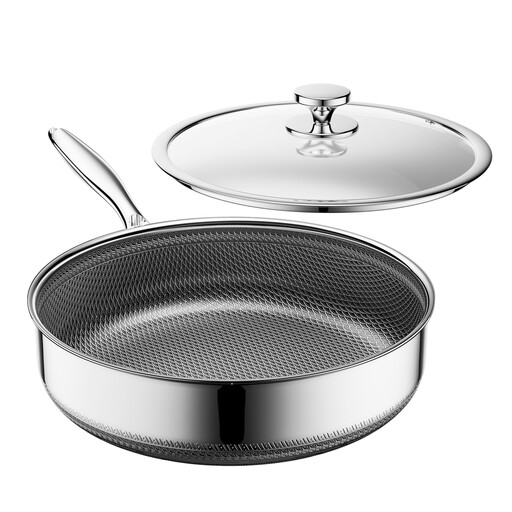
Why this product suits the profile: According to the product details, this model combines stainless steel, an aluminium core and a ceramic coating. It is designed for all the hob types mentioned and supports cooking with less oil.
The specifications list PFAS-, PTFE- and PFOA-free status, as well as separate temperature limits for the pan and lid. The coating should still be protected from overheating and metal utensils.
Oven-safe up to 260 °C, lid up to 148 °C, dishwasher-safe and with a heat-conducting aluminium core according to the manufacturer's details.
We've put together a full, regularly updated list of products that fully meet these strict selection criteria and the safety regulations in force in the EU.
A casserole dish with a diameter of 24 to 28 cm covers most everyday dishes. For sauces and smaller portions, 24 cm is often sufficient. If you're preparing vegetable stir-fries, braised dishes or pasta for several people, you'll usually benefit from 28 cm and higher sides.
That depends on the specific model. The pan, handle and lid can have different temperature limits. A product specification like "oven-safe up to 260 °C" should therefore always be read alongside the separate lid temperature. If there's no clear indication, the pan should not be used in the oven.
It's not possible to give a reliable general lifespan. It depends on the type of coating, temperature, utensils, cleaning and frequency of use. Low to medium heat, careful hand washing and a protective layer between stacked pans can help extend the life of the surface.