
Lieferung heute & morgen

Qualitätsgarantie

Willkommens-Angebote freischalten: KOSTENLOSE Lieferung | Bis zu 80 % RABATT | Kostenlose 30-Tage-JoyPlus-Testphase
App herunterladen
A cast-iron casserole is ideal for slow-cooked dishes, roasts, soups and stews. Thanks to its substantial weight, cast iron stores heat and releases it gradually. This makes the casserole versatile, but it also comes with certain requirements. If you focus only on colour, brand name or an apparent special offer, you may end up buying a model that is too heavy, too small or not heat-resistant enough for everyday use.
The litre measurement often refers to the total capacity. However, slow-cooked dishes require room for ingredients, liquid and the lid. A 2.2-litre casserole is more suitable for smaller households or side dishes, while 3.8 to 5.3 litres is a better choice for family portions and entertaining.
The diameter is also important: a wide base makes it easier to brown pieces of meat, but requires enough space on the hob. For two to three portions, a compact casserole measuring around 20 to 22 cm may be more practical.
A casserole for induction should be expressly approved for induction hobs. The permitted temperatures may also vary between the casserole, lid knob and lid. When using a cast-iron casserole in the oven, the lowest temperature limit is therefore the one that matters.
A metal knob may have a different heat resistance from the body of the casserole. For example, the gold-coloured knob on the Le Creuset Gourmet-Pro casserole is specified as suitable for temperatures of up to 260 °C. Always check the relevant manufacturer's instructions before use.
An enameled cast-iron casserole does not require the traditional seasoning care needed for an uncoated Dutch oven. Enamel is neutral in taste and makes cleaning easier. However, it can be damaged by sudden temperature changes, hard knocks or abrasive cleaning products.
For everyday use, wooden, silicone or heat-resistant plastic utensils are therefore a sensible choice. Place hot casseroles on heatproof mats and do not cool them abruptly with cold water.
Cast iron stores heat, distributes it evenly when preheated slowly and keeps food warm for longer after serving. An enamelled interior makes cleaning easier and is practical for acidic ingredients such as tomatoes or wine. A matt black enamel interior, as used in various STAUB cocottes, is designed for powerful browning.
Look for an evenly finished surface without chips, cracks or noticeable irregularities. If the enamel is damaged, stop using the casserole.
A well-fitting lid reduces moisture loss during slow cooking. On a STAUB Cocotte, a pattern of studs on the lid guides condensed water back into the food. This is a design feature, but it is no substitute for the correct temperature and cooking time.
A heavy lid improves the seal, but also increases the overall weight. Check that you can safely grip both the lid and casserole while wearing oven gloves.
A cast-iron casserole is considerably heavier than a stainless-steel or aluminium saucepan. A model with a 5.2-litre capacity and a net weight of 6.67 kg is suitable for several portions, but requires a stable surface and careful lifting. For smaller quantities, a 1- to 2.6-litre model may be easier to handle.
Also consider:
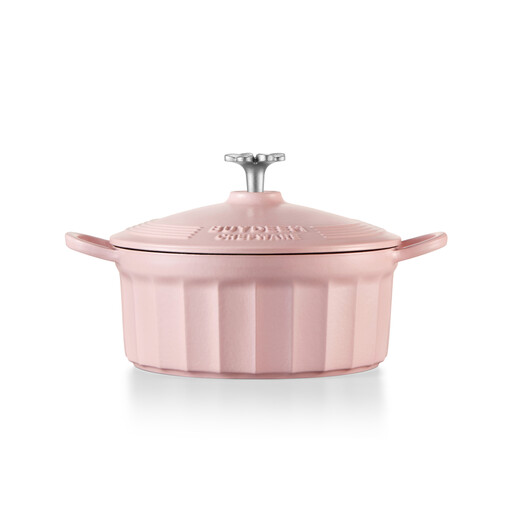
Why this product suits the profile: With a capacity of 2.9 litres and a diameter of 22 cm, this casserole is designed for smaller households and everyday slow-cooked dishes. The enamelled interior and exterior, along with compatibility with induction, gas, electric, halogen and ceramic hobs, cover typical kitchen requirements.
The stated size makes the capacity clear. The manufacturer also specifies an oven-safe design and a tightly closing, domed lid.
2.9-litre capacity; compatible with several hob types, including induction.
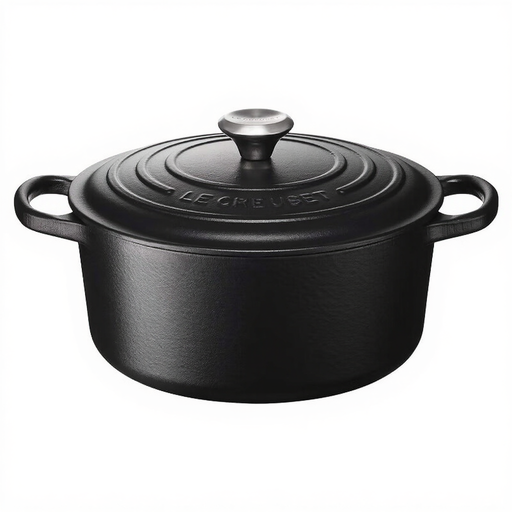
Why this product suits the profile: The round 22 cm shape with a 3.3-litre capacity is designed for one-pot meals, soups, slow-cooked dishes and smaller roasts. The manufacturer specifies a matt, acid-resistant enamel interior, as well as compatibility with all hob types, including induction, and use in the oven.
The technical specifications distinguish between diameter, capacity and material. The explicitly stated enamel interior also makes care easier than with uncoated cast iron.
3.3-litre capacity; matt black, acid-resistant enamel interior.
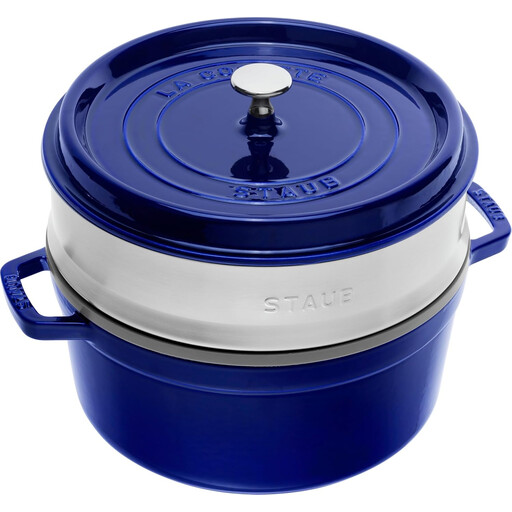
Why this product suits the profile: The 3-in-1 concept combines roasting, slow cooking and steaming. With a capacity of 5.2 litres, the product details state that it is suitable for around four to six portions; the stainless-steel insert also expands its use to vegetables, fish and side dishes.
The intended uses and capacity are clearly stated. Nevertheless, the oven limit of up to 250 °C and induction compatibility should be checked against your recipe and oven.
5.2-litre capacity; stainless-steel steamer insert and condensation studs on the lid.
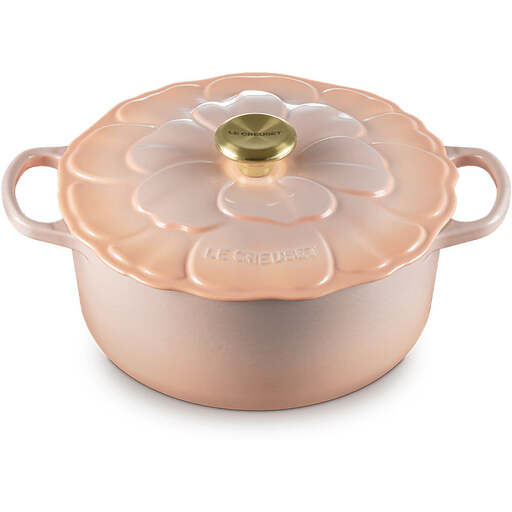
Why this product suits the profile: The 26 cm cocotte with a 5.3-litre capacity offers room for slow-cooked dishes, soups, roasts and bread. The floral-relief lid and Pêche colour make it suitable for serving directly at the table.
The specific capacity prevents you from choosing based solely on the external diameter. The specifications also state compatibility with induction and oven use up to 260 °C.
5.3-litre capacity; suitable for all common hob types, including induction, and for use in the oven.
We've put together a complete, regularly updated list of products that fully meet these strict selection criteria and the safety regulations applicable in the EU.
For four people, around 4 to 5.3 litres is often suitable. The exact capacity depends on whether you mainly prepare stews, larger cuts of meat or side dishes. For two people, 2 to 3.3 litres is often enough.
Yes, provided the manufacturer expressly states that it is suitable for induction. Cast iron is generally magnetic, but the base, diameter and weight of the casserole should still be suitable for your hob. Lift the casserole when moving it to avoid scratching the glass surface.
Its lifespan depends on the construction, use and care. Cast iron is mechanically robust, while enamel can be sensitive to knocks and thermal shock. With careful handling, low to medium heat and gentle cleaning, an enamelled casserole can be used in the home for many years.