
Lieferung heute & morgen

Qualitätsgarantie

Willkommens-Angebote freischalten: KOSTENLOSE Lieferung | Bis zu 80 % RABATT | Kostenlose 30-Tage-JoyPlus-Testphase
App herunterladen
A cast-iron casserole is ideal for braised dishes, soups, stews and slow cooking. The material retains heat for a long time and can be used on the hob or in the oven. However, not every casserole is right for every household.
Many disappointing purchases come down to three common pitfalls:
Choosing the right one depends less on its appearance than on its material, dimensions, lid, weight and how you cook day to day.
A traditional cast-iron pot without enamel usually needs special care to protect its surface. An enamelled cast-iron pot, on the other hand, has a glass-like coating. This makes it easier to clean and suitable for acidic ingredients such as tomatoes or wine.
Look out for the following details:
Good heat retention doesn’t mean you always need to cook on a high setting. For many recipes, a low to medium temperature is enough once the ingredients have been browned.
When choosing a size, consider the number of people in your household, the recipes you cook and your available storage space:
A round casserole for stews makes even use of the hob’s cooking area. An oval casserole can be useful for longer cuts of meat. Shallow models such as a cocotte or braiser make browning and serving easier, while taller pots offer more room for soups and liquids.
A casserole suitable for induction must be explicitly approved for induction by the manufacturer. The same applies to gas, electric, ceramic and halogen hobs. If you plan to use it in the oven, check the maximum temperature as well as the material of the lid knob.
A well-fitting casserole with a lid helps keep liquid in the pot. Some lids have a special inner surface that returns condensation to the food. This can be useful for slow cooking, but it doesn’t replace following the recipe’s instructions for temperature and liquid quantities.
Also consider the weight: a cast-iron casserole filled with food is much heavier than an aluminium pot. Two side handles and a stable base make it easier to handle.
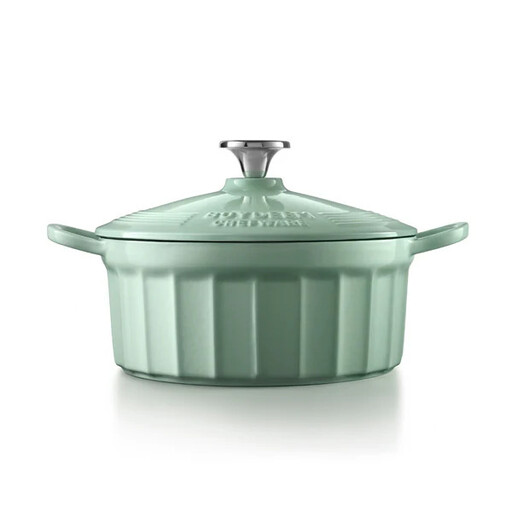
Why this product suits this profile: According to the supplier, this 2.9-litre Dutch oven is designed for smaller portions, as well as braising, roasting and slow cooking. It is approved for induction, gas, electric, halogen and ceramic hobs, as well as oven use.
The stated capacity and hob compatibility are clearly specified. This makes it easier to check whether the size is right for your household before buying.
2.9-litre capacity, enamelled cast iron and a dishwasher-safe design, according to the product details.
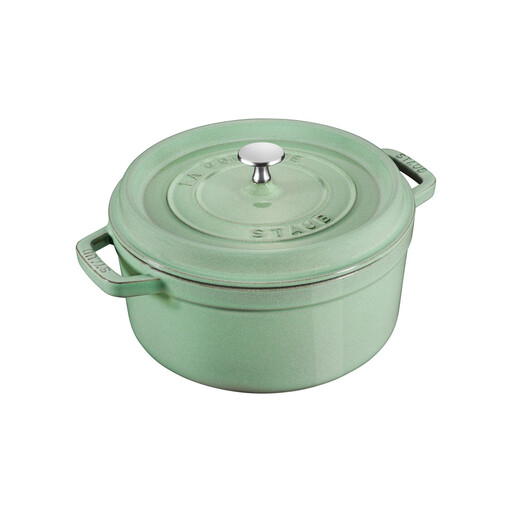
Why this product suits this profile: According to the supplier, this cocotte has a 3.8-litre capacity, a matt black enamel interior and a lid with a dimpled structure. It is suitable for induction and other hob types, and for oven use at temperatures up to 250–260 °C.
The maximum temperature and weight of around 4.74 kg are stated. This helps you plan for oven use, storage and safe lifting.
3.8-litre capacity, enamelled cast iron and suitability for all common hob types, according to the product description.
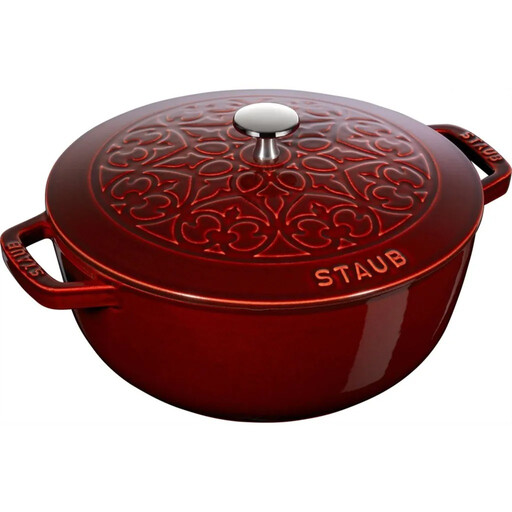
Why this product suits this profile: With a 5-litre capacity, this cast-iron pot is designed for larger portions, soups, braised dishes and slow cooking, according to the supplier. Its suitability for induction and oven use makes it even more versatile.
The larger capacity reduces the risk of trying to cook family-sized portions or batch meals in a pot that’s too small. Check the maximum temperature before use.
5-litre capacity, a lid with a Chistera drop structure and suitability for induction, according to the product details.
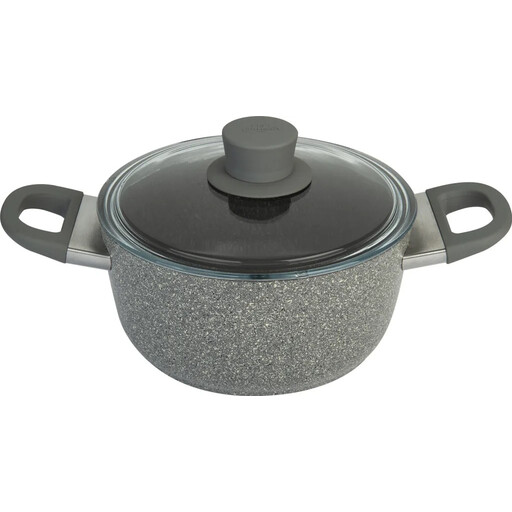
Why this product suits this profile: If you need something lighter than cast iron, this 4.5-litre forged aluminium pot has an induction base and glass lid, according to the supplier.
The material description makes clear that this isn’t a cast-iron casserole. This helps you weigh up heat retention against a lighter design.
4.5-litre capacity, glass lid, induction compatibility and a dishwasher-safe design, according to the product description.
We’ve put together a complete, regularly updated list of products that meet these strict selection criteria and fully comply with the safety regulations in force in the EU.
Follow a few simple rules to help your cast-iron casserole last:
A dishwasher-safe casserole can generally be cleaned in the dishwasher. However, many suppliers still recommend hand-washing with a soft sponge to preserve the enamel.
For four people, around 3.5 to 5 litres is often a good size. A larger model is more practical for soups, stews or if you’re planning to make leftovers. For braised dishes alone, a shallower casserole with a smaller capacity may be enough.
Many enamelled models are suitable for induction, but this must be confirmed in the product details. Also check the diameter of the base and handle the casserole carefully, so its heavy underside doesn’t damage the hob.
Its lifespan depends on the quality of the workmanship, how well you care for it and how you treat the enamel. Avoid sudden temperature changes, overheating an empty pot and using metal utensils. For safety, stop using the pot if the enamel is chipped or cracked.