
Lieferung heute & morgen

Qualitätsgarantie

Willkommens-Angebote freischalten: KOSTENLOSE Lieferung | Bis zu 80 % RABATT | Kostenlose 30-Tage-JoyPlus-Testphase
App herunterladen
A cast-iron casserole can sear food on the hob, braise it in the oven and be served directly at the table. However, not every heavy cooking pot automatically makes a good purchase. Marketing often focuses on colour, brand name or supposedly special lid designs, while important technical details are left out.
This buying guide from the Joybuy Product Recommendation Officer explains what keen home cooks, families and frequent users should look for in an enameled cast-iron casserole.
A high litre capacity may initially sound practical. However, a round 5-litre pot may have a smaller base than an oval model with a similar volume. For beef olives, poultry or elongated roasts, an oval casserole is often more practical.
It is also important to take the weight of the empty casserole into account. A filled 5- to 8-litre model can become very heavy when lifted out of the oven. Wide handles that can be reached safely even when wearing oven gloves are therefore an important feature.
Enameled cast iron has a smooth glass coating. This makes it easier to clean and, unlike untreated cast iron, it normally does not need seasoning. However, this does not automatically mean that it has a traditional non-stick coating.
The enamel can be damaged by knocks, sudden temperature changes or unsuitable metal utensils. Claims such as “scratch-resistant” should therefore always be considered alongside the care instructions. Wooden, silicone or heat-resistant plastic utensils are usually the gentler choice for everyday use.
A cast-iron pot for induction is not only suitable for induction hobs. The contact between the base and the hob, the size of the cooking zone and the temperature rating of the lid knob are also important. For an oven casserole, you must also consider the maximum temperature for the pot, lid and knob.
Product details should therefore clearly state whether gas, electric, ceramic, halogen and induction hobs are supported, and the maximum temperature at which the casserole may be used.
A cast-iron stew pot retains heat for a long time and distributes it comparatively evenly. This supports slow braising, searing and keeping food warm. The enamel on the interior is tasteless and makes cleaning easier. It also does not need seasoning.
Uncoated cast iron can rust if cared for incorrectly and is more sensitive to acidic ingredients. If you regularly prepare tomato sauces, dishes containing wine or fruit-based ingredients, a suitable enamel surface is often the more convenient option.
As a rough guide:
A Dutch oven with lid should leave enough room so that ingredients do not reach the rim. With oval models, length is more important than the diameter alone. Before buying, also check whether the casserole fits on your existing hob and whether there is enough room in the oven for the handles.
A close-fitting cast-iron lid reduces moisture loss during braising. Some STAUB models feature a structured underside of the lid designed to direct condensation back into the food. This is a construction feature, but not a blanket promise of a particular cooking result.
When cleaning, the casserole should be completely cool before being washed with warm water and mild washing-up liquid. Dishwasher-safe does not mean that every cleaning cycle will have no effect on its appearance. For long-term enamel care, washing by hand with a soft sponge is often the gentler option.
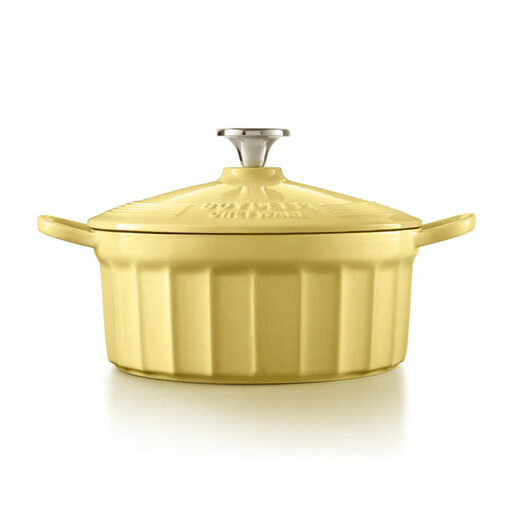
Why this product suits this profile: With a capacity of 2.9 litres, this enameled cast-iron pot is suitable for smaller households and modest portions. It works on gas, induction, electric, halogen and ceramic hobs, and is suitable for use in the oven.
The stated capacity and suitability for several types of hob make comparisons easier. The care instructions specifically advise allowing the pot to cool before cleaning and avoiding abrasive cleaning products.
2.9-litre capacity, enameled cast iron, stainless-steel knob and stated dishwasher suitability.
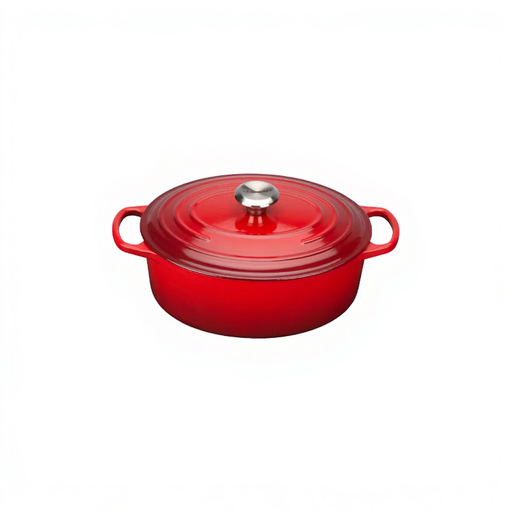
Why this product suits this profile: This 4.7-litre oval casserole is designed for larger roasts, whole poultry and family-sized portions. According to the product details, it is suitable for all common hobs, including induction, and for oven use up to 250 °C.
The shape, capacity and temperature rating are clearly stated. This makes it easier to assess whether the casserole is suitable for your oven and the dishes you plan to prepare.
Oval format, 4.7-litre capacity, suitable enameled interior and close-fitting lid.
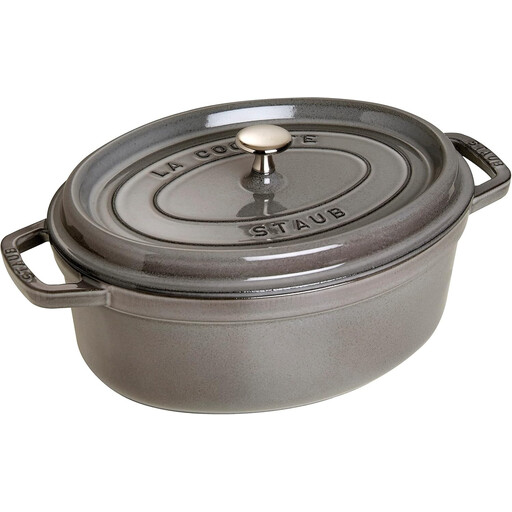
Why this product suits this profile: With an 8-litre capacity, this large oval casserole is aimed at families, hosts and frequent users. Its shape accommodates elongated ingredients such as whole poultry or a leg of lamb.
The large capacity is complemented by the dimensions and weight: approximately 8.5 kg at 37 cm in length. This allows you to check before buying whether your storage space, hob and oven are large enough.
8-litre capacity, oval design, suitable for induction and ovens up to 260 °C, plus enameled interior and exterior surfaces.
We have put together a complete, regularly updated list of products that fully meet these strict selection criteria and the safety regulations applicable in the EU.
Enameled cast-iron casseroles are generally often suitable for induction. However, the manufacturer’s specifications are decisive. The base should also sit fully on the cooking zone. Moving a heavy casserole across the glass surface can cause scratches, so it is better to lift it.
Its lifespan depends on the quality of the materials, how it is used and how it is cared for. Cast iron itself is very robust, while the enamel must be protected from knocks and thermal shock. Gradual heating, suitable utensils and gentle cleaning can help extend its service life. Without specific conditions of use, giving a blanket number of years would not be reliable.
The price is influenced by factors including size, coating, lid design, workmanship and brand. A small 2.9-litre pot may be sufficient for beginners, while oval models with capacities of 6 to 8 litres require considerably more material. Therefore, do not compare the purchase price alone. Also consider capacity, hob compatibility, oven temperature and cleaning requirements.