
Lieferung heute & morgen

Qualitätsgarantie

Willkommens-Angebote freischalten: KOSTENLOSE Lieferung | Bis zu 80 % RABATT | Kostenlose 30-Tage-JoyPlus-Testphase
App herunterladen
A cast-iron casserole can be used for searing, braising, baking and slow cooking. At the same time, models vary considerably in capacity, interior coating, lid design and maximum temperature. If you focus only on colour, brand name or marketing claims, you could end up buying cookware that is too heavy, too small or unsuitable for your hob.
This buying guide from the Joybuy Product Recommendation Officer explains which specifications really matter before buying an enameled cast-iron casserole, cocotte or Dutch oven.
A 3.7-litre pot is not automatically suitable for every family portion. The shape affects how much surface area is available for searing and how easily ingredients can be removed. A tall, round cast-iron pot with lid is practical for soups and stews. A shallow casserole, on the other hand, provides more space for pieces of meat or vegetables.
For two to three people, around 2.4 to 3.3 litres may be sufficient. If you regularly cook for several people, consider models from around 3.7 litres or with a 5-litre capacity.
“Suitable for all hob types” should explicitly include induction in the product specifications. The maximum oven temperature is also crucial. For the models listed here, the stated limits vary by product from around 250 to 260 °C. However, the lid knob may have its own temperature limit.
Before buying, you should therefore check:
An enameled cast-iron casserole normally does not need seasoning on the inside like uncoated cast iron. The smooth surface makes cleaning easier and is also suitable for acidic ingredients such as tomatoes. Nevertheless, severe temperature changes, metal utensils and abrasive cleaning products can damage the enamel.
Allow the casserole to cool completely before washing it. Do not place hot cookware directly on a cold stone or glass surface, and do not immerse it in cold water. This precaution reduces the risk of thermal shock.
Cast iron retains heat for a long time. This is particularly useful when braising and slow cooking, as the temperature remains comparatively stable after heating. An enamel coating can make cleaning easier. For matt black interior enamel, manufacturers often indicate that it is suitable for searing. However, the specific care instructions for each product remain the deciding factor.
A 24 cm casserole with a capacity of around 3.7 litres is versatile enough for many everyday dishes. A 28 cm model with a capacity of 3.7 litres may offer a larger base, but it is not necessarily taller. A 26 cm pot with a 5-litre capacity is more suited to larger portions or dishes with a high volume.
Cast iron is heavy: with comparable cocottes, the pot and lid alone can weigh around 4 to 5.4 kg combined. So check the size of the handles, the space available on your hob and the room in your kitchen cupboard.
A well-fitting lid keeps heat and moisture inside the pot. Some Staub cocottes feature a Chistera or raindrop structure that directs condensation back into the cooking space. A tagine, on the other hand, has a conical lid that supports the steam circulation typical of this shape.
Warm water, mild washing-up liquid and a soft sponge are suitable for cleaning. Even if a product is described as dishwasher-safe, hand washing can help protect the surface in the long term. Use wooden, silicone or heat-resistant plastic utensils unless the manufacturer states otherwise.
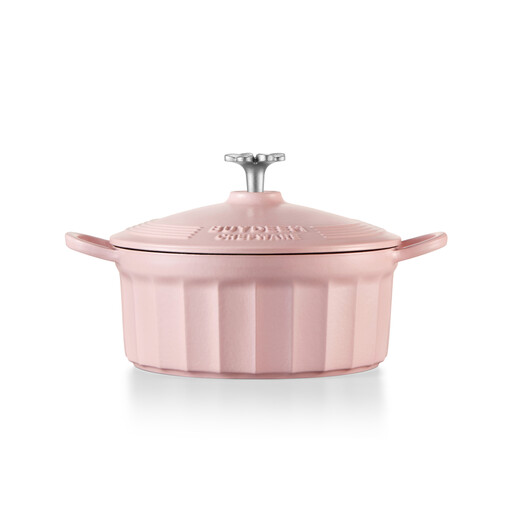
Why this product suits the profile: With a capacity of 2.9 litres, a diameter of 22 cm and an enamel coating, this model is designed for smaller households and everyday braised dishes. According to the product specifications, it is suitable for induction, gas, electric, ceramic and halogen hobs, as well as for use in the oven.
The clearly stated capacity helps you avoid choosing an oversized cocotte for small portions. The enamel coating reduces the care required compared with uncoated cast iron.
2.9-litre capacity; suitable for several hob types, including induction; domed lid.
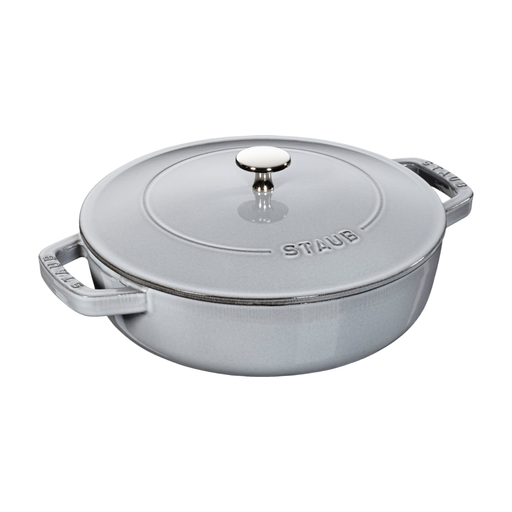
Why this product suits the profile: This round enameled cast-iron cocotte has a capacity of 3.7 litres, is designed for induction and other hob types and, according to the product specifications, is ovenproof up to 260 °C.
The stated diameter, capacity and temperature limit make it easier to check the key details before buying. The interior enamel is designed for searing, but gentle utensils are still required.
3.7-litre capacity; Chistera lid for returning condensation, according to the product description; suitable for the oven and induction.
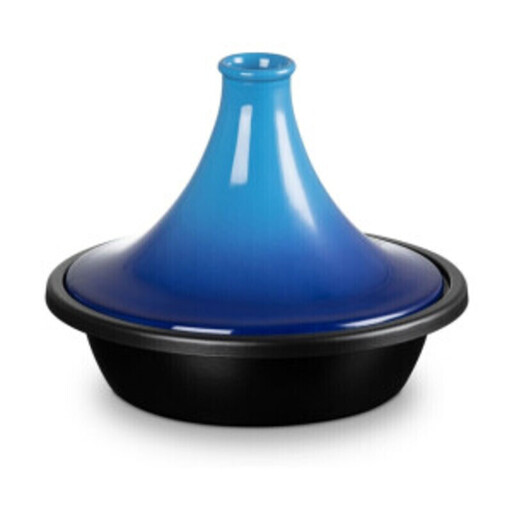
Why this product suits the profile: This tagine combines an enamelled cast-iron base with a conical lid. It is suitable for braised dishes, vegetable and meat dishes, as well as for use on induction and in the oven.
The product specifications explicitly state 260 °C as the maximum temperature and exclude dishwasher use. This makes it easier to assess the care requirements realistically.
3.7-litre capacity; conical lid; suitable for all hob types, including induction, and for use in the oven.
We have put together a complete, regularly updated list of products that fully meet these strict selection criteria and the safety regulations applicable in the EU.
For smaller households, 2.4 to 3.3 litres is often sufficient. A model with a capacity of around 3.7 litres is suitable for many family meals. For larger portions, soups or several guests, a capacity of 5 litres may be more practical. In addition to capacity, the diameter, height and weight are also important.
Yes, provided the manufacturer explicitly states that it is suitable for induction. Many of the cocottes and tagines mentioned are designed for induction hobs, as well as gas, electric or ceramic hobs. Also check that the base is flat and move the heavy pot carefully to avoid scratching the hob.
Its potential service life depends on the quality of the material, the condition of the enamel, temperature control and care. Cast iron is generally robust, but enamel can be damaged by impacts, severe temperature changes or unsuitable cleaning products. Proper handling and following the manufacturer’s instructions are therefore more important than giving a blanket lifespan estimate.