
Lieferung heute & morgen

Qualitätsgarantie

Willkommens-Angebote freischalten: KOSTENLOSE Lieferung | Bis zu 80 % RABATT | Kostenlose 30-Tage-JoyPlus-Testphase
App herunterladen
A cast-iron casserole with lid can sear food on the hob, cook it slowly in the oven and then be placed straight on the table for serving. However, some product claims can lead to disappointing purchases. The key considerations are not just the brand name or colour, but also the material, dimensions, lid design and whether it is genuinely suitable for your hob.
A 24 cm casserole can hold significantly different quantities depending on its design. Tall sides are ideal for soups and stews, while a wider, shallower shape provides more surface area for searing. Handles and the lid also reduce the usable internal capacity.
For a small household, around 2 to 3 litres is often sufficient. If you cook for several people or prepare larger slow-cooked dishes, it is better to plan for a capacity of around 3.5 to 5 litres. The actual weight should not be underestimated either: cast-iron casseroles with lids often weigh several kilograms.
A casserole for induction needs a sufficiently flat base that sits securely on the hob. The product specifications should clearly state whether it is suitable for gas, electric, ceramic and induction hobs. For oven use, the maximum temperature for the entire product is also important – including the lid knob and handles.
If you are unsure, do not rely solely on marketing images. Check the technical specifications for the particular model and take the size of your induction zone into account.
An enameled cast-iron pot is easier to care for than uncoated cast iron, but it is not indestructible. Knocks against hard edges, sudden changes in temperature and abrasive cleaning products can damage the enamel. Depending on the finish, metal utensils may also leave scratches.
Wooden, silicone or heat-resistant plastic utensils are a sensible choice. Allow a hot pot to cool down before cleaning it. Even if the manufacturer states that a model is dishwasher-safe, frequent washing can alter the sheen of the enamel.
Cast iron retains heat for a long time and releases it slowly. This supports even slow cooking and braising. An enamel interior is neutral in taste and practical for acidic ingredients such as tomatoes or wine. Uncoated cast iron, on the other hand, generally requires special care, including seasoning and thorough drying.
Look for a fully specified material construction: the cast-iron body, enamel coating and material used for the lid knob should all be clearly stated.
A tightly fitting lid reduces moisture loss. Some models have drip structures or raised areas on the inside of the lid that direct condensation back into the pot. This is particularly useful for casseroles for slow-cooked dishes, ragouts and slowly cooked vegetables.
However, these designs cannot replace proper temperature control. Cast iron responds more slowly to changes in hob power. Low to medium heat is sufficient for many recipes and helps protect the surface.
Round cocottes distribute heat evenly on round cooking zones and are suitable for soups, sauces and stews. Oval shapes provide more room for long joints of meat. An ovenproof pot should still be safe to move when filled.
Practical questions to ask before buying:
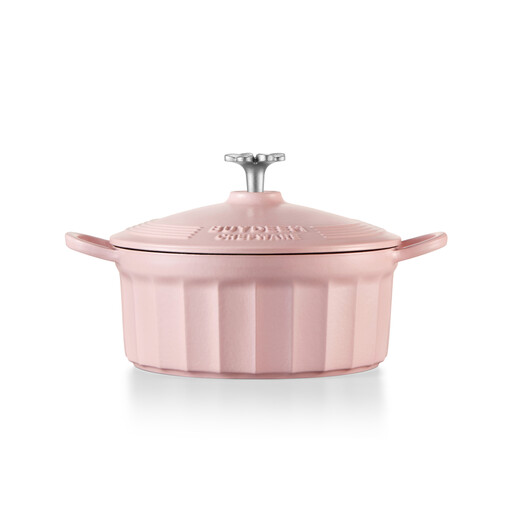
Why this product suits this profile: With a capacity of 2.9 litres and a diameter of 22 cm, this enameled cast-iron pot is designed for smaller households and everyday slow-cooked dishes.
The product details clearly state the capacity, diameter, enamel finish and suitability for induction. This makes it easier to assess how practical it will be for everyday use before buying.
Enameled cast-iron body, domed close-fitting lid and compatibility with gas, electric, ceramic and induction hobs.
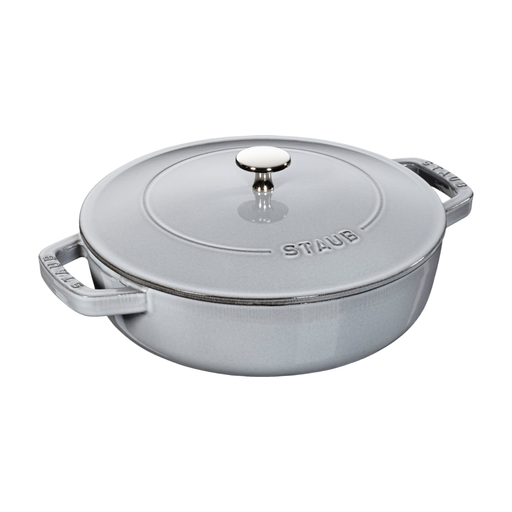
Why this product suits this profile: The 3.7-litre capacity is suitable for family portions, while the round shape is versatile enough for everything from searing to serving.
The specifications state a diameter of 28 cm, a capacity of 3.7 litres, a weight of 5.4 kg and oven suitability up to 260 °C. These figures help with realistic kitchen planning.
Enameled cast iron, black enamel interior, Chistera lid and suitability for all hob types, including induction.
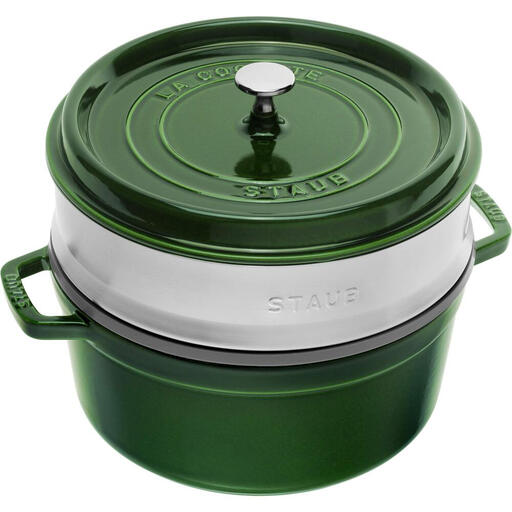
Why this product suits this profile: This 5.2-litre casserole combines slow cooking with a stainless-steel steamer insert, making it suitable for larger quantities and a range of cooking methods.
The contents are clearly listed as including the steamer insert. This makes the additional function easy to verify rather than just relying on a general marketing claim.
5.2-litre capacity, stainless-steel steamer insert, lid with drip structure and oven suitability up to 250 °C.
We have put together a complete, regularly updated list of products that fully meet these strict selection criteria and the safety regulations applicable in the EU.
Many enameled models are designed for induction. The specific manufacturer’s information is decisive. The base should also sit flat, and its diameter should match the cooking zone. On a glass or ceramic hob, it is advisable not to move the casserole by sliding it.
Its lifespan depends on the quality of its construction and how well it is cared for. Cast iron is mechanically robust, but the enamel can be damaged by knocks, metal utensils, sudden temperature changes or abrasive cleaning products. Gentle heating, soft cleaning utensils and dry storage all help to extend its service life.
Cast iron initially takes time to heat up and is heavier than many other materials. However, it retains heat for a long time. With slow-cooked dishes, you can therefore often continue cooking at a reduced hob setting after searing. Actual energy consumption depends on the recipe, hob, temperature and cooking time.