
Lieferung heute & morgen

Qualitätsgarantie

Willkommens-Angebote freischalten: KOSTENLOSE Lieferung | Bis zu 80 % RABATT | Kostenlose 30-Tage-JoyPlus-Testphase
App herunterladen
A cast-iron casserole with lid can handle braising, roasting, stews, bread baking and one-pot dishes. Even so, unclear size specifications, overestimated coating benefits and incorrect hob information often lead to disappointing purchases. What matters is not just the brand or colour, but whether the capacity, cooking surface, weight and heat sources suit your household.
A 24 cm casserole is not automatically suitable for the same quantity as another 24 cm model. The usable internal height, shape and lid all affect the capacity. For comparison:
If you regularly cook for five to six people, you should therefore check the capacity rather than just the centimetre measurement.
A casserole for induction must have a magnetic base. The enamelled cast-iron models selected here are expressly stated to be suitable for induction and other hob types. However, the temperature limit for the lid knob and the body of the pot may differ.
Before buying, check the product information for the following heat sources:
Not every model that is ovenproof may also be used under the grill or over an open fire. For example, the 20 cm Le Creuset model expressly states that it should not be used on a grill or over an open flame. The manufacturer’s instructions take priority here.
An enamelled cast-iron casserole requires less seasoning than an uncoated cast-iron pot. The enamel makes cleaning easier and is practical for acidic ingredients such as tomatoes or wine. At the same time, it can be damaged by knocks, sudden temperature changes or abrasive cleaning products.
For a long service life, we recommend that you:
Cast iron retains heat for a long time. This supports slow braising, but also means that the pot and handles remain hot for some time after cooking.
A cast-iron casserole with a lid distributes and retains heat through its base and sides. In enamelled models, the cooking surface is either light or matt black. A light surface makes it easier to monitor food while browning; dark, matt enamel is designed for high-heat searing. Both versions require careful handling of the surface.
A close-fitting lid reduces moisture loss during braising. Some STAUB cocottes use a Chistera drop structure with raised sections on the inside of the lid. According to the product description, this is intended to direct condensation back into the cooking chamber. This is a design feature, not a medical or therapeutic claim.
Cast-iron casseroles are considerably heavier than aluminium or stainless-steel pans. A model weighing 4 to 5 kg when empty can only be moved safely when its handles are sufficiently large. Also check whether the lid fits in your oven and whether the round shape sits securely on your hob.
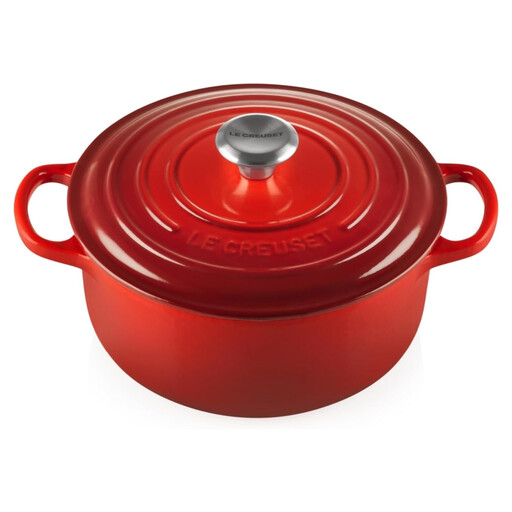
Why this product suits the profile: Its compact size is ideal for smaller households and everyday portions, without taking up the storage space required by a large casserole.
The 2.4-litre capacity is clearly stated. Its suitability for induction, other hob types and oven use is also specified, while grill use is excluded.
Enamelled cast iron, stainless-steel knob and large handles; suitable for soups, roasts, bread and one-pot dishes.
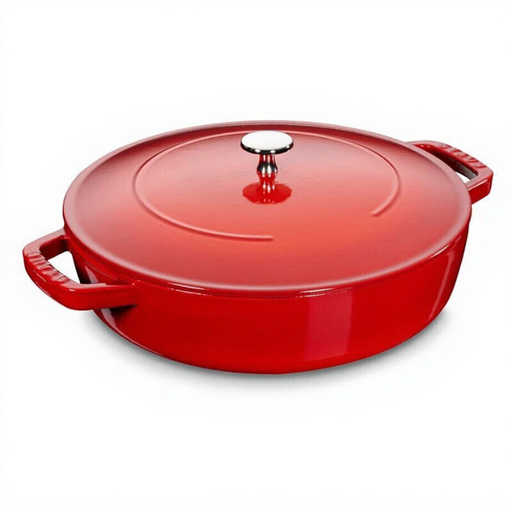
Why this product suits the profile: This cocotte combines a compact footprint with a design suited to browning, slow cooking and serving at the table.
The specifications state 2.4 litres, induction, all hob types and oven use up to 250 °C. This makes it easier to assess how you intend to use it.
Enamelled cast iron and Chistera lid; suitable for braising, searing and taking food straight from the oven to the table.
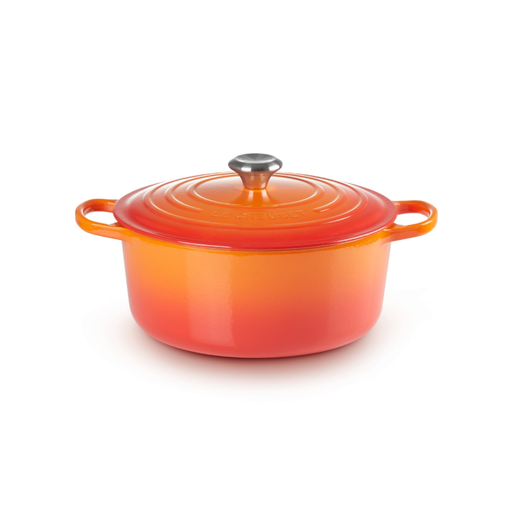
Why this product suits the profile: Its generous capacity is designed for family meals, batch cooking, braised roasts and regular cooking for several people.
The 5.3-litre capacity is specified for around five to six people. Its suitability for induction and other hob types is also stated.
Large handles, enamelled cooking surface and use on the hob, induction, in the oven and on the grill according to the product description.
We have put together a complete, regularly updated list of products that fully meet these strict selection criteria and the safety regulations applicable in the EU.
A cast-iron casserole requires no special assembly. Before first use, warm water and mild washing-up liquid are sufficient. According to the product information, many models are dishwasher-safe, although hand washing is often recommended to protect the enamel and colour.
When cooking, a low to medium temperature is usually sufficient because the material retains heat for a long time. This means the hob does not need to remain on a high setting throughout. However, specific energy savings can only be measured under identical conditions and should not be promised as a general rule.
Models whose product descriptions expressly mention induction are suitable. The enamelled Le Creuset and STAUB cocottes in this selection are specified as suitable for induction hobs and other hob types. You should also check the base diameter and maximum oven temperature.
For smaller meals, 2.4 to 3.5 litres is often sufficient. For four to six people, around 4.2 to 5.5 litres is more practical. Despite its larger diameter, a 28 cm casserole may have a similar or smaller capacity than a 26 cm model. The litre specification should therefore be the deciding factor.
Its service life depends on how it is used and cared for. Avoid sudden temperature changes, hard knocks, metal utensils and harsh scouring products. If the enamel is chipped or cracked, the cookware should no longer be used. Always check the specific guarantee or manufacturer’s warranty in the product information.