
Lieferung heute & morgen

Qualitätsgarantie

Willkommens-Angebote freischalten: KOSTENLOSE Lieferung | Bis zu 80 % RABATT | Kostenlose 30-Tage-JoyPlus-Testphase
App herunterladen
A cast-iron casserole with lid can be used on the hob, in the oven and directly at the dining table. However, models vary considerably in capacity, weight, interior coating and temperature rating. If you only consider the colour, brand name or an apparently low price, you may end up with a casserole that is too large for your hob, difficult to clean or simply impractical for everyday use.
This buying guide from the Joybuy Product Recommendation Officer provides an objective overview of the key features and shows which models suit different cooking habits.
The measurement “24 cm” usually refers to the diameter, not the usable capacity. A 24 cm roasting casserole may hold considerably less or more depending on its design. For one or two people, around 2 to 3 litres is often sufficient. Households with several people are generally better served by 4 to 5.3 litres.
The base diameter is also important: a casserole with a wide rim may heat unevenly on a small induction zone. Before buying, you should therefore consider diameter, base area, height and capacity together.
An enamelled cast-iron casserole is generally suitable for gas, electric, ceramic and induction hobs. However, the specific manufacturer’s information remains decisive. Cast iron also distributes heat slowly and retains it for a long time. This is an advantage when slow cooking, but calls for a moderate preheating phase.
When moving it across a ceramic or induction hob, its considerable weight may cause scratches. The casserole should therefore be lifted rather than dragged across the surface.
Some models are described as dishwasher-safe. Even so, hand washing is often recommended to preserve the shine and finish of the enamel. Abrasive cleaners, harsh metal scouring pads and sudden changes in temperature can damage the coating.
A cast-iron casserole with damaged enamel should not be used if the underlying material is visibly corroded or the coating is flaking. Hot casseroles should be allowed to cool before cleaning and coming into contact with water.
Bare cast iron generally requires seasoning and regular care. An enamelled cast-iron casserole, on the other hand, has a glass-like protective layer. This makes it easier to clean and, while the surface remains intact, prevents food from coming into direct contact with the cast iron.
The enamel is neutral in taste, but should not be treated with metal utensils or abrasive cleaners. For acidic dishes containing tomatoes, wine or citrus fruit, intact enamel is practical because it protects the material underneath.
A well-fitting lid reduces moisture loss during slow cooking. Some cocottes and Dutch ovens have small raised droplets or ridges on the inside of the lid. This allows condensation to drip back onto the food. It supports an even distribution of moisture, but does not replace the correct temperature and cooking time.
You should also look for:
A casserole for induction should be explicitly approved for induction hobs. To use it as an ovenproof casserole, the temperature limits for the casserole, lid knob and handles must all match. Some specifications apply only to the casserole without the lid or without plastic components.
A cast-iron roasting casserole is typically suitable for searing, slow cooking, boiling and baking. For delicate foods such as eggs or very fine sauces, however, a coated aluminium frying pan is often easier and lighter to handle.
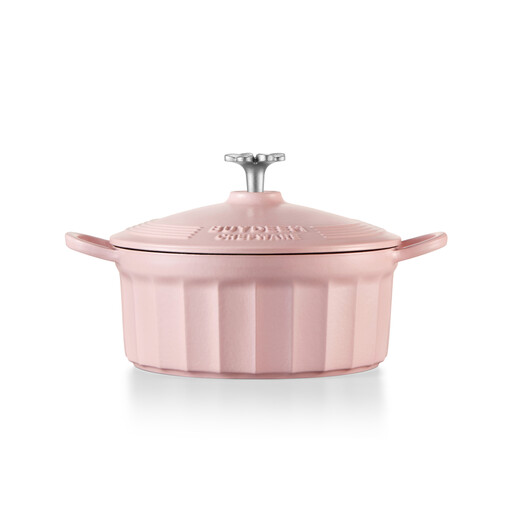
Why this product suits the profile: With a capacity of 2.9 litres and a diameter of 22 cm, this model is designed for smaller households and modest portions. It is suitable for slow-cooked dishes, soups and gentle cooking on various hob types, including induction.
The product details clearly specify the material, capacity, compatible hob types and care instructions. This makes it easier to check its suitability against your own kitchen before buying.
Enamelled cast iron, a tightly fitting domed lid and compatibility with gas, induction, electric, halogen and ceramic hobs.
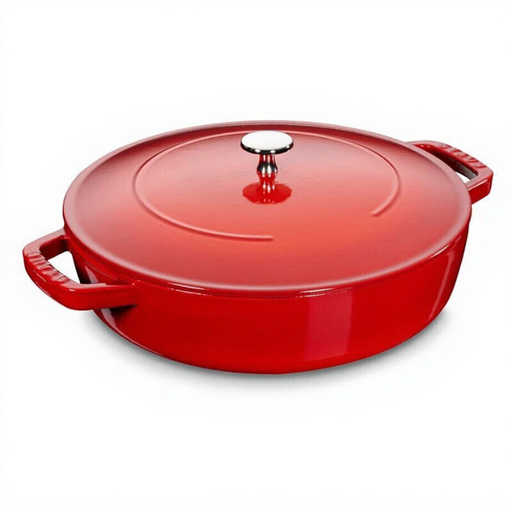
Why this product suits the profile: This 24 cm cocotte combines a compact 2.4-litre capacity with an enamelled interior and a Chistera lid. It is well suited to French-inspired slow-cooked dishes for smaller households.
The specifications state that it can be used in the oven up to 250 °C, is suitable for induction and can be cleaned by hand or in the dishwasher. This makes the temperature and care limits easy to understand.
2.4-litre capacity, enamelled cast iron and a lid with an integrated condensation structure.
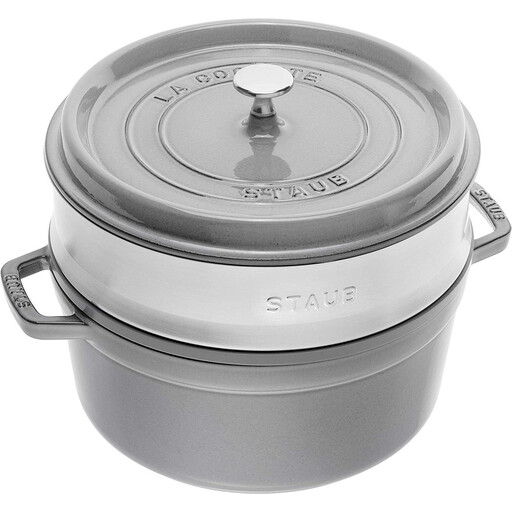
Why this product suits the profile: This model combines roasting, slow cooking and steaming. Its 5.2-litre capacity is suitable for larger portions, family meals or preparing several components at once.
Its special purpose is clearly defined: a stainless-steel steamer insert is part of the design. This means you do not need to plan for separate accessories for this cooking method.
5.2-litre capacity, 304 stainless-steel steamer insert and suitability for induction, gas and ovens up to 250 °C.
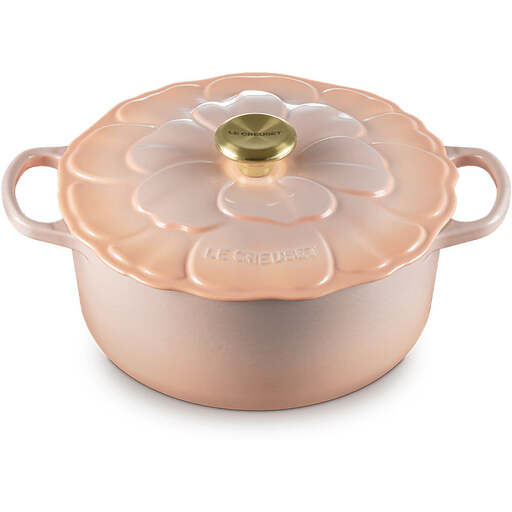
Why this product suits the profile: Its size is ideal for slow-cooked dishes, soups, roasts and baking bread in larger quantities. According to the product details, the casserole can be used on all hob types, including induction, and in the oven up to 260 °C.
The stated dimensions and 5.3-litre capacity help prevent overfilling. The specified temperature limit prevents the casserole from being used outside its intended specifications.
5.3-litre capacity, enamelled cast iron, lid and oven suitability up to 260 °C.
We have put together a complete, regularly updated list of products that fully meet these strict selection criteria and the safety regulations applicable in the EU.
A few simple habits are essential for a long service life:
Many enamelled models are approved for induction. However, the product description for the specific model is decisive. The base diameter should also be suitable for the hob. A casserole often heats up slowly on induction, but then retains the heat for a long time.
For two people, around 2.4 to 3 litres is often sufficient. For four people or larger slow-cooked dishes, 4 to 5.3 litres is a good choice. A 28 cm roasting casserole can provide more cooking surface and capacity, but is usually heavier and requires a correspondingly large hob.
Its service life depends on the quality of the enamel, temperature control, cleaning and general handling. Gradual heating, avoiding thermal shock and not using metal utensils all help reduce wear. If the enamel is chipped or cracked, the cookware should no longer be used.