
Lieferung heute & morgen

Qualitätsgarantie

Willkommens-Angebote freischalten: KOSTENLOSE Lieferung | Bis zu 80 % RABATT | Kostenlose 30-Tage-JoyPlus-Testphase
App herunterladen
A cast-iron cocotte is a long-term investment for many households. The material retains heat, is ideal for slow-cooked dishes and, depending on the design, can go straight from the hob to the oven and then to the table. However, models vary considerably in capacity, weight, coating and intended use.
If you choose based solely on colour, brand name or particularly persuasive marketing claims, you can easily overlook important details. This buying guide explains what really matters when choosing a cast-iron pot with lid, a casserole dish or a cast-iron roasting dish.
For an induction-compatible pot, the product description should explicitly mention induction. Cast iron is magnetic by nature, but the shape and size of the base, as well as the manufacturer’s approval, are crucial. The base should also sit securely on ceramic and gas hobs.
Oven safety is another important consideration. It is not enough to know whether the pot can go in the oven; you should also check the maximum temperature for the pot, lid knob and handles. Specifications may state limits of 230, 240, 250 or 260 °C, for example.
A large casserole dish looks versatile, but it is often heavy and requires more storage space. A 5- or 6-litre model is better suited to family portions, soups and larger roasts. For one or two people, 1 to 2.2 litres is often sufficient.
Important: the stated capacity is not automatically the ideal filling level. You need to leave some room for stirring and slow cooking. A pot that is too small is impractical for several portions, while an oversized pot can be unnecessarily difficult to handle when cooking small quantities.
A STAUB Cocotte may be made from enamelled cast iron or ceramic, depending on the product. Ceramic models are often lighter and suitable for individual portions, baked dishes or serving. However, they are not automatically approved for use on a hob or over an open flame.
One example is the STAUB Ceramic Cocotte with a capacity of 0.7 litres. According to the product details, it is oven-safe up to 300 °C and suitable for use in the microwave, freezer and dishwasher, but it must not be used on the hob. It is therefore not the right choice for induction cooking.
An enamelled cast-iron pot combines a heavy cast-iron body with a glass-like enamel surface. As a result, seasoning is generally not required as it is with uncoated cast iron. The interior should nevertheless be cleaned with mild washing-up liquid and a soft sponge.
Look out for the following details:
Enamel can chip if knocked, dropped or exposed to sudden changes in temperature. For this reason, a hot pot should never be placed in cold water or on a cold, delicate surface.
A well-fitting, heavy lid reduces moisture loss when using a casserole dish for slow cooking. Some STAUB models have lids with special drop or self-basting structures. This design can direct condensation back into the pot. Check the specific design in the technical product details.
A lid cannot, however, compensate for unsuitable temperature control. Cast iron retains heat for a long time, so low to medium heat is sufficient for many recipes. Excessive heat can put strain on the enamel and does not automatically improve cooking results.
In addition to the diameter, consider the empty weight. According to the product details, a 28-cm pot with a capacity of 3.7 litres may weigh around 5.4 kg. It will be considerably heavier once filled with ingredients. Large, ergonomic handles and sufficient space on the hob are therefore practical selection criteria.
Before buying, check the following:
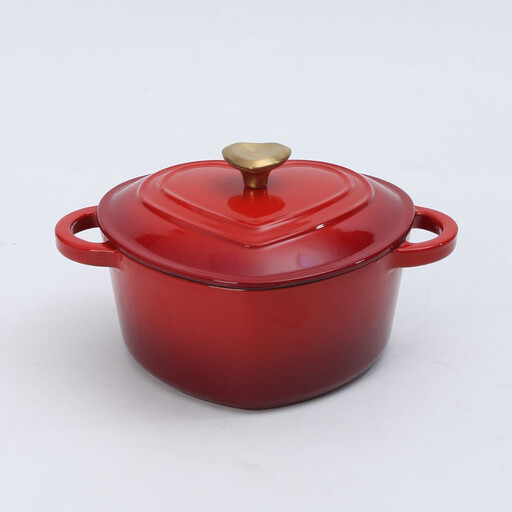
Why this product suits this profile: The 19-cm pot with lid and enamelled surface is designed for smaller slow-cooked dishes, soups and special serving occasions.
The specifications explicitly state the material, diameter, lid, hob and induction compatibility, as well as oven use.
Enamelled cast-iron body, 19-cm diameter and a design that also makes a suitable gift.
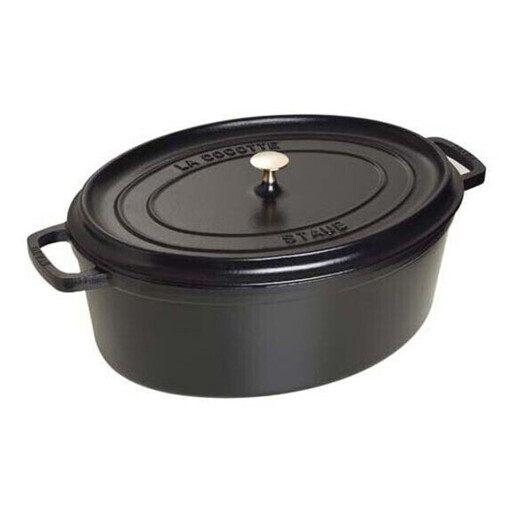
Why this product suits this profile: This compact cocotte is designed for smaller portions and combines enamelled cast iron with a lid and stated oven and induction compatibility.
The product details state a capacity of 1 l, a diameter of 17 cm and suitability for all hob types, including induction.
Compact size, enamelled interior and a lid with moisture circulation according to the product description.
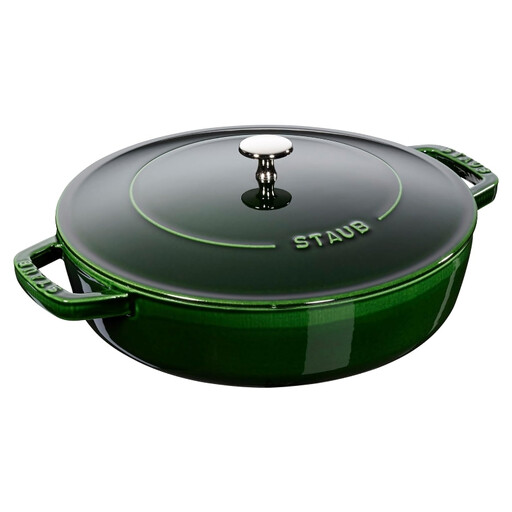
Why this product suits this profile: The 3.7-litre braiser offers a large surface for searing and is then suitable for slow-cooking meat, fish or vegetables.
Induction, hob, oven and barbecue use are listed; according to the data sheet, the maximum oven temperature is 240 °C.
3.7-litre capacity, two handles and a Chistera lid according to the product description.
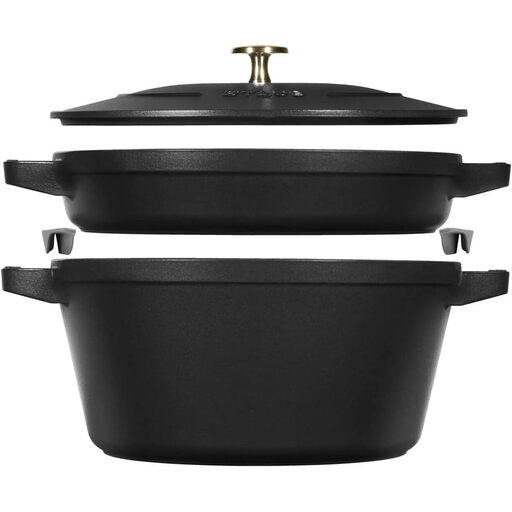
Why this product suits this profile: Its stated capacity is suitable for larger quantities of soup, slow-cooked dishes and family portions.
The product details state a capacity of 6 l, enamelled cast iron, suitability for gas, electric and induction hobs, as well as an oven temperature of up to 260 °C.
Large capacity, heavy lid with a self-basting structure and compatibility with several heat sources.
We have put together a complete, regularly updated list of products that fully meet these strict selection criteria and the safety regulations applicable in the EU.
Even a durable cast-iron roasting dish needs to be handled correctly:
With delicate hobs, lift the pot rather than sliding it across the surface. Its considerable weight can cause scratches.
Many enamelled cast-iron pots are suitable for induction. However, only the relevant manufacturer’s information is definitive. Also check that the base diameter matches the induction zone and that the pot sits securely.
For two people, around 1 to 2.2 litres is often sufficient, depending on the recipe and how much you want left over. A 1-litre model is suitable for smaller portions, while a 2.2-litre casserole dish provides more room for soup, stew or a small roast.
Its service life depends on the quality of the material, care and handling. Cast iron itself is durable, while enamel can be damaged by knocks, thermal shock and abrasive cleaning. Observing temperature limits and handling the pot carefully helps reduce typical wear and tear.