
Lieferung heute & morgen

Qualitätsgarantie

Willkommens-Angebote freischalten: KOSTENLOSE Lieferung | Bis zu 80 % RABATT | Kostenlose 30-Tage-JoyPlus-Testphase
App herunterladen
A cast iron cocotte can be used on an induction hob, in the oven and straight at the table. However, with high-quality models, the purchase price is significantly higher than that of simple saucepans. If you only pay attention to brand, colour or a promise like “suitable for every kitchen”, you can easily overlook important details.
Typical buying problems arise from:
When selecting the size, the litre capacity is not the only factor. The base area, pot height and the shape of the lid also influence how much food can fit comfortably.
As a rough guide for a cast iron pot for 2 to 6 people, consider:
A larger pot is not automatically more practical. With small quantities, the wide base area can lead to greater evaporation. Conversely, a braiser for stews that is too small quickly becomes overcrowded, causing ingredients to steam rather than sear.
An enamelled cast iron pot, unlike uncoated cast iron, generally does not require traditional seasoning. The enamel forms a sealed surface and is flavour-neutral as long as it is undamaged. However, wooden or silicone utensils should still be used on delicate surfaces.
When it comes to hob compatibility, it should be explicitly stated that the cocotte is suitable for induction, gas, electric and ceramic hobs. Particularly on induction, you should also ensure the base is flat and the diameter matches the cooking zone.
Oven safety must be considered carefully:
Cast iron heats up more slowly than thin-walled materials, but holds the temperature for a comparatively long time. This makes it suitable for searing, slow braising, baking and keeping food warm. Heat distribution also depends on the hob power, the base area and slow preheating.
A cast iron braiser with lid may be equipped with a drip or spike structure. This so-called self-basting function allows condensation to run back onto the food. This can be helpful when braising, but is no substitute for the correct ratio of liquid, time and temperature.
For cleaning, follow the manufacturer's instructions for your specific model:
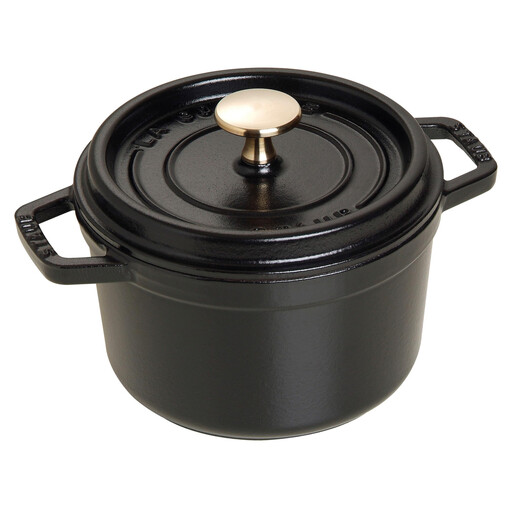
Why this product suits the profile: The compact size is sensibly proportioned for smaller households, side dishes and individual braised portions. According to the product description, the pot is suitable for all common hob types including induction, as well as for the oven.
The 1.2-litre capacity makes the usage limits clear and reduces the risk of buying a braiser that is too large and heavy for small quantities.
Enamelled cast iron, lid with drip structure and stated suitability for induction and oven.
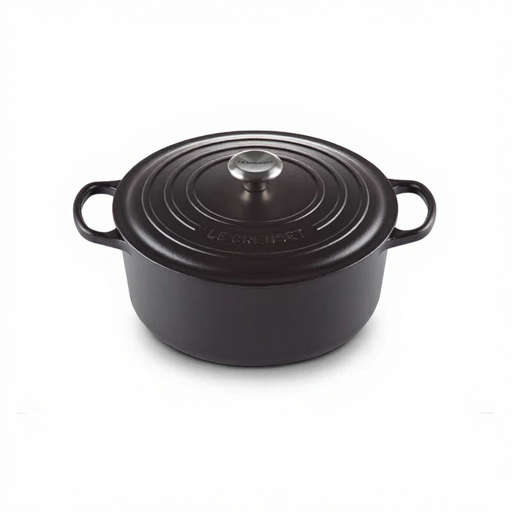
Why this product suits the profile: The 4.2-litre braiser offers space for family meals, soups, bread and braised dishes. Large handles make it easier to lift with oven gloves. According to the product description, it is suitable for induction, other hob types and the oven.
The technical specifications state the capacity, weight and dimensions. This allows you to check before buying whether the storage space, cooking zone and physical handling are suitable.
4.2 litres volume, enamelled lid, stainless steel knob and compatibility with induction, gas, electric and ceramic hobs.
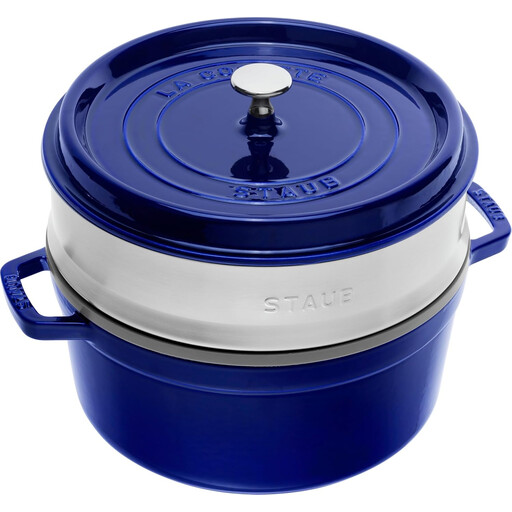
Why this product suits the profile: The large braising pot combines searing, braising and steaming. The included stainless steel steaming insert is of interest to users who want to combine several cooking methods in one piece of cookware.
The product description states the accessories, volume, temperature limit and weight. This makes it clear that the versatile design also brings a weight of 6.67 kg.
5.2 litres capacity, 304 stainless steel steaming insert, lid with drip structure and suitability for induction and oven up to 250 °C according to the product specification.
We have compiled a complete, regularly updated list of products that fully meet these strict selection criteria and the safety regulations in force in the EU.
A cocotte for induction should be heated up slowly. Prolonged high heat is usually not necessary with cast iron and can put unnecessary strain on the enamel. When cooling down, it helps to leave the pot on a heat-resistant surface first.
For daily use, these points are worth following:
Many enamelled models are suitable for induction. However, the specific manufacturer's specification is decisive. Before buying, you should also check that the base area and weight are suitable for your cooking zone and your own handling.
For two to three people, 2.2 to 2.6 litres is often sufficient. For four people and larger portions, a model with around 3.3 to 4.2 litres offers more flexibility. If you regularly cook for six people, you should consider sizes from around 5 litres.
The lifespan depends on material quality, handling and care. Cast iron is fundamentally robust, but the enamel only remains permanently intact with careful treatment. Strong impacts, sudden temperature changes and damaging cleaning agents can affect the surface. Occasional hand washing is the gentler choice for many models.