
Lieferung heute & morgen

Qualitätsgarantie

Willkommens-Angebote freischalten: KOSTENLOSE Lieferung | Bis zu 80 % RABATT | Kostenlose 30-Tage-JoyPlus-Testphase
App herunterladen
Purchasing cast iron cookware is an investment in your culinary craft. However, the market is filled with products of widely varying quality. Many home cooks invest in an expensive cast iron roaster or a cast iron skillet, only to find that the product fails to deliver the expected performance after a short time. This guide highlights the most common pitfalls and explains which technical features truly matter.
Before deciding on a model, it's crucial to be aware of common defects that often only become apparent with use.
To make an informed decision, you should carefully examine three technical aspects. These are the primary determinants of your cookware's performance and lifespan.
The enamel coating protects the cast iron from rust and simplifies cleaning. There are two basic types:
Regardless of the type, a uniform thickness of the coating is critical. Pay special attention to the rims and the transition from the base to the walls, as this is where thin spots are most likely to occur.
Being induction-compatible is a standard requirement today. Cast iron is naturally magnetic, but its efficiency depends on the construction of the base. A thick, perfectly flat base is essential. It ensures maximum contact with the cooktop, stable heat retention, and even heat distribution without "hot spots." A thick base also prevents the cookware from warping at high temperatures.
The lid plays a central role, especially for braised dishes. Premium manufacturers have developed special systems to make optimal use of condensation:
Here are some selected products tailored to the specific needs of cooks in the UK and Europe.
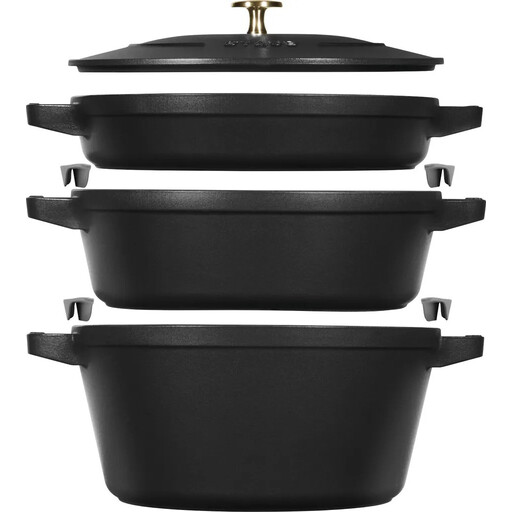
Why This Fits Their Persona: This cast iron cookware set provides a versatile foundation for ambitious cooks who want to master various techniques like searing, braising, and slow cooking at a high level.
The lid with its "Aroma Rain" function actively prevents food from drying out. The matte black enamel is renowned for its robustness and durability, resisting chipping better than inferior coatings.
The set is stackable and space-saving. The combination of a skillet, a shallow braiser, and a deep casserole covers almost every use case.
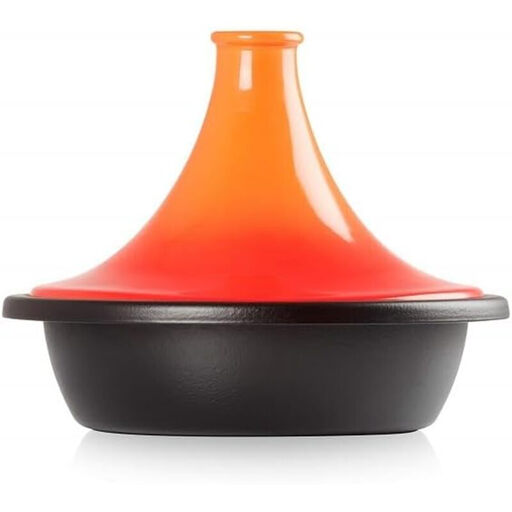
Why This Fits Their Persona: Ideal for cooks who want to prepare authentic North African stews. The cast iron tagine is specifically designed for slow, gentle cooking that preserves flavours and nutrients.
Unlike purely decorative models, this product combines a heavy cast iron base for even heat with a precisely crafted stoneware lid. This combination ensures the steam circulation characteristic of a true tagine.
The specialised design of the conical lid allows for cooking with minimal liquid and energy. The food is continuously basted by the condensing steam.
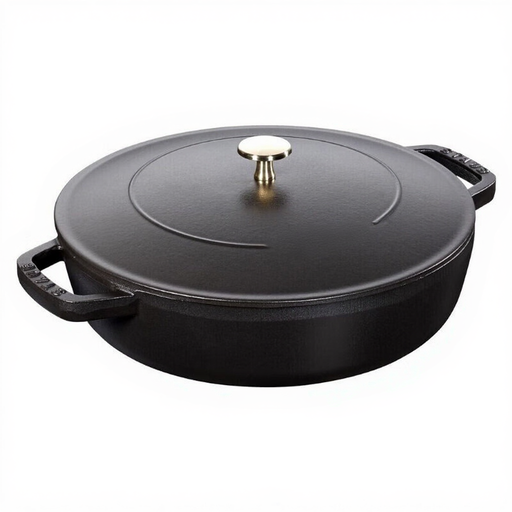
Why This Fits Their Persona: A compact yet extremely versatile cast iron casserole that serves as an entry point into cast iron cooking without compromising on quality. Ideal for smaller households (2-3 people).
This model offers the brand's premium features, like the Chistera drop-structure in the lid and a flat base, but avoids the unwieldiness and high price of an oversized roaster that is rarely used in daily life.
Full functionality of a premium casserole in a manageable size. Perfect for a variety of dishes, from soups and risottos to small pot roasts.
We have compiled a full, up-to-date list of products that fully meet these strict selection criteria and European safety regulations.
1. Is enamelled cast iron better than raw cast iron? That depends on personal preference. Enamelled cast iron is ready to use out of the box, doesn't need to be seasoned, is easier to clean, and doesn't react with acidic ingredients like tomatoes or wine. Raw cast iron, on the other hand, develops a natural non-stick patina with proper care, which many chefs prize for searing steaks, but it requires more maintenance.
2. How do I properly clean and care for my cast iron cookware? Always let the cookware cool down after use before bringing it into contact with water to avoid thermal shock and cracks in the enamel. It should be cleaned with warm water, a mild washing-up liquid, and a soft sponge. Metal scouring pads are off-limits. For stubborn stuck-on food, you can bring water to a boil in the pot. Always dry the cookware thoroughly after cleaning, especially on the un-coated rims, to prevent surface rust. Even though many products are declared dishwasher-safe, manufacturers like Le Creuset and Staub recommend hand washing to preserve the enamel's shine in the long term.
3. Will any cast iron roaster work on an induction hob? In principle, cast iron is ideal for induction due to its ferromagnetic properties. However, the crucial requirement is a completely flat and even base. Even a slightly warped or uneven base reduces the contact area, leading to very inefficient and slow heating. Always check the manufacturer's "induction-compatible" specification before buying and look for a solid, machine-flattened base.