
Lieferung heute & morgen

Qualitätsgarantie

Willkommens-Angebote freischalten: KOSTENLOSE Lieferung | Bis zu 80 % RABATT | Kostenlose 30-Tage-JoyPlus-Testphase
App herunterladen
Cast-iron cookware retains heat for a long time, works on many types of hob and can move straight from the hob to the oven or table. At the same time, it is heavier and more demanding to care for than many coated alternatives. If you focus only on terms such as “rust-resistant”, “non-stick” or “suitable for all hob types”, you could end up buying a product that does not suit your everyday cooking needs.
With an uncoated cast-iron or iron frying pan, the natural non-stick effect develops through repeated seasoning and use. Without a well-established patina, eggs, fish and starchy foods may initially stick. This works differently from an industrial non-stick coating.
Regular oiling is also essential with a carbon-steel frying pan. If you are looking for a completely maintenance-free pan, consider an enamelled option or another ovenproof piece of cookware with a suitable internal coating.
Cast iron is generally magnetic and can therefore often be used as induction-compatible cookware. However, what matters is the flat base, the diameter of the contact surface and the condition of the induction hob. An uneven or rough base can place greater strain on delicate glass surfaces.
With smaller models, the hob’s automatic pan detection may respond differently. A 10 cm mini cast-iron frying pan is designed for small portions and is not automatically ideal for every large induction zone.
Uncoated cast iron and iron do not respond well to moisture. Prolonged soaking, the dishwasher or putting the cookware away while damp can encourage rust. Claims such as “rust-resistant” should therefore be read carefully: a special surface treatment may reduce the maintenance required, but it does not replace drying and occasional oiling.
Minor casting imperfections, such as shallow indentations or sand spots, can occur in cast iron. Sharp edges, cracks, a noticeably warped base or damaged enamel are more important when deciding whether to buy.
A large cast-iron casserole dish with a capacity of 3 to 4 litres is suitable for several portions, but requires sufficient storage space and a sturdy surface. A 22 cm pot holding around 3 litres is suitable for soups, braised dishes and side dishes for smaller households. A 12 cm or 16 cm model with a capacity of around 400 ml is better suited to individual portions, gratins or serving.
Do not underestimate the weight: a solid pot with a lid can be difficult to move once full. If you regularly transfer cookware from the hob to the oven, sturdy handles and heat-resistant oven gloves are essential.
Check the relevant product’s specifications separately for gas, electric, ceramic, induction, oven and grill use. A wooden handle may remain comfortable to hold on the hob, but could have limited oven suitability. With enamelled cookware, the permitted maximum temperature and guidance on sudden temperature changes are also important.
Uncoated models should be cleaned by hand, dried immediately and rubbed with a thin layer of cooking oil. Enamelled pots can usually be cleaned with mild washing-up liquid and a soft sponge. Abrasive cleaners and aggressive metal brushes can damage the surface.
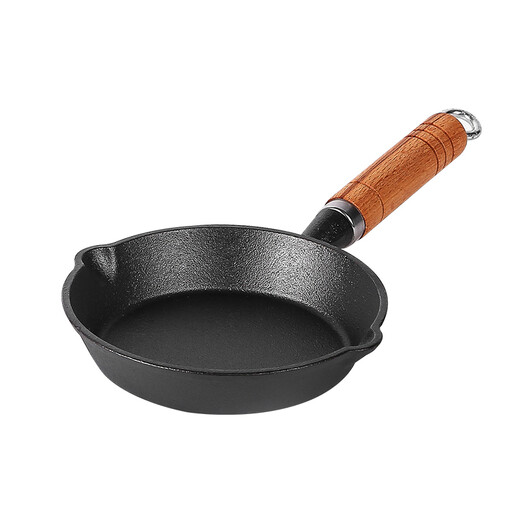
Why this product suits this profile: This compact mini cast-iron frying pan is designed for individual portions, butter, sauces, eggs or small side dishes. According to the product details, it is suitable for gas, electric, ceramic, induction and oven use; check the wooden handle’s temperature limit before using it in the oven.
The small diameter makes its intended use clear. The uncoated surface is not presented as an instantly non-stick pan and requires seasoning as well as careful drying.
10 cm diameter, wooden handle and uncoated cast iron. Hand washing and oiling are required.
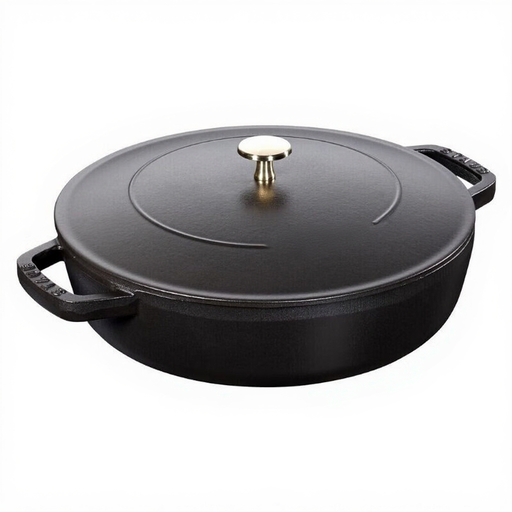
Why this product suits this profile: This enamelled cast-iron pot is designed for larger braised dishes, soups and roasts. According to the product description, it is suitable for all hob types, including induction, as well as for use in the oven and on the grill; the stated maximum temperature is 260 °C.
The 3.7-litre capacity helps you plan portions realistically. The enamel reduces the maintenance required compared with uncoated cast iron, although hand washing is still recommended.
28 cm diameter, 3.7 l capacity and a lid with Chistera design for returning condensation, according to the product details.
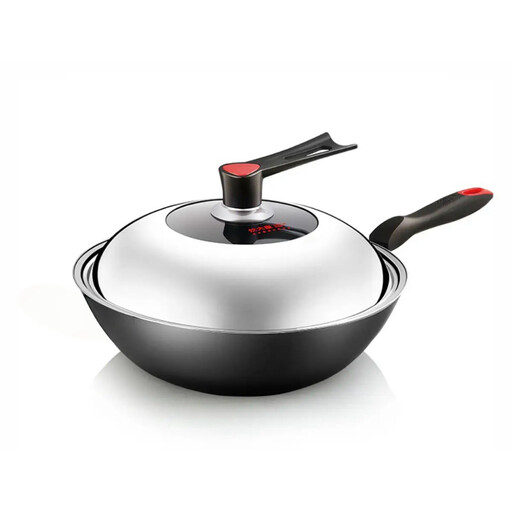
Why this product suits this profile: This 30 cm wok is aimed at households wanting to prepare Asian dishes, sear food at high heat, braise or steam. The product details describe the material as both cast iron and carbon steel; check this information in the current retailer details before buying.
The care instructions expressly specify hand washing, immediate drying and regular oiling. This makes it clear that “rust-resistant” does not mean completely maintenance-free.
30 cm diameter, glass lid and intended use for stir-frying, braising and steaming; according to the product details, it is suitable for gas hobs.
With an uncoated cast-iron frying pan, follow the manufacturer’s instructions before first use, clean the pan, dry it thoroughly and rub it with a thin layer of oil. Moderate preheating helps when cooking. Adding very cold oil to a heavily heated pan or plunging a hot pan straight into cold water can put strain on the material and surface.
After use, hot water and a suitable brush are often enough. The pan should then be dried completely, either over a low heat or with a cloth. A thin layer of oil protects it during storage. Highly acidic or very salty foods should not be left in uncoated cast iron for long periods.
Enamelled cookware is generally easier to use day to day, but it remains heavy and should be protected from knocks. If the enamel is damaged, stop using the product until its suitability has been clarified.
We have put together a complete, regularly updated list of products that fully meet these strict selection criteria and the safety regulations applicable in the EU.
Many cast-iron pots and frying pans work on induction hobs. Nevertheless, check the specific manufacturer’s information, the diameter of the base and how flat it is. Some hobs may not reliably detect small frying pans.
Clean the pan quickly with hot water wherever possible, dry it immediately and apply a very thin layer of oil. It should not be left standing in water or stored while damp. If light rust appears, clean the surface and then season it again.
An enamelled cast-iron pot generally requires less seasoning and maintenance. An uncoated cast-iron frying pan, on the other hand, develops a patina that changes with use and is particularly suitable for anyone happy to incorporate regular drying and oiling into their kitchen routine.