
Lieferung heute & morgen

Qualitätsgarantie

Willkommens-Angebote freischalten: KOSTENLOSE Lieferung | Bis zu 80 % RABATT | Kostenlose 30-Tage-JoyPlus-Testphase
App herunterladen
A cast iron Dutch oven is more than just a piece of cookware; it's an investment for years to come and the centerpiece for countless successful dishes, from hearty stews to crusty, homemade bread. But the market is flooded with products whose marketing promises often fall short. Before you make a decision, it's crucial to understand the common pitfalls that can lead to disappointment and buyer's remorse.
As your Joybuy Product Recommendation Officer, I'll help you define objective criteria for your selection. We'll focus on the facts that truly matter and steer clear of the most frequent defects.
The 3 Most Common Defects in Cast Iron Pots:
To avoid a bad purchase, you should focus your attention on a few crucial technical parameters. These define the performance and longevity of your future Dutch oven.
An enameled cast iron roaster offers significant everyday advantages over its raw counterpart. The enamel layer protects the iron from rust, makes cleaning significantly easier, and prevents acidic foods like tomatoes or wine from reacting with the metal. Look for a smooth, even coating, both inside and out. A light-colored interior enamel makes it easier to monitor the browning of your food.
Size is a critical factor. A 24 cm cast iron pot with a volume of about 4 liters is a versatile choice for a household of three to four people. For singles or couples, a smaller model around 20-22 cm is often sufficient. Oval roasters are particularly well-suited for longer items like a whole chicken or a roast, while round pots offer more even heat distribution on the stovetop.
A heavy, tight-fitting lid is not a luxury, but a necessity. Some lids feature a special texture on the inside (a "self-basting" function) that allows condensed steam to drip back evenly onto the food, keeping it moist. If you're looking for an oven-safe Dutch oven, especially to use a cast iron pot for baking bread, the lid knob must also be heat-resistant. Metal knobs are often a safer choice here compared to plastic ones, which can quickly reach their temperature limit at high baking temperatures.
For use on modern cooktops, a cast iron pot for induction with a perfectly flat base is essential. This is the only way to ensure full contact with the cooking surface, which guarantees efficient and even energy transfer. Carefully check the product description for explicit information about compatibility with all cooktop types, including induction.
Instead of making a one-size-fits-all recommendation, we have identified products tailored to specific user profiles and requirements.
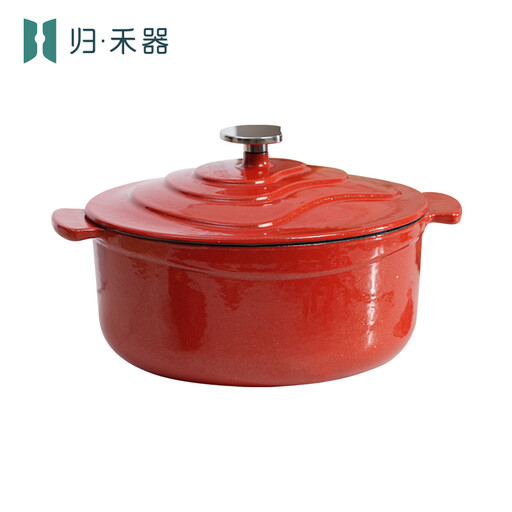
Why This Fits Their Persona: Ideal for 2- to 3-person households looking for a functional and visually appealing pot for daily use. The colorful design makes it a showstopper that can be brought directly from the stove to the table.
The solid construction and well-fitting lid ensure reliable braising performance, while the even enamel coating minimizes the risk of chipping.
Compact 3.3-liter volume. Compatible with induction cooktops thanks to its flat base.
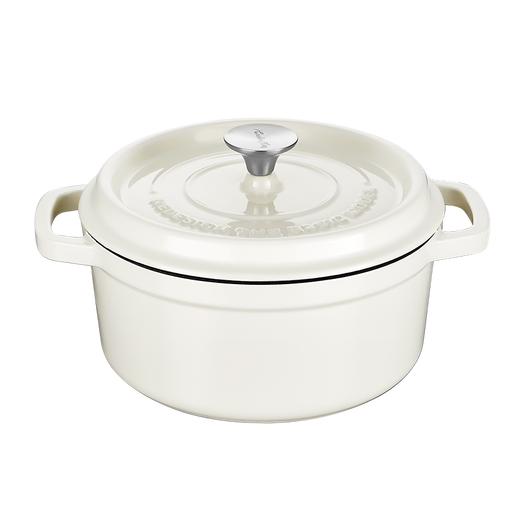
Why This Fits Their Persona: For anyone who primarily uses their Dutch oven for baking bread. The heavy-duty construction optimally retains the high heat of the oven, and the tight-fitting lid traps steam—the prerequisite for an excellent crust and an airy crumb.
This model is explicitly designed to be oven-safe and heat-resistant. Its robust build withstands the high temperatures required for bread baking without damaging the enamel.
Excellent heat retention for maximum oven spring. The 24 cm size is ideal for standard loaves of bread.
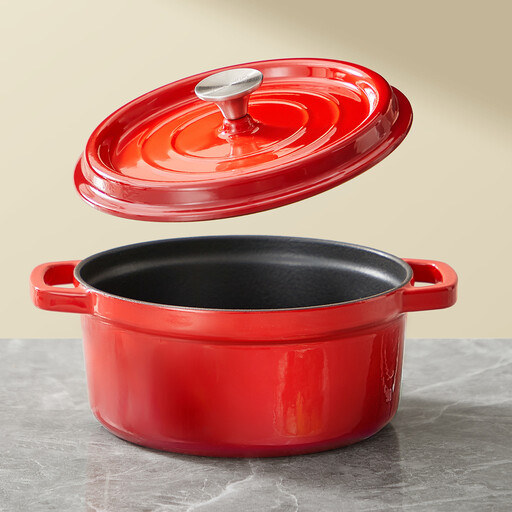
Why This Fits Their Persona: Anyone who regularly cooks for family or guests needs a reliable pot with sufficient volume. This 24 cm model offers the capacity and thermal properties for goulash, roasts, or large stews.
The heavy cast iron construction ensures very even heat distribution and retention, which prevents scorching and guarantees a perfectly cooked result, even with large quantities.
Long heat retention keeps food hot until serving. The durable enamel is easy to clean and long-lasting.
We've compiled a complete, up-to-date list of products that fully meet these strict selection criteria and German safety regulations.
Care is straightforward. Let the pot cool down after use to avoid thermal shock. Clean it by hand with warm water, dish soap, and a soft sponge. Avoid steel wool or abrasive scouring pads, as these can damage the enamel. For stubborn, stuck-on food, you can bring a little water and baking soda to a brief boil in the pot.
Yes, for many bread recipes, it's ideal. The heavy cast iron retains oven heat extremely well and transfers it evenly to the dough. The tight-fitting lid traps the steam from the dough, which creates a strong oven spring (the rise of the bread) and a moist crumb during the first 20 minutes of baking. Removing the lid for the remaining baking time produces a wonderfully crispy crust.
For a family of four, a round 24 cm cast iron pot with a capacity of about 4 to 5 liters is generally an excellent choice. It offers enough space for stews, soups, or a braised dish without taking up too much room on the stovetop. If you frequently prepare large roasts or whole poultry, an oval roaster with a 5 to 6-liter volume can be a sensible addition.