
Lieferung heute & morgen

Qualitätsgarantie

Willkommens-Angebote freischalten: KOSTENLOSE Lieferung | Bis zu 80 % RABATT | Kostenlose 30-Tage-JoyPlus-Testphase
App herunterladen
For many passionate home cooks, a cast iron Dutch oven is a cornerstone of the kitchen. It enables the slow cooking of food, which leads to exceptionally tender and flavourful results. However, choosing the right model can be a challenge given the variety of sizes, shapes, and brands. This article provides an objective guide and presents a selection of models to make your decision easier.
The decision to buy a cast iron roaster should be based on objective criteria. Three key aspects should be considered.
Most cast iron pots on the market are enamelled. An enamelled Dutch oven offers several advantages:
Uncoated cast iron pots develop a natural non-stick layer (patina) over time but require more careful maintenance to prevent rust.
The right size depends on your household size and typical cooking quantities.
A round cast iron pot is a versatile classic. It heats evenly on round hobs and is excellent for soups, stews, and even as a pot for baking bread. Oval roasters are advantageous for longer items like whole chickens or fish.
A modern cast iron pot should be versatile. Pay attention to its suitability for all hob types, especially if you need an induction-compatible Dutch oven. Cast iron is naturally magnetic and therefore ideal for induction cooktops.
It is also important that the pot is an oven-safe roaster. Check the maximum heat resistance of the entire pot, including the lid and handle. The lid knob, in particular, may have a lower temperature limit, which is relevant when baking bread at high temperatures.
Based on the criteria mentioned, we have compiled a selection of models that stand out for their material quality and functionality.
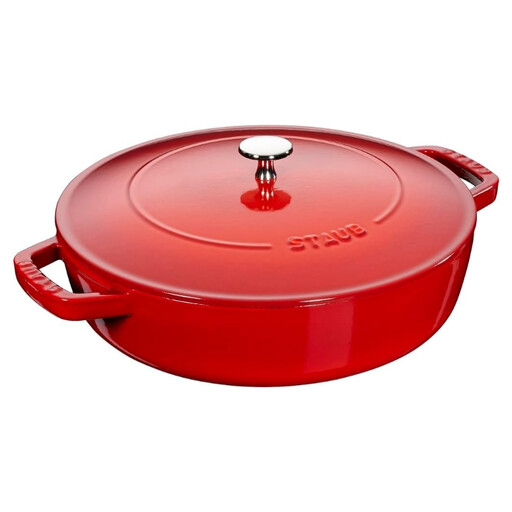
Why it stands out This Staub pot is distinguished by the special "Chistera Drop-Structure" inside the lid. According to the manufacturer, this ensures that condensation drips evenly back onto the food, leading to exceptionally moist results. The robust interior enamel is designed for high-heat searing and slow braising.
Advantages
Who it's for This model is an excellent choice for households of 3 to 4 people looking for a versatile and durable Dutch oven for preparing roasts, stews, and larger dishes.
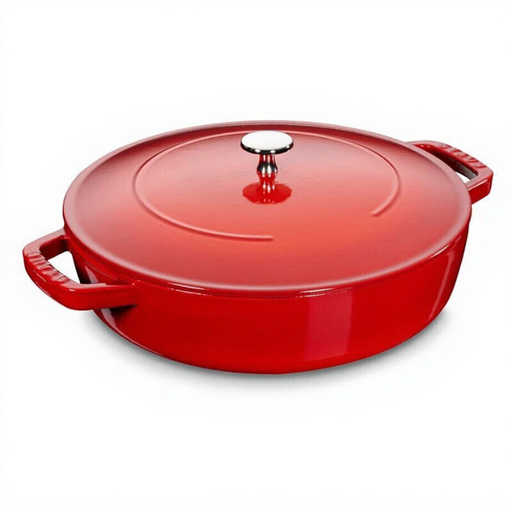
Why it stands out As a more compact version, this cast iron pot offers the same material properties as the larger model, including the Chistera structure in the lid for continuous basting. Its size makes it easy to handle and ideal for everyday use.
Advantages
Who it's for Ideal for smaller households of 1 to 2 people or for preparing side dishes, smaller casseroles, or baking bread.
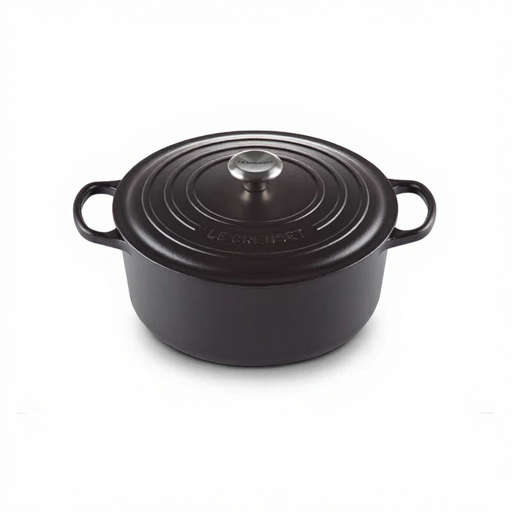
Why it stands out The Le Creuset roaster is renowned for its classic design and high functionality. With a 24 cm diameter, this model offers a considerable 4.2-litre capacity. The light-coloured interior enamel makes it easy to monitor the browning process while searing. The stainless steel knob is heat-resistant at any temperature.
Advantages
Who it's for This model is perfect for cooks who need a large capacity within a compact 24 cm diameter. It is an excellent choice for preparing soups, stews, and for baking bread at high temperatures.
A Dutch oven is just one of many ways to enjoy the benefits of cast iron in your kitchen. If the models presented don't exactly match what you're looking for, or if you're interested in other products made from this material, you can find more alternatives in our collection.
Discover our full range of cast iron pans and pots
Yes, a cast iron Dutch oven is very well-suited for baking bread. The material stores heat exceptionally well and releases it evenly to the dough, resulting in a crispy crust and a moist crumb. The closed lid also creates steam, which ensures a good oven spring.
Cleaning is straightforward. Let the pot cool down after use to avoid thermal shock. It can then be cleaned with warm water, mild washing-up liquid, and a soft sponge. Many models are dishwasher-safe, but hand washing is often recommended to protect the enamel.
The terms are often used interchangeably. In English, Dutch oven is the most common name for a heavy, lidded pot, usually made of cast iron, used for roasting and braising in the oven or on the hob. Roaster and casserole dish are also used. Cocotte is the French term for it and is frequently used by brands like Staub and Le Creuset to describe their products.