
Lieferung heute & morgen

Qualitätsgarantie

Willkommens-Angebote freischalten: KOSTENLOSE Lieferung | Bis zu 80 % RABATT | Kostenlose 30-Tage-JoyPlus-Testphase
App herunterladen
A cast iron Dutch oven is more than just a pot; it's a versatile culinary tool that can last for generations. Whether for a hearty Sunday roast, a slow-braised goulash, or even baking bread, its ability to retain and distribute heat evenly is virtually irreplaceable in the kitchen. However, given the variety of shapes, sizes, and brands, making the right choice can be a challenge.
This guide serves as your objective resource. We will walk you through the key criteria for selection and present a curated list of models to help you find a cast iron pot that meets your cooking needs and aesthetic preferences.
To make an informed decision, you should consider a few fundamental features. These factors determine not only the cooking results but also the durability and handling of your new cookware.
The heart of every Dutch oven is its cast iron construction. It is characterized by excellent heat retention, meaning that once heated, it holds a consistent temperature for a long time—perfect for braising at low temperatures.
Most modern cast iron Dutch ovens are enamelled. An enamelled cast iron pot offers several advantages:
The color of the interior enamel is also a functional feature. A light, sand-colored interior, often found in a Le Creuset Dutch oven, makes it easier to monitor the browning process. In contrast, a dark, matte enamel, characteristic of a Staub pot, promotes a robust sear and helps mask any potential stains from browning.
Choosing the right size depends on your household size and typical cooking quantities. As a rule of thumb:
The shape is also crucial. Round Dutch ovens are excellent for soups, stews, and baking bread. Oval models offer the advantage of better accommodating longer cuts of meat, like a whole chicken or a roast.
A heavy, tight-fitting lid is essential to lock in moisture and flavor. Some manufacturers, such as Staub, integrate special textures on the underside of the lid that evenly distribute condensed water over the food, continuously basting it.
A modern cast iron Dutch oven should be versatile. Check whether your desired model is suitable for all cooktop types. Thanks to its magnetic properties, cast iron is inherently an ideal Dutch oven for induction. Nevertheless, it is advisable to check the manufacturer's specifications. Also, pay attention to the heat resistance of the handles and the lid knob, especially if the pot will be frequently used in the oven at high temperatures.
Here is a curated selection of models that stand out for their material quality, functionality, and design.
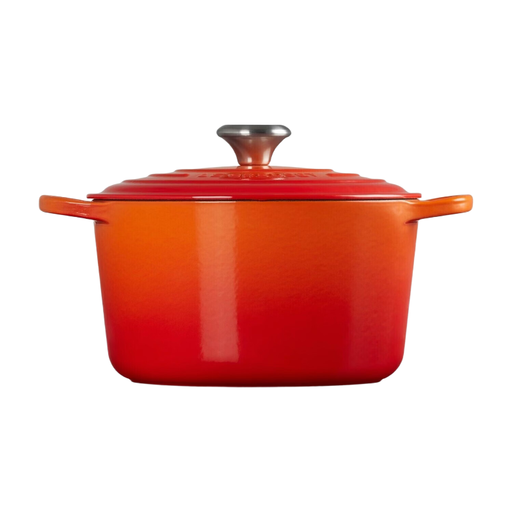
What makes it stand out: This handcrafted French oven, made in France, is a true classic. The 24 cm model, with a capacity of approximately 5 litres, is designed for a wide variety of dishes. The light, sand-colored interior enamel is durable and makes cleaning and monitoring the cooking process easy. The exterior enamel is renowned for its durability and vibrant colors.
Advantages:
Who it's for: This model is a great choice for home cooks looking for a versatile and durable all-rounder for stews, soups, roasts, and baking bread. The size is ideal for households of 3 to 5 people.
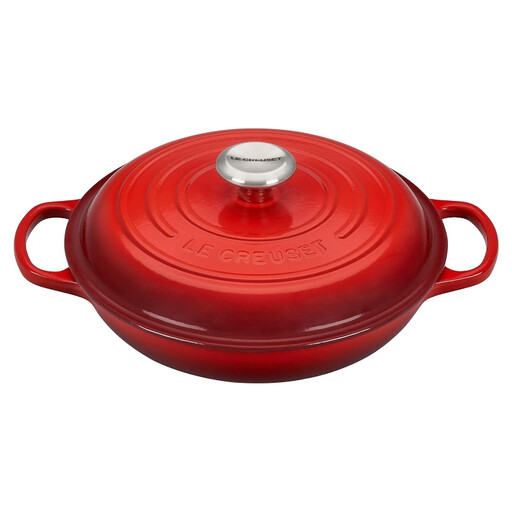
What makes it stand out: With its shallower shape and a 26 cm diameter, this braiser is particularly well-suited for dishes that require a large surface area for searing or baking. Its 2.2-litre capacity makes it a specialist for braises, gratins, paella, or as an elegant serving dish to go directly from stove to table.
Advantages:
Who it's for: Perfect for smaller households or as a complementary piece for cooks who need a specialized vessel for dishes like risotto, roasted potatoes, or baked casseroles that also serves as an attractive serving dish.
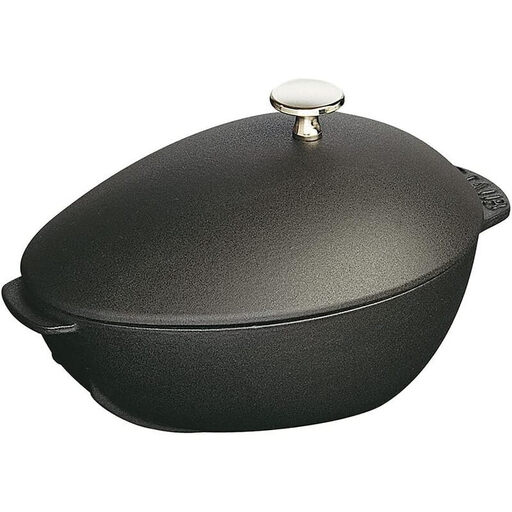
What makes it stand out: This Staub pot is specially designed for preparing mussels. A unique feature is the integrated stainless steel insert that holds the mussels in the pot while allowing you to easily pour out the broth. The matte black interior enamel is known for its durability and for promoting excellent browning.
Advantages:
Who it's for: A must-have for seafood lovers, especially those who enjoy mussels. Due to its compact 1.89-litre size, it also works well as a small cast iron Dutch oven for single or two-person households.
A cast iron Dutch oven is a specific choice for certain cooking styles. If you are looking for lighter alternatives or different materials, there is a wide variety of other options available.
Explore our wide range of cookware. Check out our collection of Ceramic-Coated Pots to find more options.
An enamelled cast iron pot does not require seasoning. Care is straightforward:
Cast iron is naturally ferromagnetic, making it ideal for induction cooktops. Nearly every modern, high-quality Dutch oven for induction is designated as such. However, it is always wise to check the manufacturer's product description to ensure compatibility. A flat base is important for optimal contact with the cooktop.
Both brands produce high-quality, tight-fitting lids, but their designs differ in one key detail. Le Creuset Dutch ovens typically have a smooth interior on their lids. In contrast, many Staub pot lids are equipped with small nubs (so-called "picots") or a drip-ring structure. According to the manufacturer, this design ensures that condensed steam drips back evenly onto the food, continuously basting it throughout the entire braising process.