
Lieferung heute & morgen

Qualitätsgarantie

Willkommens-Angebote freischalten: KOSTENLOSE Lieferung | Bis zu 80 % RABATT | Kostenlose 30-Tage-JoyPlus-Testphase
App herunterladen
A high-quality cast iron Dutch oven is more than just a cooking pot; it's an investment for years to come and the centrepiece for countless braised dishes, roasts, and even homemade bread. However, the market is flooded with options, and their quality differences are often hard to spot at first glance. Before you make a decision, it's crucial to understand the common pitfalls that frequently lead to disappointment and a costly mistake.
As your Joybuy Product Recommendation Officer, I'm here to help you separate the wheat from the chaff. We'll focus on the facts and the key features that define a great Dutch oven.
To avoid these pitfalls, you should check three core parameters before buying. These define the performance and longevity of your future cast iron pot.
A true cast iron pot is heavy. This weight is a mark of quality and the basis for its ability to retain heat for a long time and release it slowly. Look for a Dutch oven that is enamelled. You can recognise a high-quality enamel by its smooth, even surface, both inside and out. A light-coloured interior enamel makes it easier to monitor the browning of your food. A multi-layered enamel coating is more resistant to scratches and chipping and often justifies a higher price.
The lid should be heavy and sit precisely on the pot's rim to minimise steam escape. Some models, like the Staub Cocotte, feature special structures on the inside of the lid that allow condensed steam to drip evenly back onto the food. Also, check if the entire Dutch oven is oven-safe. A critical point here is the lid knob: standard plastic knobs are often only heat-resistant up to about 200°C (400°F), while stainless steel or metal knobs can withstand temperatures up to 260°C (500°F). This is particularly relevant when using the Dutch oven for baking bread at high initial temperatures.
Instead of making a one-size-fits-all recommendation, we have selected products for different user profiles that meet the criteria mentioned above.
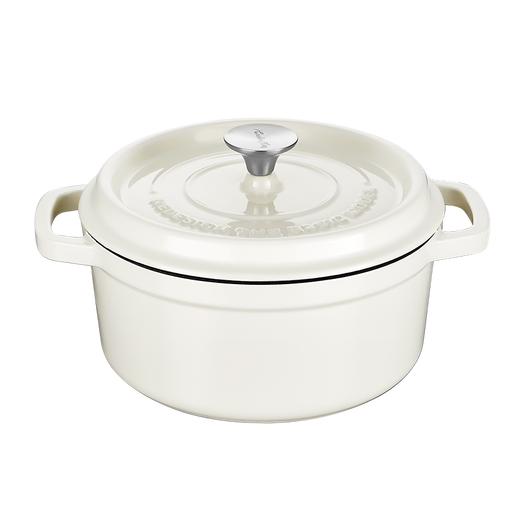
Why it's a match: Ideal for anyone looking to discover the benefits of braising in cast iron without making a large initial investment. It offers the essential features for successful braised dishes at an accessible price.
This Dutch oven relies on a traditional, heavy cast iron body, thereby avoiding the "lightweight cast iron" trap. It focuses on the core function – heat retention.
Delivers the fundamental properties of an enamelled cast iron Dutch oven, such as even heat distribution and long heat retention, at an excellent price-performance ratio.
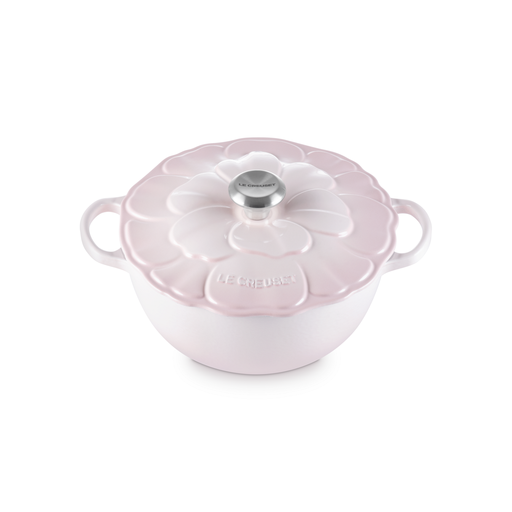
Why it's a match: For home chefs who view cookware as both an investment and a design piece. This model combines proven Le Creuset quality with an exceptional, artistic design that becomes a showstopper on any dining table.
The multi-layered, durable enamel and the precision-fit lid are the results of decades of optimisation. This actively prevents the problems of chipping enamel and escaping steam.
Made in France. The combination of a unique floral-embossed design and legendary durability makes this Le Creuset Dutch oven an heirloom piece.
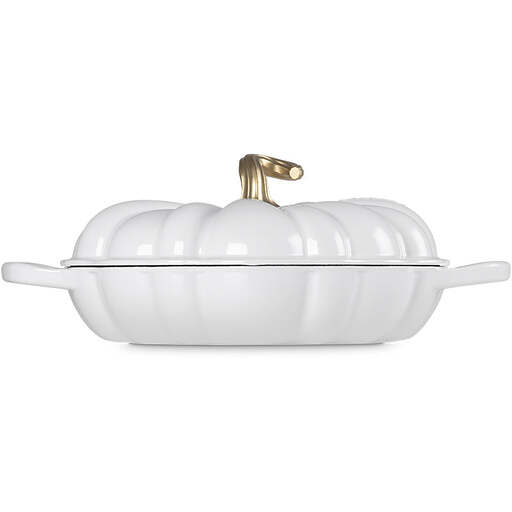
Why it's a match: Perfect for those who celebrate cooking and want to present their dishes in a spectacular way. The unique pumpkin shape is ideal for seasonal meals and becomes the centrepiece of any autumn table setting.
Despite its playful design, this is a fully functional Le Creuset Dutch oven. It features the same high-quality enamel and tight-fitting lid as the classic models, making no compromises on cooking performance.
A unique, decorative design that is ideal for serving directly from the hob to the table. Its flat, wide shape is optimal for dishes that require a large surface area, such as gratins or risotto.
Beyond cast iron, there are high-quality Dutch ovens made from other materials. Discover alternatives that also meet our strict selection criteria.
Always let the Dutch oven cool down completely after use before bringing it into contact with water to avoid thermal shock and cracks in the enamel. Soak stubborn food residue with warm water and a little washing-up liquid. Use only soft sponges or brushes for cleaning. Abrasive cleaners and steel wool will permanently damage the enamel surface. While most enamelled Dutch ovens are dishwasher-safe, hand washing is gentler on the material in the long run.
Yes, a cast iron Dutch oven is excellent for baking bread. The heavy, tight-fitting lid creates a steam-saturated environment, similar to a professional steam oven. This results in a crispy crust and a moist crumb. Preheat the pot along with the oven to give the dough a burst of heat when you place it inside, which promotes a strong oven spring.
Dutch ovens from brands like Le Creuset or Staub are often made in Europe (e.g., France) and are subject to strict quality controls. The investment is reflected in several aspects: an exceptionally durable and resistant enamel coating, a thoughtful lid design for optimal braising results, high material purity, and often a very long or lifetime warranty from the manufacturer. Whether the price is justified for you personally depends on how much value you place on this longevity, cooking performance, and design.