
Lieferung heute & morgen

Qualitätsgarantie

Willkommens-Angebote freischalten: KOSTENLOSE Lieferung | Bis zu 80 % RABATT | Kostenlose 30-Tage-JoyPlus-Testphase
App herunterladen
By a Joybuy Product Recommendation Officer, August 30, 2026
A high-quality cast iron Dutch oven is an investment for years, often even for generations. It's the cornerstone of the kitchen for braises, crispy roasts, and even as a vessel for baking bread. However, the market is flooded with products whose marketing promises often don't align with reality. Before you invest, it's crucial to know the typical pitfalls that can lead to disappointment and a costly mistake.
Two common problems frequently lead to dissatisfaction:
To avoid these issues, you should focus your attention on a few critical technical features. These determine the longevity and cooking performance of your Dutch oven.
An enamelled Dutch oven protects the cast iron from rust and simplifies cleaning. However, the quality of this coating is paramount. Look for a multi-layered, non-porous enamel finish. High-end manufacturers use complex processes to achieve this. There are two main types of interior enamel:
One feature that distinguishes a simple cast iron pot from a high-quality cocotte is the lid. A heavy, tight-fitting lid is the basic requirement. Some models go a step further by integrating a self-basting function. Manufacturers like Staub, for example, use a special drip-point structure on the inside of the lid. The rising steam condenses on these spikes and drips evenly back onto the food. This cycle keeps the food moist and intensifies the flavours without you needing to add more liquid.
A solid, thick, and perfectly flat base is essential. It ensures even heat distribution and retention, which saves energy and prevents food from burning. This is especially important for a Dutch oven for induction, as only a flat base guarantees full contact with the cooking surface and thus efficient energy transfer. Cast iron is naturally magnetic and therefore fundamentally suitable for induction hobs. However, a warped or uneven base can severely impair performance. A good oven-safe Dutch oven should also have handles that are also made of cast iron to withstand high temperatures in the oven.
Instead of making a one-size-fits-all recommendation, we have identified products that meet specific needs and adhere to the quality criteria mentioned.
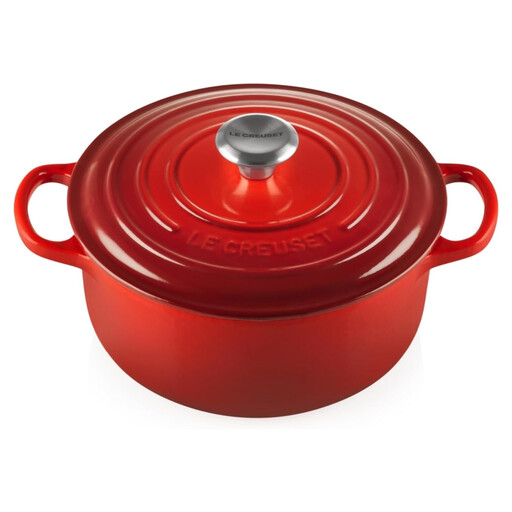
Why This Fits Their Persona: Ideal for cooks who value a trusted brand, versatility, and classic design. The pot looks as good on the hob as it does on the dining table. The light-coloured interior enamel is perfect for preparing risotto, sauces, or baking bread, as the degree of browning is easy to monitor.
The manufacturer's scratch-resistant and durable enamel is renowned for its resilience, bypassing the low-quality coating trap. The tight-fitting lid ensures a good seal.
Even heat distribution and retention. The light-coloured interior enamel simplifies cleaning and monitoring the cooking process.
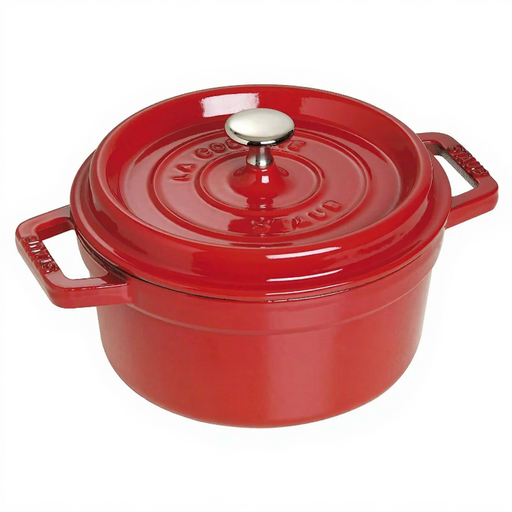
Why This Fits Their Persona: Perfect for home cooks whose passion is slow-cooking goulash, coq au vin, or pulled pork. Functionality is the priority here, aiming for maximum moisture and flavour development. The matte black enamel is ideal for high-heat searing.
The unique self-basting system with spikes in the lid, as claimed by the manufacturer, actively solves the problem of food drying out. It is the technical answer to inefficient, leaky lids.
Continuous basting of the food for exceptionally tender and juicy results. The robust, multi-layered enamel is designed for longevity.
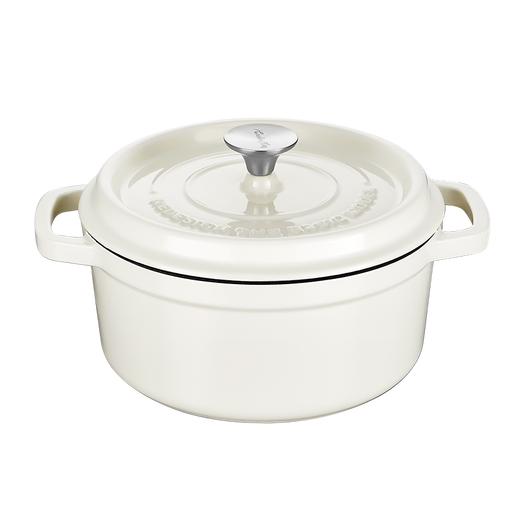
Why This Fits Their Persona: For anyone who wants to enjoy the benefits of a cast iron Dutch oven without a significant upfront investment. With a 24 cm diameter, this model offers a family-friendly size for everyday dishes like stews, soups, or a Sunday roast.
This model offers a solid cast iron construction with an enamel coating and long heat retention, serving as a functional alternative to thin-walled pots that lose heat quickly.
Delivers the fundamental benefits of cast iron—even cooking and heat retention—at an accessible price point. The 24 cm size is highly versatile.
We have compiled a complete, up-to-date list of products that fully meet these strict selection criteria and rigorous safety standards.
Always let the cast iron pot with lid cool down completely after use before cleaning to avoid thermal shock and cracks in the enamel. Clean it with warm water, a mild washing-up liquid, and a soft sponge. Avoid steel wool or harsh abrasive cleaners. Dry the pot thoroughly inside and out to prevent flash rust on any uncoated rims. Many manufacturers recommend hand washing, even if some products are declared dishwasher-safe, to maximise the longevity of the enamel.
Yes, an oven-safe Dutch oven made of cast iron is an excellent vessel for baking bread. The material retains heat extremely well and releases it evenly into the dough. The closed lid traps the steam from the dough, creating a humid baking environment. This allows for a strong oven spring and a crispy, golden-brown crust, similar to a professional steam oven.
In principle, yes. Cast iron is a ferromagnetic material and therefore reacts with the magnetic field of an induction hob. However, efficiency depends heavily on the condition of the pot's base. For optimal performance, the base must be perfectly flat to ensure maximum contact with the glass surface of the hob. Always check the manufacturer's specifications regarding suitability as a Dutch oven for induction before purchasing.