
Lieferung heute & morgen

Qualitätsgarantie

Willkommens-Angebote freischalten: KOSTENLOSE Lieferung | Bis zu 80 % RABATT | Kostenlose 30-Tage-JoyPlus-Testphase
App herunterladen
A cast iron frying pan retains heat for a long time, works with many types of hob and, depending on the design, can go straight from the hob to the oven or table. At the same time, its weight, care requirements and unclear temperature specifications can often lead to disappointing purchases. Focusing only on colour, brand name or a marketing promise such as “non-stick” means overlooking important technical details.
An enamelled cast iron frying pan has a glass-like protective coating. This makes it easier to clean and normally means it does not require seasoning like an uncoated cast iron frying pan. However, this does not automatically mean that food will not stick without fat or at every temperature.
An uncoated frying pan, such as a small cast iron frying pan with a natural surface, generally needs a well-maintained patina. If it is not dried completely after washing, rust can form. With enamelled models, metal utensils, steel wool and abrasive cleaners should be avoided to prevent damage to the surface.
The permitted oven or grill temperature does not always apply to every component. A cast iron handle can become extremely hot, while a wooden handle or plastic element may have a lower heat limit. With an ovenproof frying pan, buyers should therefore check the maximum temperature and the handle instructions separately.
Temperature changes are also important: a hot frying pan should not be plunged straight into cold water or placed on a cold, delicate surface. This can create material stresses and may damage the enamel.
A 23 cm frying pan or a 26 cm frying pan generally refers to the upper diameter. The base may be smaller. For induction hobs, it is therefore important that the base of the frying pan sits sufficiently over the cooking zone. Larger models offer more cooking space, but are often considerably heavier and require more storage space.
Cast iron does not distribute heat as quickly as thin-walled materials, but it retains heat for a long time. This is useful for searing, braising and keeping food warm. The frying pan should be preheated slowly at a medium setting; immediate maximum heat is not necessary for many models.
There are three surface types to distinguish between:
A cast iron frying pan for induction should be explicitly approved for induction hobs. Most suitable models also work on gas, electric and ceramic hobs. For use on a grill or in an oven, the temperature limits, handle material and manufacturer’s instructions must all be compatible.
A cast iron grill pan typically has ridges. These create contact lines and allow dripping fat to collect in the grooves. However, the ridges reduce the direct contact area. For eggs, sauces or very small foods, a smooth surface is often more practical.
For a single portion, a fried egg or small side dishes, a mini cast iron frying pan with a diameter of 10 to 16 cm is sufficient. A 23 cm frying pan is suitable for smaller households and serving at the table. A 26 cm model offers more room for meat, fish or vegetables, but also adds more weight.
Helper handles or two short handles make carrying easier. Long cast iron handles become hot during cooking. A suitable pan handle or oven glove is therefore essential for safe use.
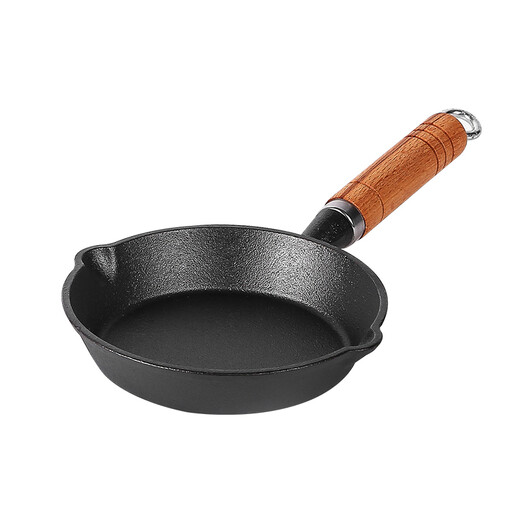
Why this product suits this profile: The compact mini frying pan is designed for single portions, butter, sauces or small side dishes and is compatible with gas, electric and induction hobs.
The uncoated surface is clearly specified. This makes it clear that seasoning, drying and applying a thin layer of oil are all part of its care.
10 cm diameter, wooden handle and compact size for small portions. Not suitable for the dishwasher.
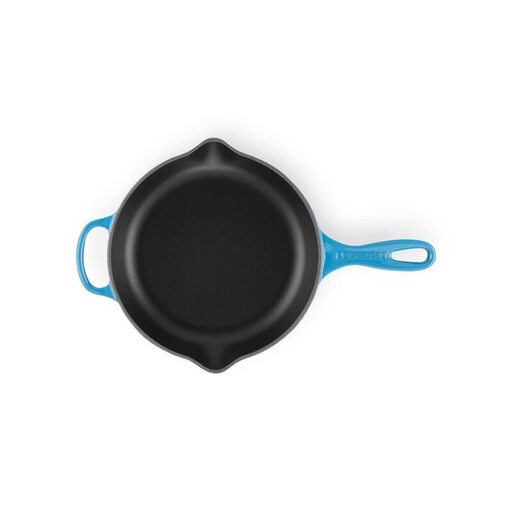
Why this product suits this profile: The enamelled design is suitable for all hob types, including induction, as well as for oven use. It also features a helper handle and pouring spouts.
The specifications state the material, 23 cm diameter, 1.93 kg weight and maximum oven temperature of 260 °C. This makes it easier to plan dishes that go from hob to oven.
Enamelled cast iron, helper handle, pouring spouts and, according to the product specifications, dishwasher suitability. Hand washing is recommended to protect the surface.
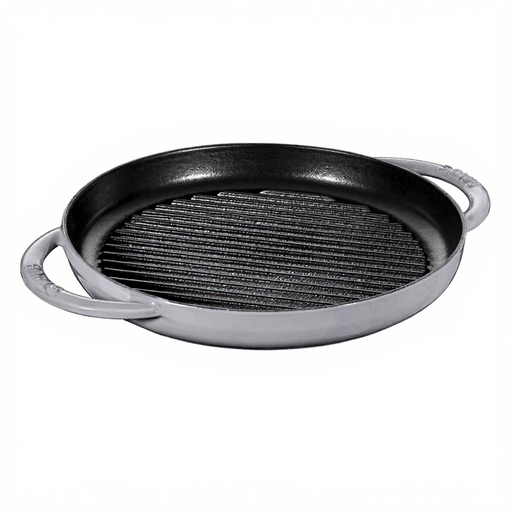
Why this product suits this profile: This cast iron grill pan has ridges, two handles and a capacity of 0.75 litres. According to the product specifications, it is suitable for hobs, induction, ovens and grills up to 260 °C.
The usage limits and handle design are clearly specified. This makes it easier to assess its suitability for grilled dishes and transporting them afterwards.
26 cm diameter, enamelled cast iron, defined grill ridges and two handles. It weighs 2.7 kg.
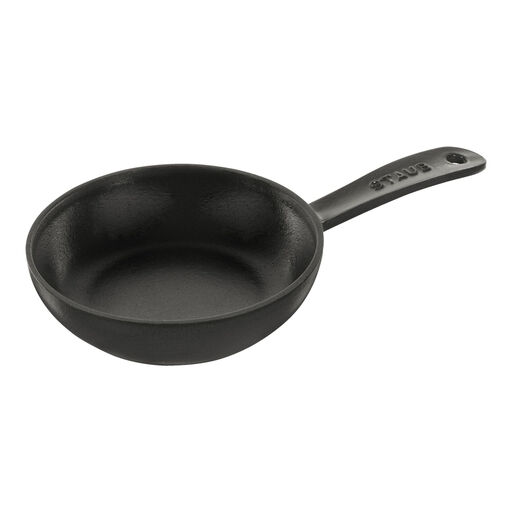
Why this product suits this profile: The compact size is ideal for tapas, side dishes and single portions. According to the product specifications, the frying pan can be used on all hob types, in the oven and on the grill.
The matt black enamel makes the surface type clear. The recommended hand washing and avoiding metal utensils reduce the risk of surface damage.
16 cm diameter, 0.60-litre capacity, induction compatibility and stackable design.
We have put together a complete, regularly updated list of products that fully meet these strict selection criteria and the safety regulations applicable in the EU.
Many models are suitable for induction, provided the manufacturer explicitly lists this hob type. You should also check the base diameter and the size of the induction zone. A very small mini frying pan may work less efficiently on a large cooking zone.
Its lifespan depends on the material, coating and care. Enamelled cast iron does not require seasoning, but should be protected from impacts, abrasive cleaners and sudden changes in temperature. With complete drying, regular care and suitable storage, uncoated cast iron can be used for many years. Rust can be removed from many uncoated models, but they must then be seasoned again.
According to the product specifications, some enamelled models are approved for dishwasher use. However, hand washing with warm water and a soft sponge is generally gentler on the surface. Uncoated cast iron frying pans should never be put in the dishwasher, as water and detergents can damage the patina and encourage rust.