
Lieferung heute & morgen

Qualitätsgarantie

Willkommens-Angebote freischalten: KOSTENLOSE Lieferung | Bis zu 80 % RABATT | Kostenlose 30-Tage-JoyPlus-Testphase
App herunterladen
A cast iron frying pan can be used on the hob, in the oven, on the barbecue and, where suitable, on an induction hob. At the same time, the material has characteristics that do not suit every household: cast iron is heavy, retains heat for a long time and responds more slowly to changes in temperature.
When buying, three common mistakes can often lead to unnecessary costs:
A traditional cast iron frying pan without enamel is usually seasoned. Oil and heat create a protective patina. This can be affected by incorrect cleaning or prolonged exposure to moisture. After washing, the pan must be dried completely and, depending on the model, lightly oiled.
An enamelled cast iron frying pan, on the other hand, has a glass-like protective coating. It is neutral in taste and is also suitable for acidic ingredients such as tomatoes or wine. Cleaning is easier, although abrasive cleaning products, steel wool and sudden temperature changes should still be avoided. If there is visible chipping, the cookware should no longer be used.
For UK households, versatile use is often a practical choice. Look for specific information on:
An ovenproof frying pan should only be used up to the stated maximum temperature. The manufacturer’s instructions are particularly important for enamelled models. Cast iron handles also become hot and require oven mitts or heat-resistant gloves.
If you often braise, reduce sauces or keep food warm, you may prefer a frying pan with a lid. A glass lid makes it easier to monitor the food, while a matching cast iron lid helps retain heat. However, not every frying or serving pan is supplied with a lid.
The size should match your portion sizes and hob:
A cast iron grill pan also requires a sufficiently large cooking zone that heats evenly. The ridges create grill marks but reduce the area in direct contact with the food. For sauces or very flat foods, a smooth stainless steel frying pan may be more suitable.
A stainless steel frying pan with a multi-layer construction, such as stainless steel–aluminium–stainless steel, is generally lighter and responds more quickly to temperature changes. It is a practical alternative for anyone who often tosses food or prefers straightforward cleaning. Without a traditional non-stick coating, however, stainless steel requires the right temperature and amount of fat to reduce sticking when cooking delicate foods.
Cast iron, by contrast, stands out for its weight and long-lasting heat retention. This is useful for searing, braising and serving. For both materials, information about the base, handle, oven temperature and cleaning is more important than general claims about durability.
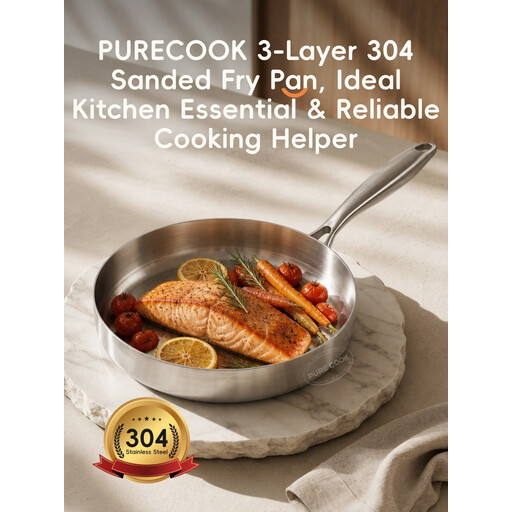
Why this product suits this profile: The 20 cm stainless steel frying pan is more compact than a large cast iron frying pan and, according to the product information, is suitable for gas, induction, ceramic and other common hobs.
The multi-layer construction with an aluminium core is explicitly described, so you do not have to rely solely on vague claims about even heat distribution.
304 stainless steel, a three-layer construction and, according to the product data, dishwasher suitability; a lid is not included.
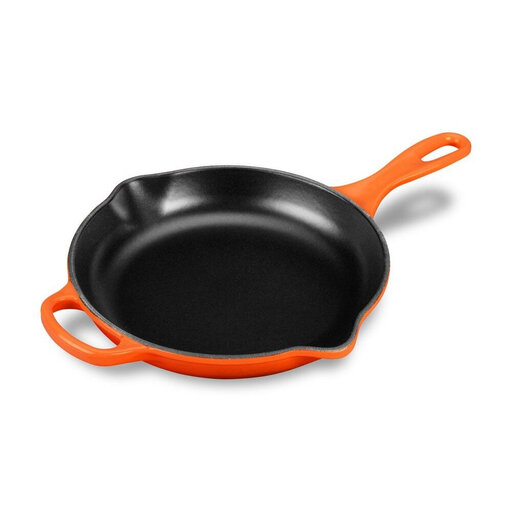
Why this product suits this profile: The enamelled 23 cm frying pan is designed for all common hob types, including induction, as well as for oven use, and has an additional handle.
The product data specifies the material, diameter, weight of 1.93 kg, additional handle and maximum oven temperature of 260 °C. These details make it easier to check the product before buying.
Enamelled cast iron, two pouring spouts, oven suitability and induction compatibility; a lid is not included.
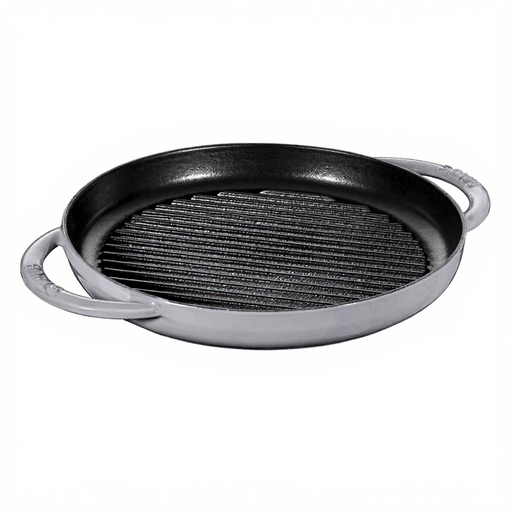
Why this product suits this profile: This enamelled cast iron grill pan has two handles and grill ridges and, according to the product information, is suitable for all hobs including induction, as well as for use in the oven and on the barbecue.
The two handles take the 2.7 kg weight into account. Its stated barbecue and oven suitability clarifies its intended use, rather than repurposing a smooth frying pan for grilled dishes.
26 cm diameter, enamelled surface, two handles and stated heat resistance up to 260 °C according to the product information.
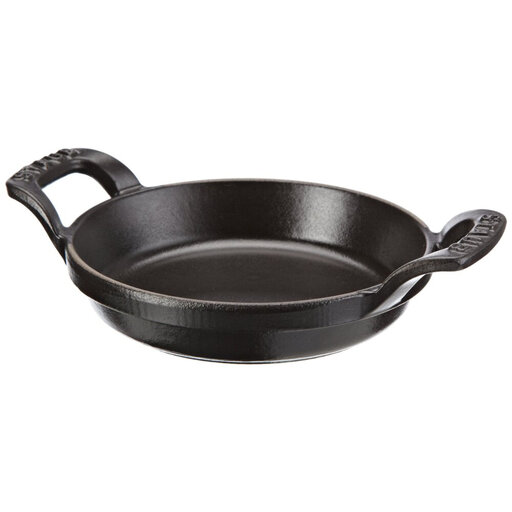
Why this product suits this profile: The compact enamelled cast iron frying pan is designed for individual portions and can be taken out of the oven or off the hob more safely thanks to its two handles.
The small diameter prevents a portion pan from taking up unnecessary storage space. The product data specifies a capacity of 0.25 l and oven suitability up to 230 °C.
12 cm diameter, stackable design, induction compatibility and enamelled surface; a lid is not included.
We have put together a complete, regularly updated list of products that fully meet these strict selection criteria and the safety regulations applicable in the EU.
As a rule, an enamelled surface does not require traditional seasoning in the same way as raw cast iron. Before first use, washing it with warm water and mild washing-up liquid is normally sufficient. The care instructions provided by the manufacturer always take priority.
Its service life depends on the material, enamel, temperature control and care. Cast iron itself is robust, while damaged enamel or a warped base can restrict further use. Avoid knocks, sudden temperature changes and aggressive cleaning products.
Cast iron generally takes longer to heat up, but then retains its heat for longer. If you warm the pan slowly over a medium setting and then reduce the temperature, you can make targeted use of its heat retention. On an induction hob, the base must sit flat and be compatible with the hob.