
Lieferung heute & morgen

Qualitätsgarantie

Willkommens-Angebote freischalten: KOSTENLOSE Lieferung | Bis zu 80 % RABATT | Kostenlose 30-Tage-JoyPlus-Testphase
App herunterladen
A cast iron frying pan is a versatile kitchen workhorse, perfect for searing, braising, baking and serving. However, models differ significantly in terms of coating, weight, maintenance and heat resistance. If you only focus on a well-known brand name or a flashy product description, you could end up buying a pan that doesn't suit your hob or everyday cooking style.
With an uncoated cast iron pan, the non-stick properties come from a layer of baked-on oil, known as seasoning. This surface needs to be built up and maintained regularly. Without sufficient preheating and the right amount of fat, food can stick more easily.
An enamelled cast iron pan, on the other hand, usually doesn't require seasoning. The enamel protects the surface, can make cleaning easier and reduces contact between food and the bare iron. However, it's not indestructible: metal utensils, abrasive cleaners and sudden temperature changes can damage the surface.
A 23 cm cast iron frying pan is suitable for smaller households, side dishes or single portions. But for several steaks or a larger one-pan meal, the diameter is limited. A small cast iron pan with a diameter of 10 to 12 cm is better suited to an egg, butter, sauces, desserts or a single side dish.
The base area is also crucial. The stated top diameter doesn't always match the actual heated surface area on your hob.
Many models are suitable as a cast iron pan for induction. Before buying, you should also check the oven temperature, grill compatibility and handle material. A wooden handle can have limitations when used in the oven, even if the pan body itself is oven-safe. Also, remember: the handle can get hot and should be handled with suitable heat protection.
An enamelled surface is a good choice if you want easier cleaning and a ready-to-use interior from the start. According to product information from STAUB, their relevant models feature a matt black enamel and are suitable for induction and the oven.
An uncoated mini cast iron pan offers a traditional surface but demands more care. The pan should be dried immediately after washing and given a thin coat of oil. Prolonged soaking or storage in a damp environment can encourage rust.
Weight should also be considered. According to product information, the round Le Creuset pan with a 23 cm diameter weighs 1.93 kg. An additional helper handle can make moving it from the hob to the oven easier at this weight.
For enamel, warm water, mild washing-up liquid and a soft sponge are a good starting point. Manufacturer instructions may also mention dishwasher suitability; however, hand washing is often recommended to protect the surface. The specific maximum temperature depends on the model. For the Le Creuset variants shown here, product information states 260 °C and 350 °C respectively. Buyers should therefore always check the details on the individual product page.
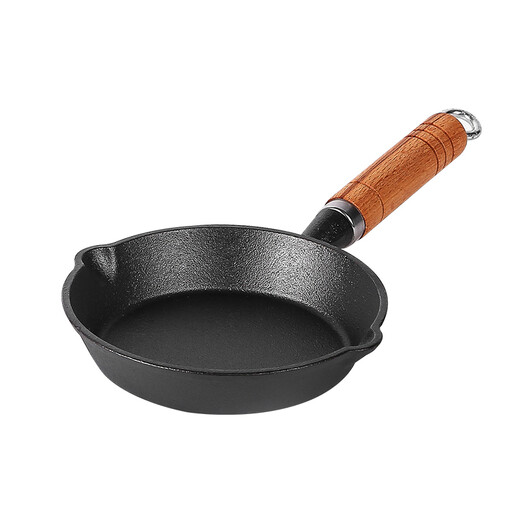
Why this product fits the profile: This compact mini frying pan made from uncoated cast iron is designed for small portions, eggs, butter or sauces, and is compatible with induction, gas and electric hobs according to product information.
The small diameter makes its intended use clear. This isn't a large everyday frying pan, but a model for single portions. Be prepared to season it and wash it by hand.
10 cm diameter, wooden handle and suitability for several hob types; intended for oven use according to product information, though the handle's heat tolerance must be considered.
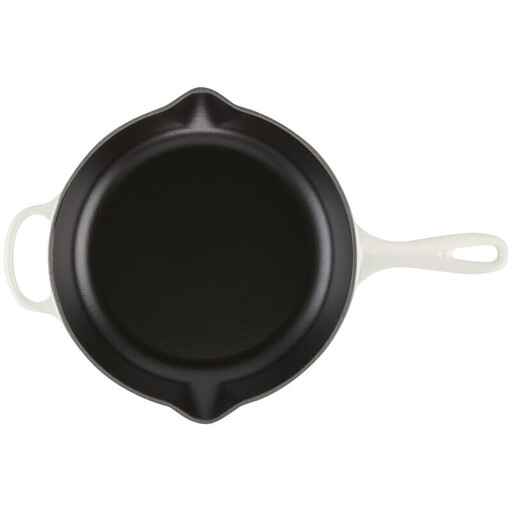
Why this product fits the profile: This enamelled cast iron pan combines a 23 cm diameter with a helper handle and pouring spouts. According to product information, it is suitable for all hob types including induction, as well as for the oven.
The technical specifications clearly state the diameter, weight, oven suitability and maximum temperature. This makes it easier to match the pan to your hob, oven and storage space.
23 cm diameter, enamelled surface, two pouring spouts and a weight of 1.93 kg according to product information.
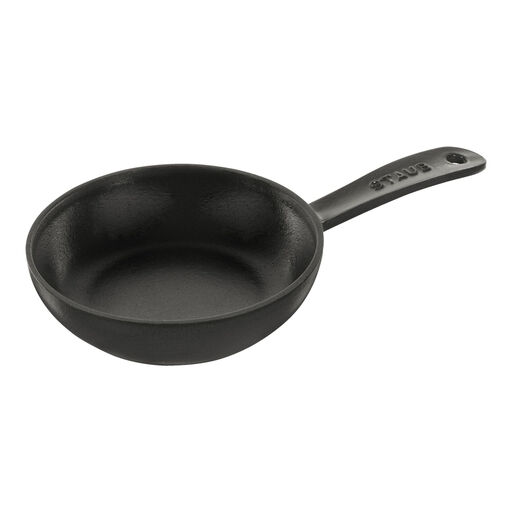
Why this product fits the profile: This 16 cm model is designed for tapas, side dishes and single portions. According to product information, it features a matt black enamel, is induction-compatible, oven and grill safe, and stackable.
Its intended use as a cooking and serving pan is clearly described. The enamel reduces the maintenance required compared to uncoated cast iron; however, metal utensils and sudden temperature changes should still be avoided.
16 cm diameter, 0.60 l capacity, 1.02 kg weight, and suitability for induction, oven and grill according to product information.
We've put together a complete, regularly updated list of products that fully meet these strict selection criteria and the safety regulations in force in the EU.
Cast iron is generally magnetic and therefore often compatible with induction hobs. What matters are the specifications of the specific model and a pan base that is as flat as possible. When placing the pan on the hob, avoid sliding it to prevent scratching the glass surface.
As a rule, an enamelled cast iron pan does not require classic seasoning. The enamel already forms the protected interior surface. An uncoated cast iron pan, on the other hand, usually needs a prepared and maintained oil layer.
The lifespan depends on material quality, coating, temperature management and care. Cast iron itself is robust, while enamel can be damaged by impacts, abrasive cleaners or thermal shock. Dry storage and following the manufacturer's instructions will help keep your pan usable for years to come.