
Lieferung heute & morgen

Qualitätsgarantie

Willkommens-Angebote freischalten: KOSTENLOSE Lieferung | Bis zu 80 % RABATT | Kostenlose 30-Tage-JoyPlus-Testphase
App herunterladen
A cast iron grill pan brings those coveted grill lines into your kitchen, works whatever the weather, and, depending on the design, can be used on both hob and in the oven. However, models vary greatly in coating, weight, care and usable cooking area. If you focus only on deep ridges or eye-catching brand wording, you could end up with a pan that’s too heavy, too small or unsuitable for your hob.
High ridges create visible lines and keep food lifted above rendered fat. That only works reliably if the pan heats evenly and the food makes sufficient contact with the ridges. A very uneven or too-small cooking surface can lead to inconsistent results with larger steaks or multiple pieces of veg.
An enamelled cast iron pan and a non-stick coated grill pan need different care. Enamel is resistant to acidic ingredients, but can be damaged by hard knocks or unsuitable metal utensils. A traditional coated grill pan helps delicate foods release easily, but should not be overheated empty and should only be used with suitable utensils.
A grill pan for induction must have a magnetic base. Cast iron is inherently suitable; with aluminium it depends on an integrated magnetic base layer. Also, not every grill pan is oven-safe. Fixed plastic or Bakelite handles may rule out oven use, while silicone or metal handles have different temperature limits depending on the product.
Cast iron holds heat for longer. That’s helpful for searing steak, fish or veg, but it calls for slow preheating over a medium heat. A heavy pan responds more slowly to changes in hob power. This can be an advantage when searing, but makes lifting and cleaning more demanding.
Enamelled cast iron usually doesn’t need traditional seasoning. With an uncoated cast iron grill pan, a light film of oil as part of regular care is important to prevent rust. After washing, the pan should be dried completely.
A grill pan with ridges should have ridges that are high enough and clearly spaced apart. This lets rendered fat collect in the grooves. Pouring spouts or side spouts make it easier to remove liquid. The ridges don’t replace temperature control: overheating can cause smoke and burnt-on residue.
For a coated surface, guidance on hand washing, dishwashing and suitable utensils is crucial. Product information should take precedence over general marketing claims.
A square grill pan often makes efficient use of the hob area and offers a predictable grilling zone. Rectangular models are ideal for longer foods such as steaks, asparagus or fish fillets. A grill pan with two handles can be lifted steadily with both hands, but takes up more storage space. A single or folding handle can be more practical in a small kitchen.
Look out for:
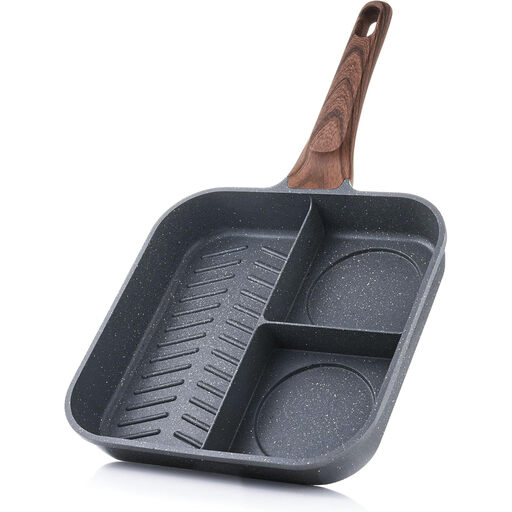
Why this product fits the profile: The compact aluminium grill pan with three sections is suitable for smaller households and a combined breakfast or quick meal on induction, gas or electric hobs.
The product details clearly state hob compatibility and hand washing. That lets you account for the lack of oven use before buying.
Three separate sections plus an ILAG non-stick coating according to the product description; the model weighs 1,41 kg.
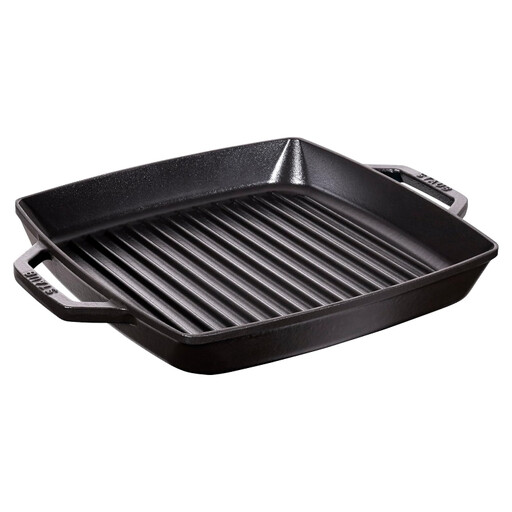
Why this product fits the profile: The enamelled cast iron pan offers a large square surface, two handles and use on all common hob types, including induction.
The product description points to slow preheating, soft utensils and hand washing. That takes into account enamel’s sensitivity to impacts and abrasion.
Enamelled cast iron, grill ridges, twin handles and oven-safe according to the product information.
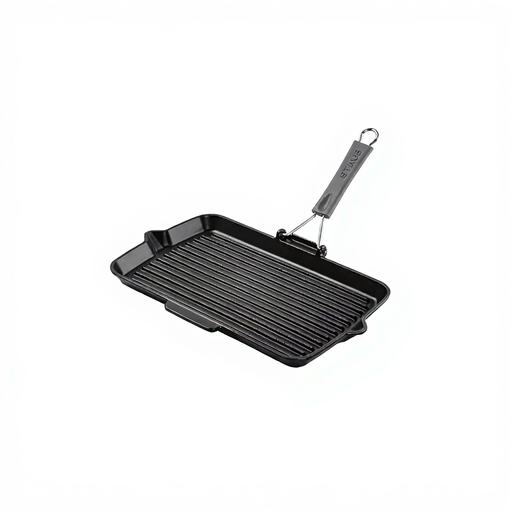
Why this product fits the profile: The elongated grill surface is designed for steak, fish fillets and vegetables. A folding silicone handle makes storage easier in smaller kitchens.
A pouring spout, fat drain and precise external dimensions help with practical planning. The product details also state suitability for induction and oven use.
Rectangular format of 34 × 21 cm, capacity of one Liter, folding handle and oven-safe according to the product description.
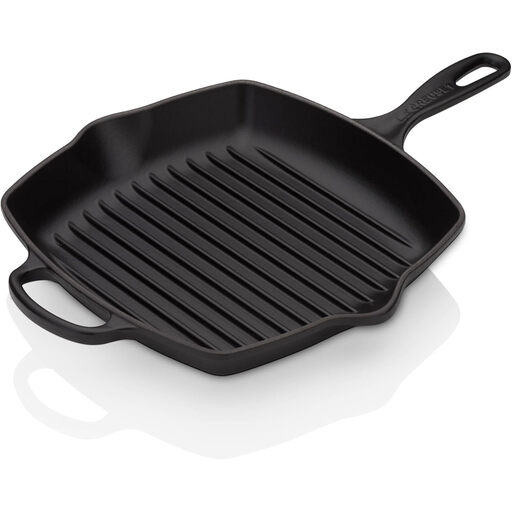
Why this product fits the profile: This model combines a square grill surface with a capacity of 1,6 Liter, making it suitable for regular meals with meat, fish and vegetables.
The details explicitly state hand washing is recommended, even though the pan is dishwasher-safe. That lets buyers weigh up care effort versus material protection.
26 cm diameter, 1,6 Liter capacity, grill ridges, pouring spouts, and suitable for hob and oven according to the product data.
We’ve put together a comprehensive, regularly updated list of products that fully meet these strict selection criteria and the safety regulations applicable in the EU.
For a grill pan for steak, gradual preheating is recommended. Add the oil shortly before the food goes in and place the meat, patted dry, on the ridges. If the pan is overcrowded, the temperature drops and you’ll get more of a braise than a proper sear.
With a grill pan for vegetables, cut ingredients as evenly as possible. Courgette, pepper, aubergine or asparagus can be grilled with little oil; delicate pieces should be moved with wooden or silicone turners.
After cooking:
A heavy cast iron pan can be used for many years if the enamel and handles aren’t damaged and the care instructions are followed. Actual lifespan depends on use, temperature, cleaning and storage.
Generally yes, provided the base sits flat and the diameter matches the cooking zone. With enamelled models and aluminium variants, check the manufacturer’s specific statement on induction.
Normally, traditional seasoning isn’t required. The enamel already forms a sealed surface. An uncoated cast iron pan, however, may need regular oil care.
Consumption depends not just on the pan but above all on hob power, preheating time, the amount of food and the temperature. Cast iron stores heat for a long time, so a lower setting is often enough once hot. Long preheating when empty should still be avoided.