
Lieferung heute & morgen

Qualitätsgarantie

Willkommens-Angebote freischalten: KOSTENLOSE Lieferung | Bis zu 80 % RABATT | Kostenlose 30-Tage-JoyPlus-Testphase
App herunterladen
A cast iron grill pan can give steaks, fish, poultry and vegetables distinctive char lines. It is also heavier than an aluminium or stainless steel pan, and needs a little more care when choosing and looking after it. If you focus only on deep ridges or a well-known brand, it’s easy to overlook important details.
A ridged grill pan creates contact lines between the food and the base of the pan. But heat retention, contact with the hob and preheating behaviour also play an important part in even browning. If the pan is too small or doesn’t sit evenly on the hob, the edges may stay cooler.
An enameled grill pan has a glass-like protective layer of enamel over the cast iron. It generally doesn’t need to be seasoned in the traditional way. By contrast, a coated grill pan made from aluminium or stainless steel may be easier to clean thanks to a ceramic or other non-stick coating, but can be more sensitive to overheating, metal utensils and abrasive sponges.
Always check the technical specifications for the individual model when it comes to claims such as “scratch-resistant”, “PFAS-free” or “dishwasher-safe”. A particular coating alone isn’t enough to draw general conclusions about health effects.
A 26 cm grill pan is handy for smaller households and individual portions. However, the ridges and shape mean the actual cooking area is smaller than the outside diameter suggests. A square or rectangular pan may provide more room for cooking several steaks. Cast iron also often weighs two to three kilograms, so the handle design and a safe place to set the pan down are important factors to consider.
Cast iron heats up relatively slowly and retains heat for a long time. This helps you sear food at high heat, but means you should preheat the pan gradually. Traditional seasoning isn’t needed with enamelled cast iron, but you should still use wooden, plastic or silicone utensils if the manufacturer recommends them.
An uncoated cast iron grill pan needs to be dried regularly and may need a thin layer of oil to prevent rust. Enameled versions are less sensitive to acidic foods. A ceramic or hybrid coating can make cleaning easier, but is usually best used over low to medium heat.
If you’re looking for an induction grill pan, check that the base is magnetic all the way across and sits properly on the hob. According to their product descriptions, the cast iron models featured here are suitable for gas, electric, ceramic and induction hobs. It’s also worth comparing the following before you buy:
High ridges can channel fat and liquid away from the food and create char lines. Pouring spouts make it easier to drain off cooking fat or sauces. A long handle is handy on the hob, but takes up more space in the oven. Two handles give you extra grip when lifting a heavy pan, while a foldable silicone handle can make it easier to store.
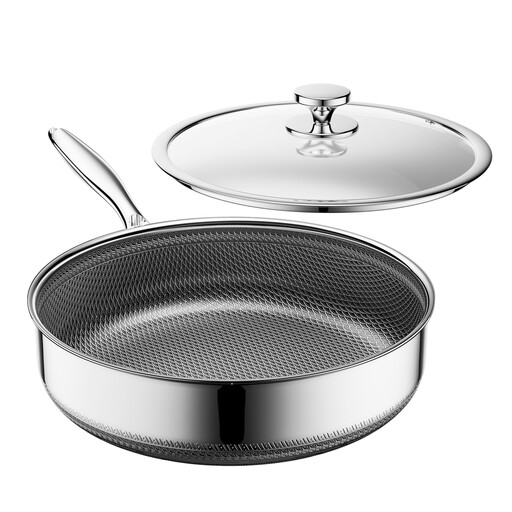
Why this product suits this profile: For households looking for a versatile pan for vegetables and meat, and who prefer an easy-care alternative to heavy cast iron.
The specifications state that it has a ceramic coating without PFAS, PTFE or PFOA, and is suitable for induction. The temperature limits for the pan and lid are listed separately.
Suitable for all the hob types listed, oven-safe up to 260 °C without the lid and, according to the product details, dishwasher-safe.
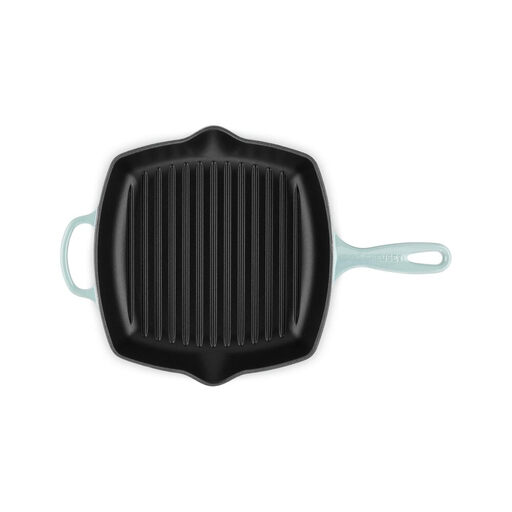
Why this product suits this profile: This square, enamelled cast iron pan is designed for people who want to cook steaks, fish and vegetables on the hob or in the oven.
The product details specify raised ridges, pouring spouts and a black satin enamel interior. This makes it easy to check the key design features.
26 cm cooking surface, suitable for induction and oven use, with a long handle and an additional helper handle. Hand-washing is recommended.
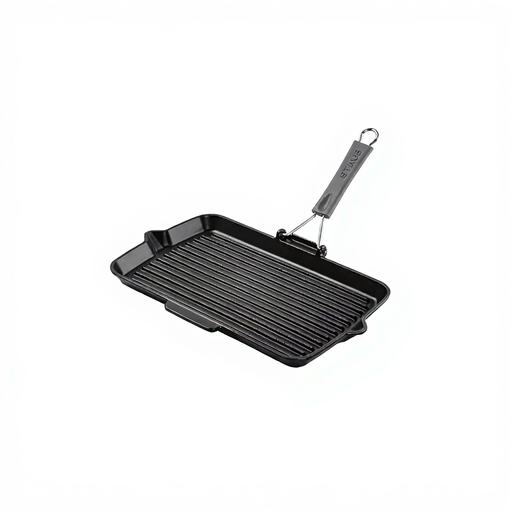
Why this product suits this profile: The elongated shape has room for several ingredients, making it suitable for cooking steaks, poultry, fish and vegetables together in one meal.
The dimensions, weight of around 2,04 kg, foldable silicone handle and pouring spout are all clearly specified. This makes it easier to judge how much storage space you’ll need and how easy the pan will be to handle before you buy.
Enameled cast iron, ridges to drain away fat, suitable for induction and oven use and, according to the product details, dishwasher-safe.
Before first use, warm water and mild washing-up liquid are usually all you need for enamelled cast iron. Heat the pan gradually and let it cool completely after cooking. Placing a hot cast iron pan straight into cold water can put stress on the enamel and material through thermal shock.
To help your pan last:
Calling a grill pan oven-safe isn’t enough to make a buying decision: the specific temperature limit and handle suitability are what matter. For coated models, the care instructions are also more important than a general promise that the pan is easy to clean.
We’ve put together a complete, regularly updated list of products that meet these strict selection criteria and fully comply with the safety regulations in force across the EU.
Yes, provided the base is magnetic and sits fully on the induction zone. According to the product details, enamelled cast iron models such as the Staub and Le Creuset pans mentioned here are approved for induction use. The size of the hob should match the pan’s cooking surface.
A pan with intact enamel doesn’t usually need traditional seasoning. However, you should still follow the manufacturer’s instructions for cleaning and use. Unenamelled cast iron needs more care, especially when drying it and protecting it from rust.
A round or square 26 cm grill pan is suitable for individual portions and smaller households. For several steaks or longer ingredients, a rectangular pan measuring around 21 × 34 cm may be more practical. As well as the outside diameter, consider the usable ridged cooking area, the weight and the storage space available.