
Lieferung heute & morgen

Qualitätsgarantie

Willkommens-Angebote freischalten: KOSTENLOSE Lieferung | Bis zu 80 % RABATT | Kostenlose 30-Tage-JoyPlus-Testphase
App herunterladen
A high-quality cast iron grill pan is the top choice for many home cooks when it comes to achieving the perfect steak or crisp, grilled vegetables. Its ability to store and distribute extremely high temperatures evenly is unparalleled. However, the market is flooded with products that promise more than they can deliver. Before you invest, you should know the three most common pitfalls, which often only become apparent after a few uses.
To make an informed decision, you should focus on objective criteria rather than marketing promises. Three technical features are of central importance.
A cast iron pan can be made of either raw or enamelled cast iron. While raw cast iron requires meticulous care and regular seasoning to build up a natural non-stick layer (patina), enamelled models offer a low-maintenance alternative. Look for a multi-layered, matte enamel on the pan's interior. This not only promotes the development of savoury browning but is also more resistant to scratches and chipping. A smooth enamel on the base also protects delicate glass-ceramic hobs.
For users of an induction hob, a ferromagnetic and completely flat base is essential. A good cast iron pan for induction must lie flat to efficiently absorb the energy from the magnetic field and distribute it across the entire surface. A thick, warp-resistant base prevents the pan from deforming even at maximum heat—a quality feature that directly impacts the evenness of browning and the creation of perfect grill marks. Check the manufacturer's specifications for suitability on all hob types, including induction.
The shape of the pan should suit your cooking style. A square grill pan often provides more usable surface area for long items like skewers or multiple steaks side-by-side. Round pans, on the other hand, are often more compact. The ridge profile is critical: deep and clearly defined ridges not only create the characteristic look but also drain away excess fat. This allows for lower-fat cooking and prevents the meat from stewing in its own juices. If you are looking for a pan for steak that can also be transferred to the oven to finish cooking, an oven-safe grill pan with heat-resistant handles (made of cast iron or detachable) is a necessary feature.
Based on these objective criteria, we have identified several models that are particularly well-suited for specific user profiles.
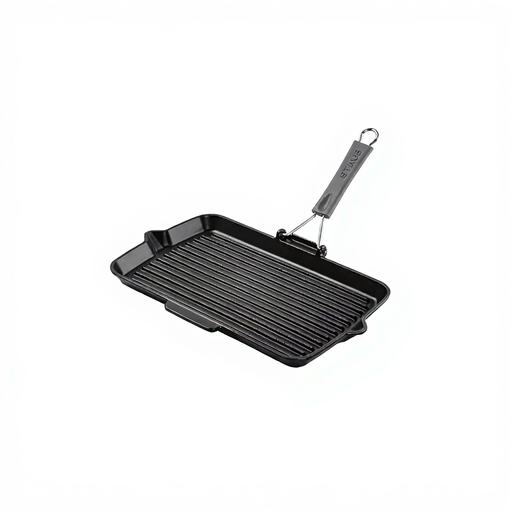
Why This Fits Their Persona: Ideal for users seeking uncompromising searing results for steaks and fillets. The rectangular shape maximises the surface area for longer cuts of meat, and the Staub brand is synonymous with high-quality materials and craftsmanship.
The thick, durable enamel is designed for longevity and will not chip. The solid cast iron body ensures absolute stability and prevents warping, even at the highest temperatures.
Excellent heat retention for a sharp, even crust. The deep ridges create defined grill marks and effectively drain away fat.
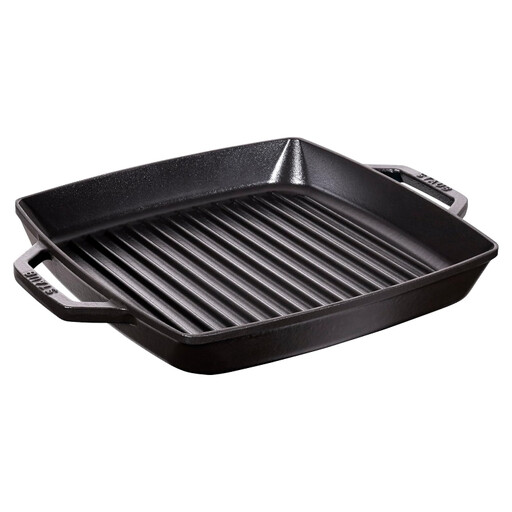
Why This Fits Their Persona: Perfect for larger quantities and versatile applications. The two handles allow for safe lifting and transport of the heavy pan, ideal for moving from the hob to the oven or for serving at the table.
The dual cast iron handles provide secure and balanced handling, minimising the risk when moving the hot, heavy pan. The pan is fully oven-safe.
Large square surface (28x28 cm) for maximum capacity. Its compatibility with all hob types, including induction, and its oven-safe design make it extremely flexible.
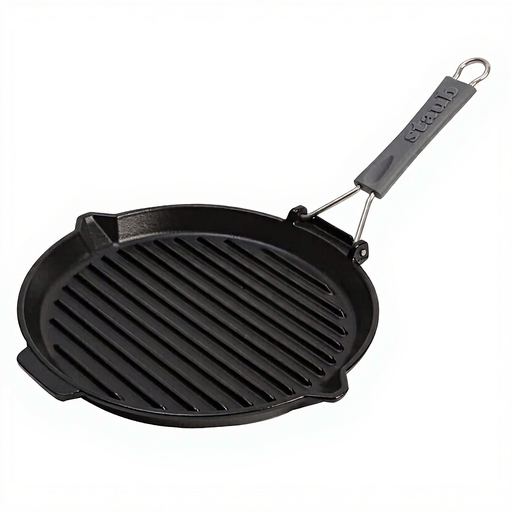
Why This Fits Their Persona: For kitchens with limited storage, without compromising on performance. The folding handle is a smart solution that makes storage in cupboards or drawers significantly easier.
The silicone handle solves the problem of unwieldy and hot handles. It provides a secure grip and folds for compact storage, which is often an issue with rigid cast iron handles.
Space-saving design thanks to the folding handle. The 27 cm round shape is versatile for steaks, burgers, or vegetables and fits well on standard hobs.
We have compiled a complete, up-to-date list of products that fully meet these strict selection criteria and German safety regulations.
No, one of the main advantages of enamelled cast iron is that it does not require seasoning. The enamel layer acts as a protective barrier against rust and provides a ready-to-cook surface. However, it is recommended to wash the pan with warm water and mild washing-up liquid before its first use and to use a little more oil or fat during the first few cooking sessions to optimise its performance.
There is a risk of scratching, but it can be minimised with careful handling. Always lift the pan instead of sliding it across the hob. High-quality pans like those from Staub often have a smoothly ground or enamelled base specifically designed for use on glass-ceramic hobs, reducing the risk of damage. Check the pan's base for any adhering debris before each use.
Let the pan cool down slightly after use, but clean it while it is still warm. Soak stubborn residues with hot water. Use a stiff-bristled brush (not metal) to clean the ridges. For enamelled pans, using mild washing-up liquid is safe. For particularly tough, burnt-on food, special cleaning sponges suitable for pots and pans can be helpful. Always dry the pan thoroughly after cleaning to prevent flash rust.