
Lieferung heute & morgen

Qualitätsgarantie

Willkommens-Angebote freischalten: KOSTENLOSE Lieferung | Bis zu 80 % RABATT | Kostenlose 30-Tage-JoyPlus-Testphase
App herunterladen
A cast iron pan can serve you well for years when it comes to frying, braising and serving. However, not every heavy piece of cookware automatically delivers good results. What really matters is the material construction, coating, hob compatibility and the right size.
Discerning home cooks and design-conscious households often come across three typical pitfalls when buying:
A traditionally seasoned cast iron pan develops a dark patina with regular care. It is particularly suitable for searing at high heat, but should not be treated with harsh cleaners or exposed to moisture for long periods.
An enamelled cast iron pan, on the other hand, has a coated interior or exterior surface. It is generally easier to clean and can also be useful for acidic ingredients such as tomatoes or wine. However, you should avoid metal utensils, steel wool and abrasive cleaning products if the manufacturer advises against them.
A coated frying pan made of aluminium or stainless steel is lighter and often more convenient for delicate foods. With a non-stick coated pan, the maximum temperature, permitted kitchen utensils and care instructions are particularly important.
For UK households with an induction hob, the induction-compatible label is relevant. Additionally, the pan should be approved for gas, ceramic and electric hobs if you want to use it flexibly.
An oven-safe pan is not automatically suitable for every temperature. With the products listed here, manufacturer specifications range from 160 °C for certain BALLARINI Vipiteno models to 230 °C for the ZWILLING Pro pan and 260 °C for the Le Creuset tagines mentioned. The handle must also be suitable for oven use.
A serving pan with two handles can go straight from the hob to the table. A cast iron grill pan, on the other hand, usually has ridges and is designed for steaks, vegetables or halloumi. If you want to prepare oriental braised dishes, you could choose a cast iron tagine with a conical lid instead of a classic pan.
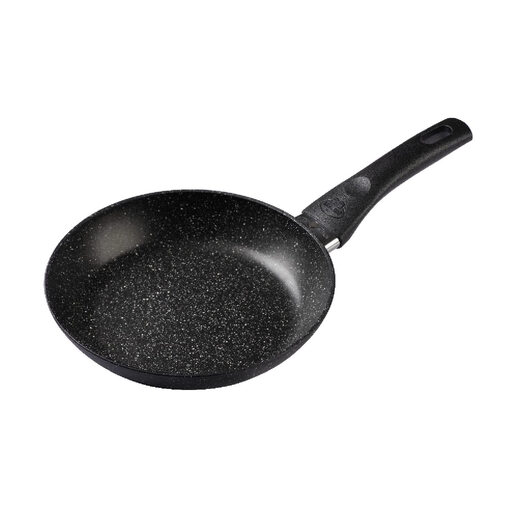
Why this product fits the profile: The aluminium pan weighs 764 g according to the product data and is suitable for gas, electric, ceramic and induction hobs. This makes it a lighter entry point than a classic cast iron pan.
The product details explicitly mention the four hob types, the Nerolite coating and a maximum oven temperature of 160 °C. This makes it easier to assess its intended use before purchase.
24 cm diameter, four-layer non-stick coating and dishwasher-safe finish according to the manufacturer.
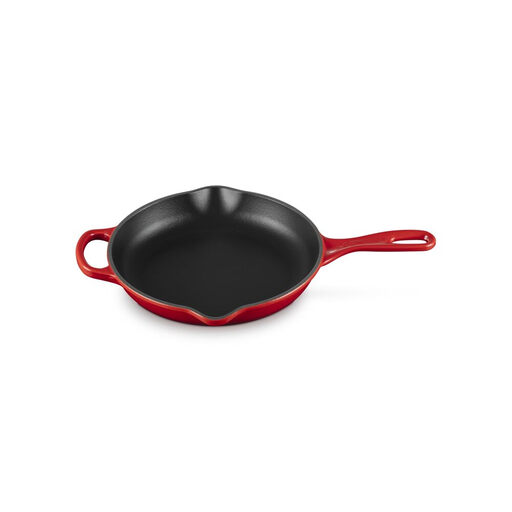
Why this product fits the profile: The enamelled cast iron pan is suitable for all hob types including induction and for oven use, according to the product data. At 1.93 kg, it remains relatively compact for a cast iron serving pan.
The details specify diameter, weight, 1.2 litre capacity and suitability for induction and oven. The care instructions recommend warm water and a soft sponge.
Enamelled cast iron, two grip areas, pouring spouts and a dishwasher-safe surface according to the manufacturer.
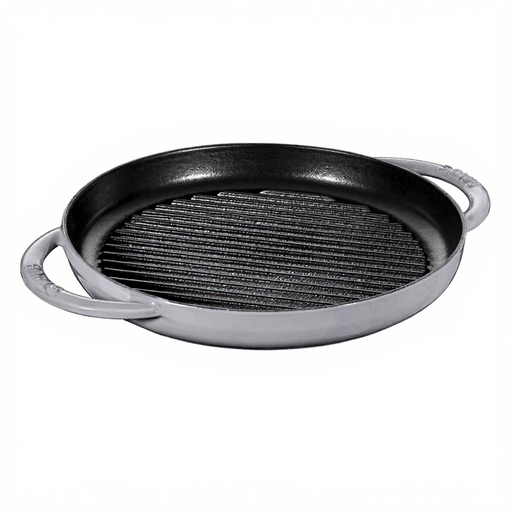
Why this product fits the profile: The grill pan made of enamelled cast iron has a ridged cooking surface and two handles. According to the product description, it is suitable for all hob types including induction, as well as oven and grill use.
The special shape makes it clear that this model is not intended as a smooth all-purpose pan. If you are looking for grill marks and a ridged surface, you get a format designed for that purpose.
26 cm diameter, 0.75 litre capacity, enamelled cast iron and two side handles according to the product details.
Cast iron should be heated up slowly. Placing an empty pot or pan on a high heat can unnecessarily stress the material and coating. With enamelled models, medium heat is recommended, along with the use of wooden, plastic or silicone utensils.
After cooking, allow the cookware to cool down first. Then, warm water, a mild washing-up liquid and a soft sponge are usually sufficient. A sudden change from very hot to very cold can be problematic for enamelled cast iron. Handles get hot during use; oven gloves or mitts are necessary for the hob and oven.
We have compiled a complete, regularly updated list of products that fully meet these strict selection criteria and the safety regulations in force in the EU.
Many models are suitable for induction, provided this is explicitly stated in the product data. With enamelled cast iron pans, you should also pay attention to a flat base and the right size for the induction zone.
The lifespan depends on the material, coating and care. Cast iron is fundamentally durable. With enamelled surfaces, you should avoid impacts, temperature shocks and abrasive cleaning products. With classic, seasoned pans, the protective layer needs regular maintenance.
Cast iron usually takes a little longer to heat up, but retains heat for a longer period. After preheating, the temperature can often be reduced. What matters is a suitable pan base, an appropriate hob zone and a moderate temperature setting.