
Lieferung heute & morgen

Qualitätsgarantie

Willkommens-Angebote freischalten: KOSTENLOSE Lieferung | Bis zu 80 % RABATT | Kostenlose 30-Tage-JoyPlus-Testphase
App herunterladen
A cast-iron pan retains heat for a long time and is ideal for searing, braising, grilling and serving. At the same time, cast iron is heavier and requires specific care. Focusing only on the brand name, colour or supposed “non-stick” properties can quickly lead to buying a model that does not suit your everyday kitchen routine.
An enameled cast-iron pan has a glass-like protective layer on both the inside and outside. It generally does not need to be seasoned and can be cleaned with warm water and a soft sponge. With an uncoated cast-iron frying pan, however, the seasoned layer of oil needs regular maintenance to keep the surface less prone to sticking and to prevent rust.
The term “non-stick” should therefore be examined carefully. Uncoated cast iron does not have a factory-applied plastic coating. Metal utensils, moisture and highly acidic foods can damage the seasoning.
Not every pan is suitable for every heat source. For a cast-iron pan for induction, the base must be magnetic and sit sufficiently flat on the hob. Models with wooden or silicone handles also require an additional check to confirm that the handle is oven-safe.
If you are looking for a pan suitable for all hob types, check the manufacturer’s specifications individually for induction, gas, electric and ceramic hobs. The maximum permitted temperature in the oven or under the grill function may also vary.
Depending on its design, a 26 cm cast-iron pan can weigh more than two kilograms. This makes it stable when searing, but difficult to toss with one hand. For one or two portions, a small cast-iron pan measuring 12 to 16 cm is often sufficient. For several people, 23 to 27 cm is usually more practical.
The usable cooking surface is also important. High grill ridges, pouring lips or heavily sloped sides reduce the area that is actually available.
Uncoated cast iron is best suited to households prepared to dry the pan completely after every wash and apply a thin layer of oil. With regular use and care, the surface gradually develops a stronger seasoning. Dishwasher cleaning is generally not recommended for these models.
Enameled cast iron is easier to live with on a daily basis. The enamel protects the material and simplifies cleaning. Nevertheless, sudden temperature changes, abrasive cleaners, steel wool and hard knocks should be avoided, as they can damage the surface. If visible chips appear, the cookware should no longer be used.
A cast-iron grill pan creates distinctive grill marks thanks to its raised ridges. Liquid and excess fat can collect in the recesses. However, the ridges reduce the direct contact area and are less practical for sauces or evenly browning food across the entire surface.
A smooth base is better suited to pancakes, vegetable dishes, braised recipes and distributing oil evenly. Some models, such as a frying and serving pan, combine a smooth cooking surface with two pouring lips and an additional helper handle.
Cast iron should be heated gradually. On induction, it is advisable to begin at a medium power setting and increase the temperature only when needed. This helps prevent thermal shock.
With an oven-safe cast-iron pan, the pan body, main handle and helper handle must all be approved for the intended temperature. The handle becomes hot on both the hob and in the oven. Oven mitts or pot holders are therefore essential for safe use.
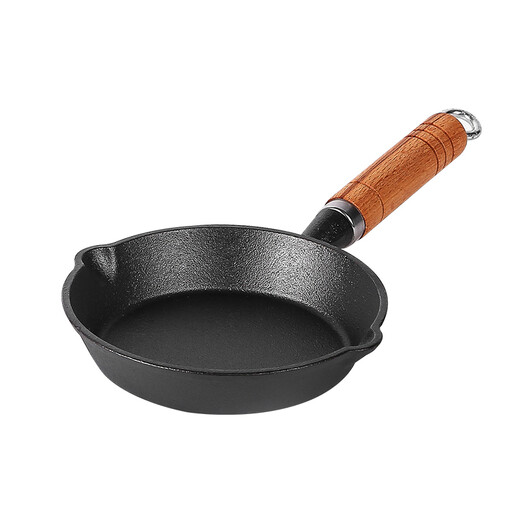
Why this product suits the profile: This compact, uncoated pan is designed for individual portions, eggs, sauces and side dishes. It is suitable for gas, electric, ceramic and induction hobs.
The product specifications explicitly call for hand washing, immediate drying and oiling. This makes the care requirements clear before purchase.
10 cm diameter, wooden handle and uncoated cast iron for small portions and portable use.
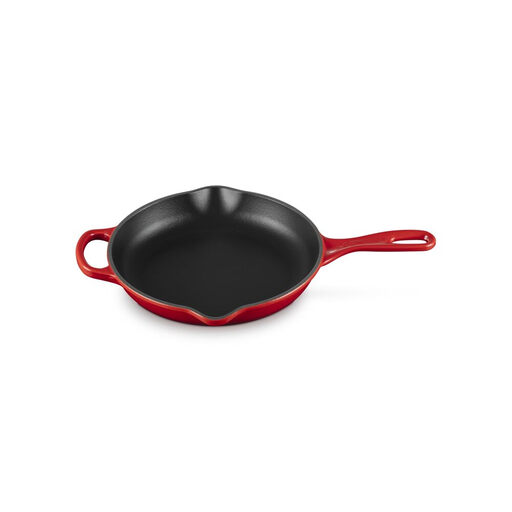
Why this product suits the profile: This enameled pan is designed for all hob types, including induction, as well as oven use. The helper handle and pouring lips make it easier to handle.
The specifications state the material, 23 cm diameter, 1.93 kg weight, enamel coating and a maximum oven temperature of 350 °C. This makes the key technical details easy to compare.
Enameled interior and exterior, induction compatibility, and suitability for both cooking and serving.
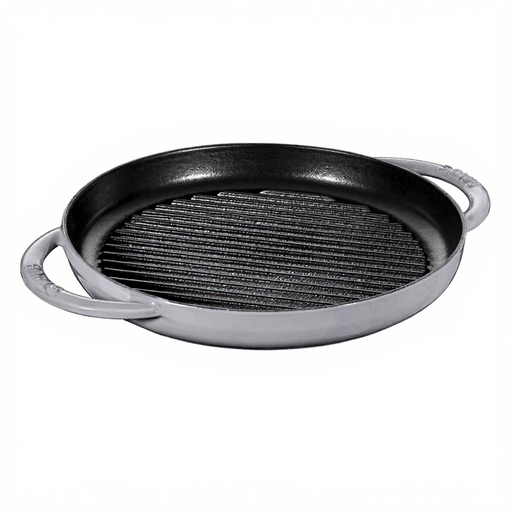
Why this product suits the profile: This round grill pan features pronounced ridges, two handles and a capacity of 0.75 litres. It is specified for all hobs, including induction, as well as oven and grill use up to 260 °C.
The grill ridges serve a clear purpose: they partially separate the food from the fat released during cooking. The two handles make it easier to move the 2.7 kg pan safely.
Enameled cast iron, defined grill ridges, two carrying handles, and documented suitability for hob, grill and oven use.
We have compiled a complete, regularly updated list of products that fully meet these strict selection criteria and the safety regulations applicable in the EU.
Cast iron is inherently magnetic and is therefore often compatible with induction. However, the manufacturer’s specifications and a sufficiently flat base are decisive. With enameled models, you should also check whether the coating is approved for the intended temperature.
With careful treatment, cast iron can be used for many years. Uncoated models require regular drying and oiling. With enameled pans, avoid impacts, sudden temperature changes and abrasive cleaning. The actual service life depends largely on care, frequency of use and the way the pan is used.
According to the product specifications, some enameled models are dishwasher-safe, although hand washing can help preserve the surface. Uncoated pans should normally not be put in the dishwasher, as water and detergents can damage the seasoned protective layer and encourage rust.