
Lieferung heute & morgen

Qualitätsgarantie

Willkommens-Angebote freischalten: KOSTENLOSE Lieferung | Bis zu 80 % RABATT | Kostenlose 30-Tage-JoyPlus-Testphase
App herunterladen
A cast iron pot can serve you in the kitchen for many years, but it will not automatically suit every household. Weight, coating, hob compatibility and care requirements can vary considerably. If you focus only on colour, brand name or terms such as “non-stick”, you could end up buying cookware that is too heavy for everyday use, unsuitable for your hob or prone to developing rust spots after a short time.
An uncoated cast iron pot usually needs a thin layer of oil before first use, as well as thorough drying after cleaning. This so-called seasoning develops through use and should not be confused with an industrial non-stick coating. Moisture, prolonged soaking and the dishwasher can encourage rust or damage the seasoning.
An enameled cast iron pot is generally easier to clean inside and normally does not need seasoning. However, enamel is not impervious to damage: metal utensils, abrasive sponges and sudden changes in temperature can harm the surface.
Not every cast iron pot is automatically suitable for induction. Buyers should look specifically in the product description for details such as “induction-compatible” or “suitable for all hob types”. The base should also sit as flat as possible on the hob. This is particularly important with an induction-compatible cast iron pot, as an uneven or undersized base can affect heat transfer.
A large 6-litre Dutch oven offers plenty of room for family meals, but it can already weigh several kilograms when empty. Once filled, lifting and moving it becomes even more demanding. For one person or small side dishes, a compact casserole dish or small cast iron frying pan is often more practical.
The following simple guide can help you choose:
A cast iron soup pot should be assessed not only by its diameter but also by its usable interior height. A lid that sits tightly can help keep condensation inside the pot during braising. However, details about special lid designs should be understood as product features rather than general promises about cooking results.
Uncoated cast iron is suitable for users who are prepared to dry it thoroughly after washing and oil the surface from time to time. Strongly acidic or very salty foods can affect the surface. With an uncoated model, you should also check whether the handles or wooden components are suitable for the intended oven temperature.
Enameled cast iron is more straightforward for many households. The enamel makes cleaning easier and reduces direct contact between food and iron. Nevertheless, important rules still apply: do not place a hot pot in cold water, do not heat empty pots intensely and do not continue using damaged enamel.
An ovenproof cast iron pot is only fully suitable for oven use if all of its components are designed for it. Lid knobs, wooden handles or plastic elements may limit the permitted temperature. Side handles are practical when moving the pot from the hob to the oven, while a long wooden handle on a small cast iron frying pan can take up more space.
The material retains heat for a long time. For this reason, use pan holders or oven gloves and place hot pots on a heat-resistant surface. Large models are safer to move with both hands.
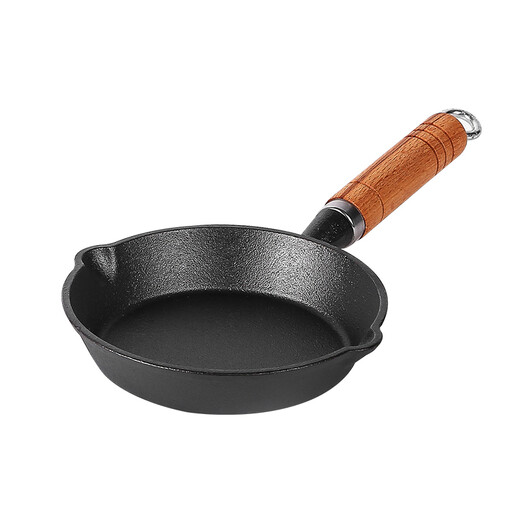
Why this product suits this profile: This compact cast iron frying pan is suitable for individual portions, butter, sauces, eggs or small side dishes. It is listed as suitable for gas, electric, ceramic, induction and oven use.
The small diameter helps prevent buying oversized cookware unnecessarily. However, seasoning, hand washing and immediate drying are required.
10 cm diameter, uncoated cast iron and a wooden handle. A practical choice for small quantities and limited storage space.
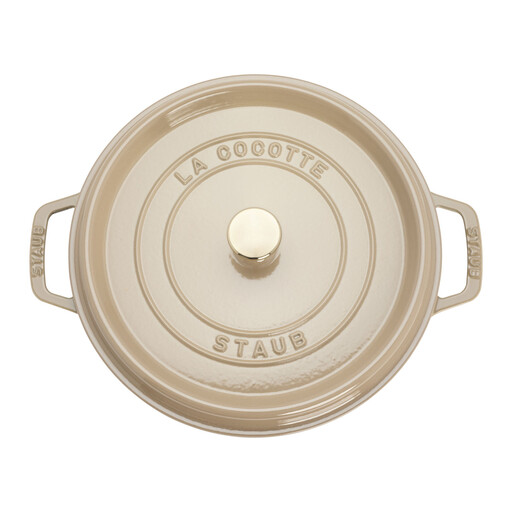
Why this product suits this profile: This enameled cocotte offers ample capacity for family meals, casseroles and soups. It is listed as suitable for induction, other hob types, oven and grill use.
The technical details specify the capacity, temperature limit of 260 °C and suitable heat sources. Its considerable weight of 6.95 kg should be taken into account before buying.
6,7-litre capacity, enamel interior and a lid with condensation return, according to the product details.
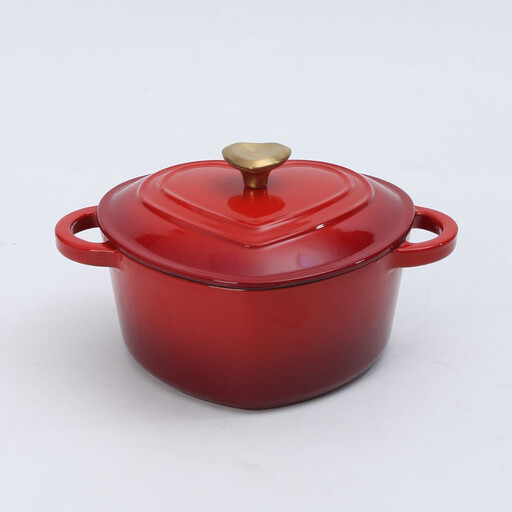
Why this product suits this profile: The heart shape and red enamel make this pot an appealing choice for special occasions and serving at the table. It comes with a lid and is listed as suitable for hobs, induction and oven use.
The product details specify a 19 cm diameter, enamel coating and suitable heat sources. Before buying, check that the small size is suitable for the recipe you have in mind.
Heart-shaped design, 19 cm diameter and a lid. The surface is described as food-safe enamel.
We have put together a complete, regularly updated list of products that fully meet these strict selection criteria and the safety regulations applicable in the EU.
For an uncoated cast iron pot, the following routine is recommended:
Enameled models should be allowed to cool before cleaning. Mild cleaning products and soft sponges help protect the coating. With both types, sudden changes in temperature should be avoided.
Many models are suitable for induction hobs, but not all of them are. An explicit statement from the manufacturer is decisive. The base should also be flat and its diameter should match the cooking zone.
Its service life depends on the material, workmanship and care. Uncoated cast iron can be used for many years if it is dried and oiled regularly. With enameled pots, knocks, scratches and thermal shocks should be avoided, as they can damage the enamel.
For uncoated cast iron, the dishwasher is generally unsuitable because it can remove the seasoning and encourage rust. With enameled products, the manufacturer may permit dishwasher use; however, hand washing is often recommended for the gentlest possible care. The specific product instructions take precedence.