
Lieferung heute & morgen

Qualitätsgarantie

Willkommens-Angebote freischalten: KOSTENLOSE Lieferung | Bis zu 80 % RABATT | Kostenlose 30-Tage-JoyPlus-Testphase
App herunterladen
A cast iron pot is ideal for searing, braising and slow cooking. Because of its high mass, it takes up heat comparatively slowly, but stores it for a long time. This is practical for stews, braised dishes and meals that go straight from the hob to the table. However, keen home cooks should check a few details carefully before buying, as product descriptions do not always highlight the differences that really matter.
A cast iron pot with a diameter of 24 cm, 28 cm or 31 cm can hold different amounts depending on its shape and height. In addition, the stated capacity usually refers to the total volume, not the amount that can be usefully filled for cooking. For two people, around 2 to 3 litres is often sufficient. Households with several people are generally better served by 3.5 litres or more.
The footprint is also important: a pot with an external diameter of 31 cm may be impractical on a small hob or in a narrow oven. Before buying, you should therefore consider the internal volume, external diameter, height and weight together.
An induction-compatible pot requires a magnetic base or magnetic cast iron. With an enamelled cast iron pot, it is also important that the base sits flat and does not scratch the hob. The pot should be lifted when moving it on an induction hob rather than dragged across the surface.
Suitability for gas, electric, ceramic and induction hobs should be stated explicitly in the technical specifications. Some models also recommend starting at a low to medium heat. This protects the material and enamel from sudden temperature changes.
A roasting pot with a lid is not automatically suitable for every oven temperature. The decisive factor is the lowest permitted temperature limit for the pot, lid knob and lid material. Particularly with a tagine or cast iron tagine, the conical lid may be made from stoneware and have different requirements from the cast iron base.
A tightly fitting lid supports braising by keeping liquid inside the pot. With a tagine, condensation runs back from the lid into the dish. This is a result of the design and is not a general promise regarding flavour or nutritional content.
Uncoated cast iron may require seasoning and a specific care routine. An enamelled cast iron pot, on the other hand, has a glass-like protective coating. This makes cleaning easier and can simplify contact with acidic ingredients such as tomatoes or wine. Nevertheless, metal utensils, abrasive cleaners and scouring pads should be avoided.
A dark enamel interior is often designed for high-heat searing. Light-coloured interiors, by contrast, make it easier to monitor sauces as they reduce. The manufacturer’s specific care instructions remain authoritative.
A wide base supports searing food in a single layer. Height is also important for braised dishes, so that there is enough room for both the lid and the contents.
An ovenproof pot should state a specific maximum temperature. The product specifications available for several models state temperatures of up to 250 or 260 °C. Before using the pot in the oven, you must take the handles, lid knob and lid material into account. Heat-resistant gloves are essential when removing it, as cast iron remains hot for a long time even after the heat has been turned off.
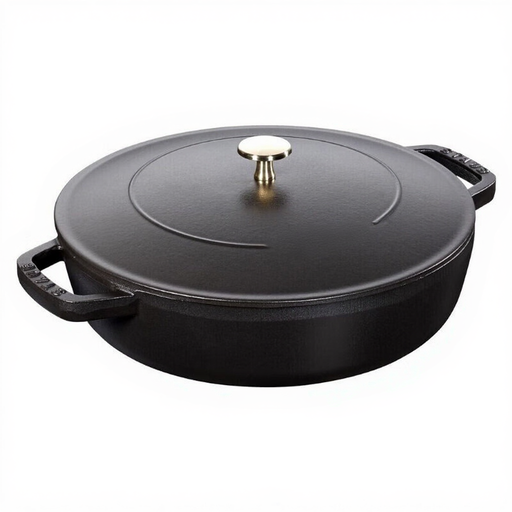
Why this product suits this profile: Its compact capacity is suitable for smaller households and takes up less storage space. According to the product specifications, the pot is suitable for induction and other types of hob.
The specifications state the capacity, diameter, induction compatibility and oven suitability. This makes it easier to assess whether it meets your needs before buying.
2.5-litre capacity, 24 cm diameter, enamelled cast iron and Chistera lid structure according to the product description.
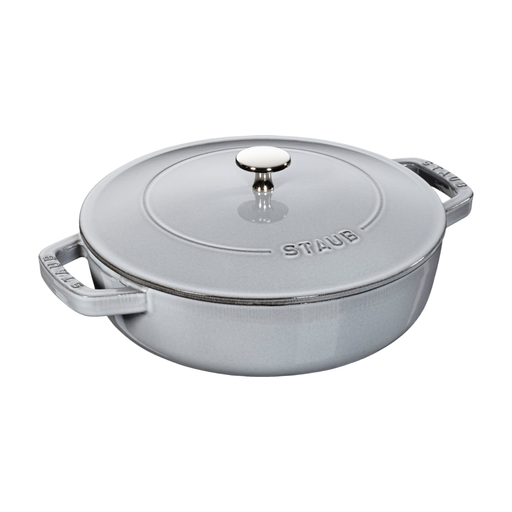
Why this product suits this profile: The 28 cm cocotte combines a larger searing surface with a 3.7-litre capacity. According to the specifications, it is suitable for all hobs, including induction, as well as for oven use.
The product data lists temperature limits, weight, base dimensions and cleaning instructions. This helps you assess the space required and the care involved realistically.
3.7-litre capacity, enamelled cast iron, Chistera lid and, according to the product information, a 30-year guarantee.
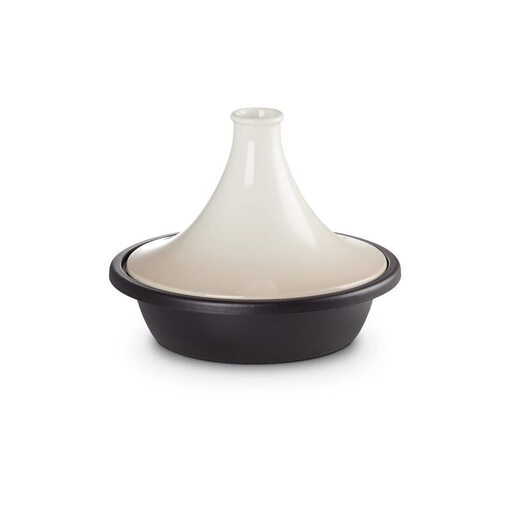
Why this product suits this profile: The combination of a cast iron base and conical stoneware lid is designed for tagine dishes and slow cooking with little liquid.
The product information states a diameter of 31 cm, a capacity of 3.3 litres and a maximum temperature of 260 °C. This allows you to check the available oven space and intended uses in advance.
Suitable for all hob types, including induction, ovenproof according to the specifications, with a 3.3-litre capacity and stoneware lid.
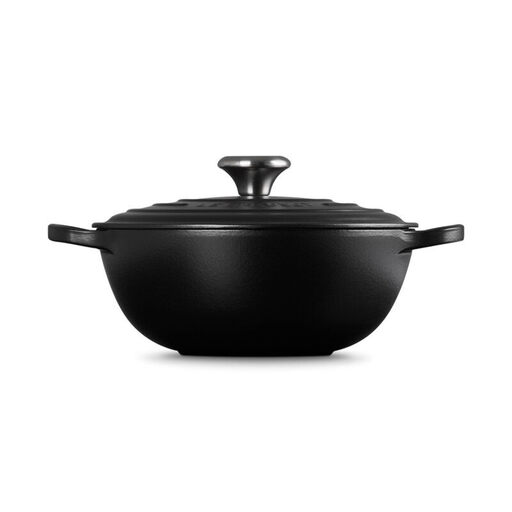
Why this product suits this profile: Its round shape and 3.1-litre capacity are suitable for soups, stews, braised dishes and serving at the table. According to the product specifications, the pot can be used on the hob, in the oven and under the grill.
The technical specifications state a diameter of 24 cm, a capacity of 3.1 litres and a temperature limit of 260 °C. The care instructions recommend hand-washing and avoiding abrasive cleaners.
Black enamel interior, tightly fitting lid, induction compatibility and oven use according to the product description.
We have put together a complete, regularly updated list of products that fully meet these strict selection criteria and the safety regulations applicable in the EU.
Before using an enamelled cast iron pot for the first time, clean it with warm water and mild washing-up liquid, then dry it thoroughly. For ongoing care, follow these points:
Whether the pot is dishwasher-safe depends on the model. Some STAUB models are described as dishwasher-safe, while hand-washing is recommended for certain Le Creuset tagines, or the instructions explicitly state that a dishwasher should not be used.
Many enamelled models are suitable for induction, including the STAUB cocottes and Le Creuset tagines mentioned above. However, the specific product description is always decisive. The pot should sit flat on the hob and should not be dragged across its surface.
For smaller households, 24 cm and around 2.5 to 3.1 litres are often sufficient. A 28 cm cast iron pot with a capacity of around 3.7 litres offers more surface area and volume for several portions. A 31 cm cast iron pot is particularly suitable for generous dishes and tagine preparations, but requires more storage space.
Its lifespan depends on the quality of the material, the enamel, how it is used and how well it is cared for. Cast iron is generally robust, but enamel can be damaged by knocks, sudden temperature changes or metal utensils. Gentle cleaning and gradual heating help keep the pot usable for many years.