
Lieferung heute & morgen

Qualitätsgarantie

Willkommens-Angebote freischalten: KOSTENLOSE Lieferung | Bis zu 80 % RABATT | Kostenlose 30-Tage-JoyPlus-Testphase
App herunterladen
A cast iron pot is ideal for casseroles, soups, stews and slow cooking. The material retains heat for longer and can be used on the hob and – depending on the design – in the oven. Even so, not every cast iron pot is suitable for every household.
Anyone who only pays attention to the colour, brand name or the word “versatile” can overlook important differences. Three points in particular often lead to unsuitable purchases:
The right size depends on how you intend to use it:
A small cast iron pot can be attractively served at the table and takes up less storage space. For a cast iron casserole or Dutch oven for several people, however, the internal dimensions, lid height and weight are crucial. The usable capacity is usually lower than the maximum volume, as the pot should not be filled right to the brim.
An uncoated cast iron pot has a more open surface. Seasoning is often required before first use. A well-maintained layer of oil can help reduce sticking, but it does not replace proper temperature control. After washing, the cookware must be dried completely straight away and lightly oiled.
An enamelled cast iron pot has a glass-like coating. This makes it easier to clean and, with many dishes, less sensitive to moisture. Nevertheless, metal utensils, abrasive cleaners and sudden temperature changes should be avoided. If the enamel is damaged or chipped, the product should no longer be used in accordance with the manufacturer’s instructions.
A cast iron frying pan or cast iron wok can also be uncoated or coated. The care requirements therefore differ despite the similar material description.
For a cast iron pot for induction, a suitable, flat base that sits securely on the hob is important. The manufacturer’s information should explicitly state induction compatibility. Heavy cookware should also be lifted rather than slid across a glass hob to prevent scratches.
With an ovenproof cast iron pot, not only the body of the pot but also the lid knob and handle must be suitable for the desired temperature. Wooden handles can restrict oven use. For enamelled models, details such as “up to 230 °C” are more precise than general claims that the pot is ovenproof.
Uncoated cast iron is also more sensitive when cooking highly acidic or very salty foods for long periods. With enamelled interiors, this is less relevant depending on the manufacturer’s information. Buyers should also take the weight into account: cast iron distributes heat evenly, but is heavier than many stainless steel or aluminium pots.
The following models meet a range of requirements. In each case, the stated dimensions, materials, hob types and care instructions are the key considerations.
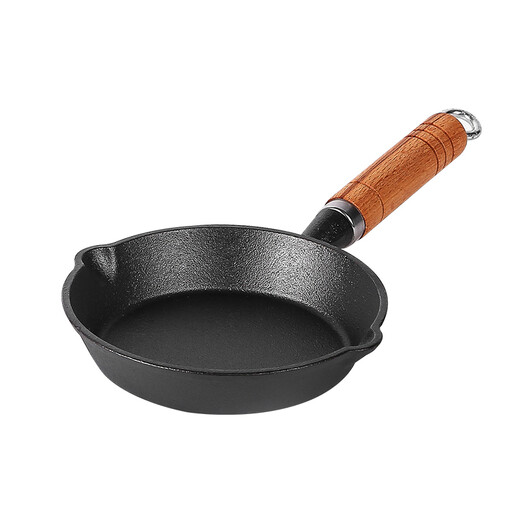
Why this product suits the profile: The small, uncoated cast iron frying pan is designed for individual portions, butter, sauces, eggs or side dishes. According to the product information, it is suitable for induction, gas, electric hobs and the oven; the temperature limit for the wooden handle must be observed.
The diameter and intended use are clearly stated. This means the model is not accidentally used as a large casserole, but is chosen specifically for smaller quantities.
10 cm diameter, wooden handle and support for several hob types. Hand washing, thorough drying and oiling are all part of its care routine.
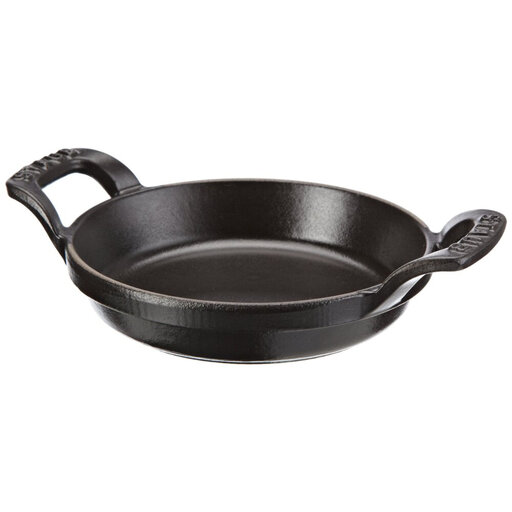
Why this product suits the profile: The enamelled cast iron pan is designed for individual portions and side dishes. According to the product information, it is suitable for all hob types, including induction, as well as for oven use up to 230 °C.
The specific oven temperature and 0.4-litre capacity help with realistic planning. The lack of a lid should be taken into account before buying.
Enamelled surface, 16 cm diameter and two handles. According to the product description, the model is dishwasher-safe; hand washing is recommended to protect the surface.
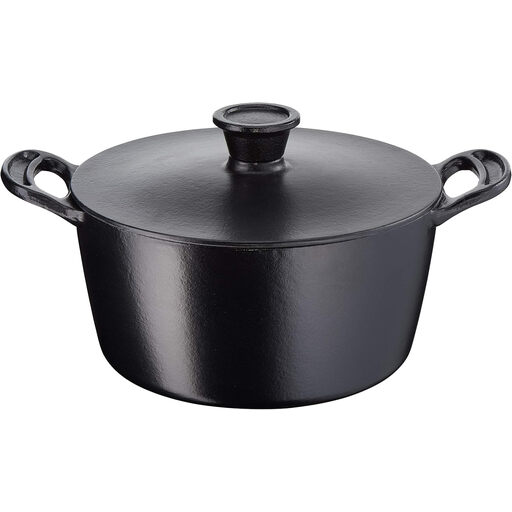
Why this product suits the profile: The cast iron casserole, enamelled inside and out, is designed for casseroles, soups and slow cooking. According to the product information, it works on gas, electric, ceramic and induction hobs.
The enamel reduces the maintenance required compared with uncoated cast iron. At the same time, buyers should note that the product information specifies hand washing.
24 cm diameter, enamelled interior and suitability for all common hob types, including induction.
The following steps are recommended for an uncoated model:
Enamelled variants should be cleaned with a mild detergent and a soft sponge. Hot pots must not come into direct contact with cold water. Oven cloths or oven gloves are essential when using any cast iron pot, as the body, handles and lid can become extremely hot.
We have put together a complete, regularly updated list of products that fully meet these strict selection criteria and the safety regulations applicable in the EU.
Many models are suitable for induction hobs because cast iron is magnetic. However, the manufacturer’s information and a base that sits as flat as possible are decisive. On a glass hob, the pot should be lifted rather than slid across the surface.
Its service life depends on the material, enamel, workmanship and care. With thorough drying, regular oiling and proper use, uncoated cast iron can be used for a very long time. With enamelled products, drops, scratches and thermal shocks should be avoided.
Many cast iron casseroles and Dutch ovens can be used in the oven. Before buying, however, the pot body, lid and handles must be considered together. Wooden handles and plastic knobs can limit the permitted temperature. The manufacturer’s specific information is the deciding factor.