
Lieferung heute & morgen

Qualitätsgarantie

Willkommens-Angebote freischalten: KOSTENLOSE Lieferung | Bis zu 80 % RABATT | Kostenlose 30-Tage-JoyPlus-Testphase
App herunterladen
A cast iron tagine combines the properties of a heavy casserole dish with the distinctive shape of North African cookery. The conical lid channels condensation back into the pot, while the cast iron base stores heat and distributes it evenly to the ingredients. This makes a tagine ideal for meat, vegetables, pulses and many other slow-cooked dishes.
However, there are some typical pitfalls when buying one. Not every model with an oriental shape is suitable for induction hobs, and not every decorative lid can withstand the high temperatures of an oven. Our selection shows which technical specifications really matter before buying a Moroccan tagine.
A traditional tagine is often made from ceramic or unglazed clay. These models can be more sensitive to sudden temperature changes and are not automatically suitable for induction hobs. If you want to use a tagine daily on a modern hob, you should specifically look for a tagine for induction.
A cast iron base with an appropriate coating is more practical in this case. What matters are the manufacturer's specifications regarding hob types, oven suitability and maximum temperature.
The conical lid is more than just a decorative feature. During slow cooking, steam rises, cools on the lid and can drip back onto the food. If the lid does not fit precisely on the base, more liquid can escape and the cooking result will be affected.
With a tagine with lid, buyers should therefore pay attention to the material, fit and temperature limit. An earthenware lid can have different care and temperature requirements than a cast iron lid.
Cast iron stores heat, but it is significantly heavier than aluminium or thin-walled stainless steel. A tagine with a 31 cm diameter can weigh more than five kilograms. This is relevant when lifting it out of the oven, washing it and storing it.
The diameter of the base surface also matters: a large pot does not necessarily fit optimally on every hob zone. Before buying, you should therefore compare diameter, capacity, weight and dimensions with the lid.
An enamelled cast iron tagine has a glass-like protective layer on the surface. It makes cleaning easier and reduces direct contact between food and the iron. At the same time, the heat retention typical of cast iron is preserved.
For daily use, the following details are important:
For the Le Creuset tagines mentioned, a maximum temperature of 260 °C is specified. According to the product data, these items are suitable for all hob types including induction, as well as for the oven.
A 31 cm tagine is designed for several portions or a shared meal at the table. The available Le Creuset models in this size are stated to have a capacity of 3.3 and 3.7 litres respectively. The exact usable volume depends on how much space is needed for liquid and ingredients under the lid.
For smaller households, a classic casserole dish of 24 to 28 cm may be sufficient. These are not always traditionally shaped tagines, but often a French cocotte or an oriental stew pot with a flatter lid.
Cast iron stays warm for longer after being turned off. This means a dish can continue cooking or be kept warm using lower residual heat. However, any specific energy saving depends on the hob, recipe, fill level and cooking time, and should not be promised as a general rule.
For care, we recommend:
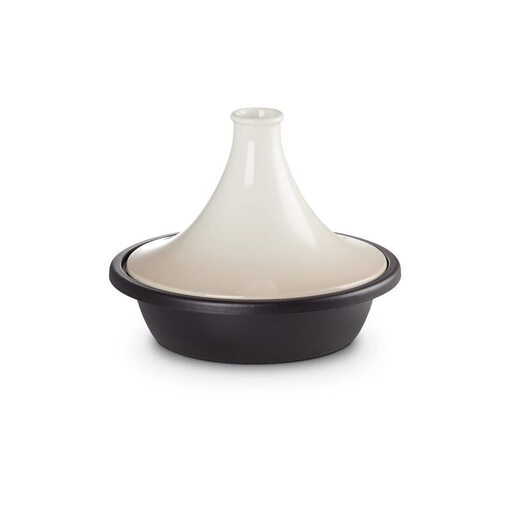
Why this product fits the profile: The combination of enamelled cast iron, 3.3 litre capacity and a conical earthenware lid suits households that regularly prepare slow-cooked dishes for several people.
The product data explicitly states suitability for induction, all hob types and the oven up to 260 °C. This means these usage areas do not need to be inferred from the shape.
31 cm diameter, 3.3 litre capacity, enamelled cast iron and an earthenware lid; made in France according to product information.
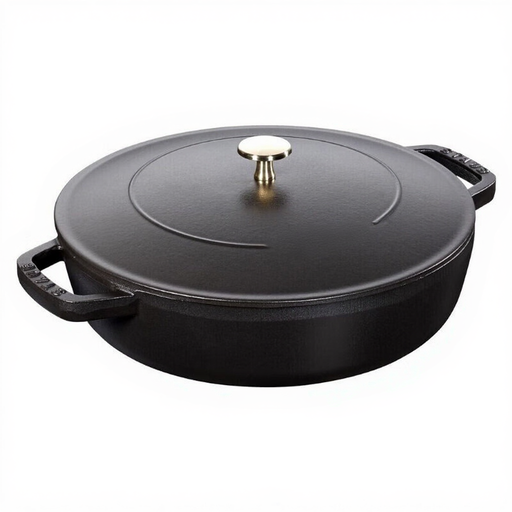
Why this product fits the profile: The more compact casserole dish is ideal for smaller households looking for a versatile pot for slow-cooked dishes, without necessarily needing the traditional tagine shape.
At 24 cm diameter and 2.5 litres, the size is clearly defined. The specifications also mention induction, oven and grill suitability up to 250 °C.
Enamelled cast iron, 2.5 litre capacity and a lid with Chistera structure for returning condensation.
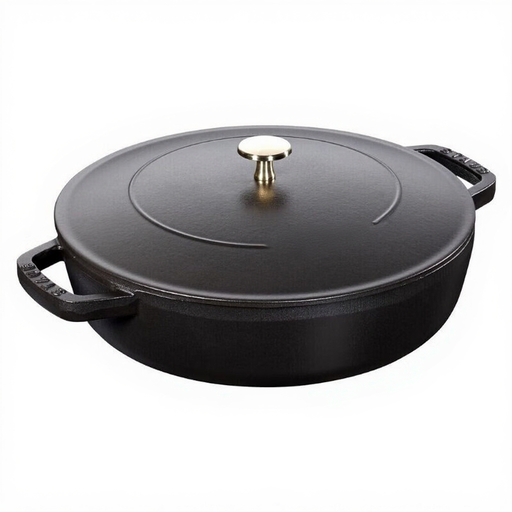
Why this product fits the profile: If you frequently sear, slow-cook and serve directly at the table, you get a versatile cast iron pot with a larger capacity and ergonomic handles.
The product description states suitability for induction, all hobs, oven and grill, as well as a temperature limit of 260 °C.
28 cm diameter, 3.7 litre capacity, Chistera lid and heat-retaining enamelled cast iron.
We have compiled a complete, regularly updated list of products that fully meet these strict selection criteria and the safety regulations in force in the EU.
That depends on the individual model. A cast iron base is often induction-compatible, but the manufacturer's specification should explicitly mention induction. In addition, the base diameter must match the hob zone.
With proper use, enamelled cast iron can last a long time. Its lifespan depends mainly on avoiding sudden temperature changes, impacts, metal utensils and abrasive cleaning products. Cracks or chips in the enamel should not be ignored.
Cast iron stores heat and is suitable for cooking on low to medium heat. Whether this actually uses less energy depends on the recipe, hob power, cooking time, lid fit and fill level. A general saving cannot therefore be guaranteed.