
Lieferung heute & morgen

Qualitätsgarantie

Willkommens-Angebote freischalten: KOSTENLOSE Lieferung | Bis zu 80 % RABATT | Kostenlose 30-Tage-JoyPlus-Testphase
App herunterladen
Choosing the right cat litter can quickly become overwhelming. The market is vast, and the advertising claims are often lofty. But what is really behind terms like "dust-free," "biodegradable," or "extreme odour control"? As a Joybuy Product Recommendation Officer, I will help you separate the facts from the marketing myths and make an informed decision that works for both you and your cat.
Many cat owners invest in products that fail to deliver on their promises. Before you make your choice, you should be aware of the three most common pitfalls:
To find the right cat litter, a look at its fundamental properties is essential. These three parameters largely determine its everyday performance.
The material is the basis for absorbency, odour control, and weight. The most common types are:
The choice between clumping and non-clumping litter is a matter of personal preference and cleaning effort:
Correct disposal is crucial to comply with environmental regulations and avoid problems.
Instead of a one-size-fits-all recommendation, we present products tailored to the specific needs of cat owners in the UK.
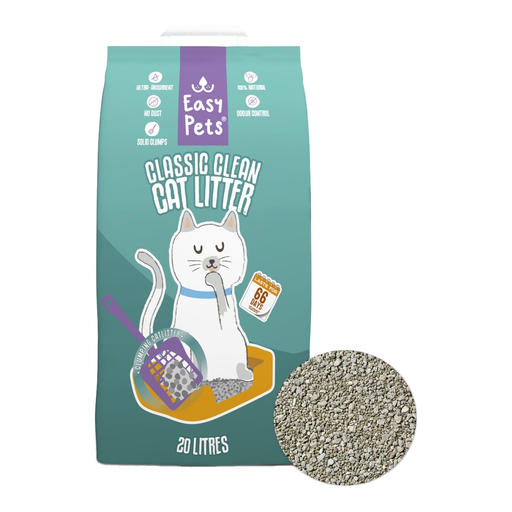
Why This Fits Their Persona: The 20-litre value pack offers excellent value for money, ideal for multi-cat households with high consumption. Its bentonite base ensures reliable, firm clumping, making daily cleaning quick and efficient.
This product relies on the natural absorbency of bentonite for odour control, rather than just masking smells with perfume. The extra-large granules are also designed to reduce tracking outside the litter box.
High Yield: Large 20-litre bag for long-lasting use.
Firm Clumps: Simplifies daily cleaning and keeps the remaining litter fresh for longer.
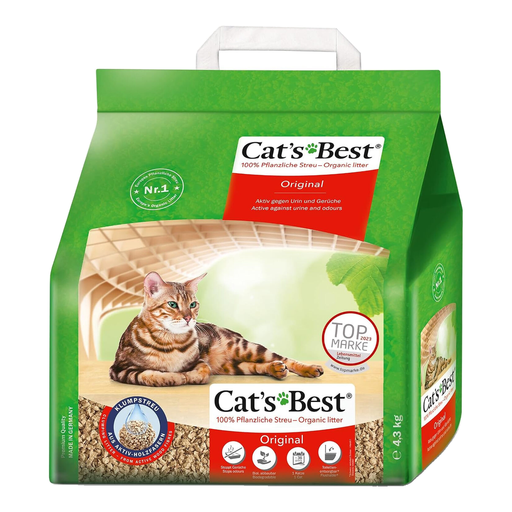
Why This Fits Their Persona: Made from pure plant fibres, this eco-litter is lightweight, compostable, and an environmentally friendly alternative to mineral litters. Its low-dust quality makes it ideal for sensitive cats and owners in urban apartments.
This product resolves the "biodegradable" vs. "flushable" confusion by offering both features (subject to local regulations). It is a genuine eco-solution, not just marketed as one.
100% Biodegradable: Can be composted or disposed of in an organic waste bin (depending on local ordinances).
Lightweight and Low-Dust: Easy to transport and gentle on the respiratory system.
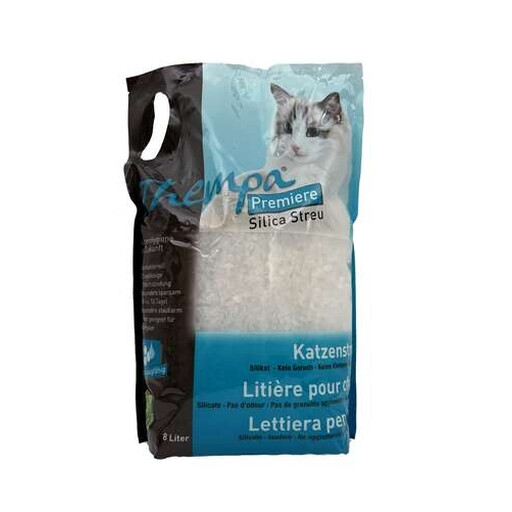
Why This Fits Their Persona: Silica litter is known for its extremely low dust production, making it an excellent choice for cats or people with respiratory sensitivities or allergies. Its high absorbency reliably locks in moisture and odours, keeping the litter box dry.
This product delivers on the "low-dust" promise, as silica naturally produces very little dust. Odour control is achieved through absorption, not perfume, which is ideal for sensitive feline noses.
Especially Low-Dust: Suitable for allergy sufferers and sensitive respiratory systems.
Effective Odour Control: Locks odours inside the crystals, ensuring a dry litter box environment.
For those who prefer the convenience of easy disposal via the toilet, we have curated a special selection of tested, flushable cat litter products.
This largely depends on the type of litter and the number of cats. For clumping litter, a complete change every 2 to 4 weeks is usually sufficient, provided that clumps and solid waste are removed daily. Non-clumping litter, such as silica litter, needs to be completely replaced more frequently, often after just one week, as it only absorbs liquid.
This is one of the most critical questions, and the answer is: it depends. Only litter explicitly labelled as "compostable" or "suitable for the organic waste bin" can be disposed of this way—and only if your local council's waste regulations permit it. The same applies to flushable cat litter: only products declared as such should go into the toilet, and even then, only in small quantities to prevent blockages. When in doubt, disposal in the regular household waste is always the safest option.
Cats are creatures of habit. An abrupt switch can cause your cat to avoid the litter box. The key is a gradual transition. Over a period of one to two weeks, progressively mix the new litter in with the old. Start with a small amount of the new litter and increase the ratio every few days until the old litter is completely replaced.