
Lieferung heute & morgen

Qualitätsgarantie

Willkommens-Angebote freischalten: KOSTENLOSE Lieferung | Bis zu 80 % RABATT | Kostenlose 30-Tage-JoyPlus-Testphase
App herunterladen
As a cat owner, you know that choosing the right cat litter is crucial for a clean home and a happy cat. However, the market is crowded and full of marketing claims that don't always deliver. Many products lead to frustration and unnecessary expense. So, before you buy cat litter again, you should be aware of the typical pitfalls.
The 3 Most Common Problems When Buying Cat Litter:
To avoid a bad purchase, you should base your decision on objective criteria. Pay attention to the following three factors to find a litter that meets your cat's needs and your standards for hygiene and handling.
The material is the foundation of any cat litter and determines its most important properties, such as absorbency, weight, and disposal.
The choice between clumping and non-clumping litter depends on your personal cleaning preferences.
Keeping a cat litter low-dust is vital for the respiratory health of both you and your cat. Look for products explicitly labelled as dust-reduced. For effective odour control, materials with a porous structure, such as activated charcoal or special plant fibres, are advantageous because they bind odour molecules rather than just masking them with fragrances.
To make your decision easier, we have curated a selection of products for various needs and households.
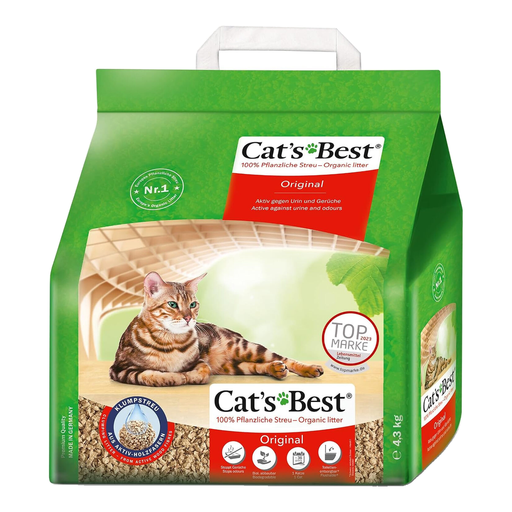
Why it's a great fit: Perfect for owners who prioritise sustainability. This eco-friendly cat litter is made from pure plant fibres, is fully biodegradable, and compostable. Its light weight also makes it easier to transport and handle.
The natural plant fibres effectively bind odours without artificial additives. The clumps are firm and don't fall apart, allowing for clean and economical removal.
According to the manufacturer, this litter is up to 3 times more economical than conventional mineral litters, making it cost-effective despite a higher initial price.
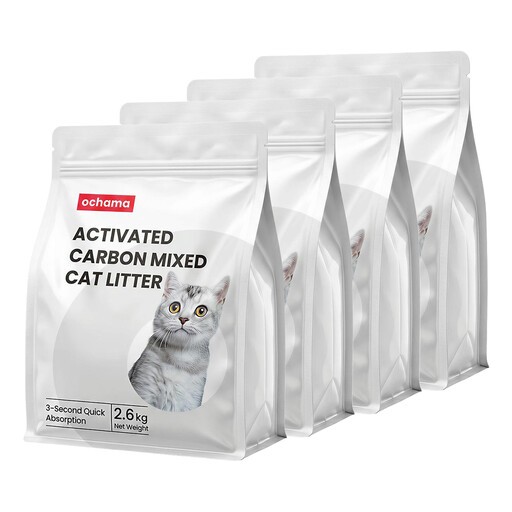
Why it's a great fit: In households with multiple cats, powerful odour control and high efficiency are crucial. This mixed litter combines tofu litter with Bentonite cat litter and activated charcoal to combat odours effectively. The multi-pack is also economical.
The scientifically formulated blend provides dual odour absorption and forms very stable clumps that don't break apart. This prevents contamination of the clean litter and keeps the litter box fresher for longer.
The combination of tofu and bentonite litter offers the benefits of both materials: strong clumping and effective odour control with simultaneously reduced dust production.
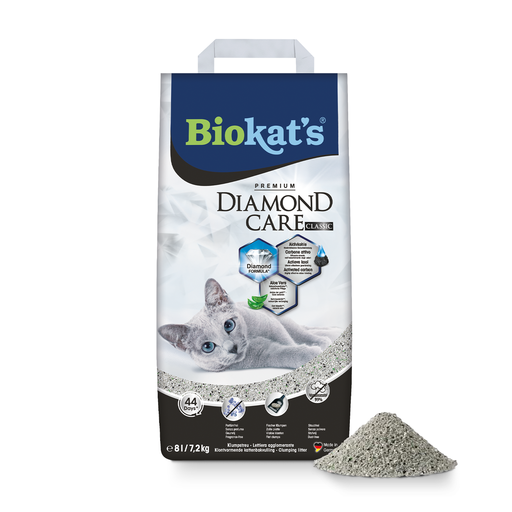
Why it's a great fit: For cats with sensitive respiratory systems or allergies, a low-dust cat litter that is fragrance-free is the right choice. According to the manufacturer, this natural clay product is 99% dust-free and unscented, which helps prevent irritation.
The explicit "99% dust-free" claim directly addresses the trap of misleading "low-dust" promises. The absence of fragrances prevents odours from simply being masked, while the integrated activated charcoal binds them effectively.
Made in Germany, this litter combines natural clay with activated charcoal for highly effective odour control and aloe vera for gentle paw care.
We have compiled a complete, up-to-date list of products that fully meet these strict selection criteria and German safety regulations.
1. How often should you completely change the cat litter? With clumping litter, it is usually sufficient to completely replace all the litter every 2 to 4 weeks, provided that clumps and solid waste are removed daily. With non-clumping litter, a weekly full change is often necessary to maintain hygiene. The exact frequency depends on the number of cats, the type of litter, and the size of the litter box.
2. Can you flush cat litter down the toilet? That depends on the material. Bentonite cat litter and silica litter should never be put in the toilet, as they can swell and clog pipes. Some plant-based cat litter products are suitable for toilet disposal, according to the manufacturer. However, always flush only small clumps one at a time and be sure to check your local municipal disposal regulations, as this is not permitted everywhere.
3. How do I transition my cat to a new litter? Cats are creatures of habit and often react skeptically to changes. Gradually mix the new litter with the old one over a period of one to two weeks. Start with a small amount of the new litter (about 25%) and gradually increase it until the old litter is completely replaced. This allows your cat to slowly get used to the new texture and smell.