
Lieferung heute & morgen

Qualitätsgarantie

Willkommens-Angebote freischalten: KOSTENLOSE Lieferung | Bis zu 80 % RABATT | Kostenlose 30-Tage-JoyPlus-Testphase
App herunterladen
As a cat owner, you want to do what's best for your pet. A small bowl of milk seems like a natural choice for a reward. However, the market for cat milk and milk-based snacks is confusing and full of pitfalls that can negatively impact not only your wallet but also your cat's well-being. Before you make a decision, it's important to understand the most common misconceptions and marketing traps.
To avoid these issues, a close look at the product details is essential.
Choosing the right product depends on a few, but crucial, parameters. Knowing them will protect you from making a bad purchase and ensure you select a product that is suitable for your cat.
The key criterion is the lactose content. While young kittens produce the enzyme lactase to digest their mother's milk, most cats lose this ability in adulthood. Consuming regular cow's milk, therefore, often leads to bloating, diarrhoea, and abdominal pain.
For this reason, you should exclusively look for products declared as lactose-reduced cat milk. This special processing ensures the milk is digestible for cats. The term "lactose-free" is less common in the pet food industry and not strictly necessary; "lactose-reduced" is the established standard.
A good cat milk or milk-based snack should offer more than just flavour. A brief analysis of the composition is crucial.
Not every milk product is suitable for every cat or every situation. The distinction is fundamental:
Based on these criteria, we have put together a selection of products suitable for the different needs of cat owners in the UK.
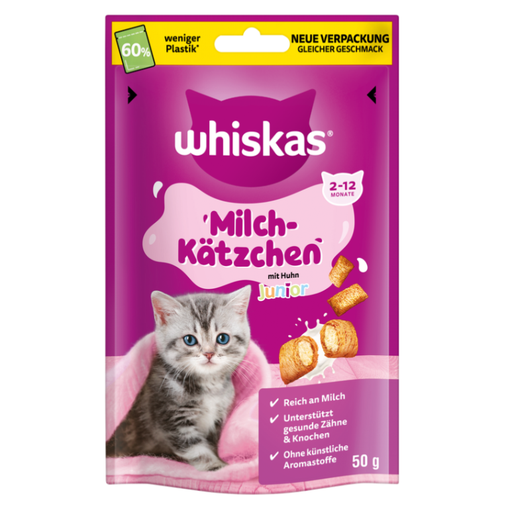
Why This Fits Their Persona: Specifically designed for the needs of kittens aged 2 to 12 months. The small pieces are easy to eat and contain calcium to support the healthy growth of teeth and bones.
The product is clearly declared as a treat, not a meal replacement. With less than 2 kcal per piece, it avoids the trap of overfeeding with high-calorie snacks.
The dual texture (crispy on the outside, creamy on the inside) offers a special chewing experience. The formula is enriched with additional vitamins and minerals.
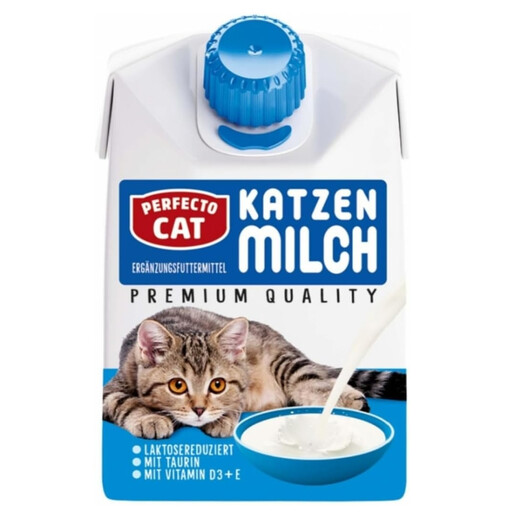
Why This Fits Their Persona: Ideal for cat owners who want to regularly offer a liquid supplement to the main diet to encourage hydration. The bulk pack is practical and designed for regular use.
This product is clearly formulated as lactose-reduced cat milk to prevent the digestive issues common with regular milk. It is designed as a supplement, not a complete food.
The formula is enriched with taurine, vitamin D3, and vitamin E to support vision, the immune system, and bone development. Ready to use and easy to serve.
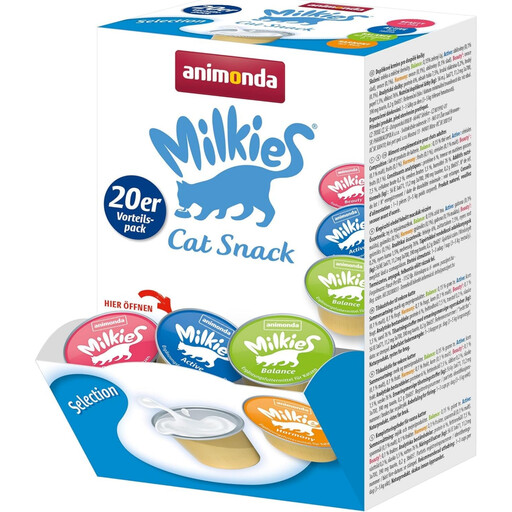
Why This Fits Their Persona: Perfect for cat owners who want to offer their cat a special and varied reward. The single-serving cups are ideal as a snack, a topping, or diluted with water.
According to the manufacturer, the product is free from added sugar, soy, colourings, and preservatives. This avoids the trap of hidden, unwanted additives found in many commercial snacks.
The mix pack with four different varieties provides flavour variety. The convenient portion cups are hygienic and allow the cat to lick directly from the cup.
We have compiled a complete, up-to-date list of products that fully meet these strict selection criteria.
No, most adult cats should not drink regular cow's milk. They lack the enzyme lactase needed to digest the milk sugar (lactose), which can lead to digestive issues like diarrhoea and bloating. Specially formulated, lactose-reduced cat milk is the appropriate and digestible alternative.
The question of whether cats can eat cheese cannot be answered with a simple yes or no. In very small quantities, some hard cheeses like Parmesan, which are naturally low in lactose, may be tolerated by some cats. However, soft cheeses and processed cheeses are often high in lactose and fat and should be avoided. A safer choice is specially formulated cheese-flavoured cat treats, as their composition is tailored to the needs of cats.
The difference is fundamental. Kitten formula is a complete feed. It is rich in nutrients and energy and serves as a complete substitute for mother's milk to ensure the survival and growth of kittens without a mother. Cat milk for adult animals, on the other hand, is a complementary feed. It serves as a treat or to encourage fluid intake and is not intended to replace a complete meal.