
Lieferung heute & morgen

Qualitätsgarantie

Willkommens-Angebote freischalten: KOSTENLOSE Lieferung | Bis zu 80 % RABATT | Kostenlose 30-Tage-JoyPlus-Testphase
App herunterladen
The selection of cat trees is vast, and choosing the right model can be a challenge. A cat tree, also known as a cat tower or climbing tree, is more than just a piece of furniture—it's a key part of your pet's living space. It serves for scratching claws, climbing, observing, and as a safe retreat. This guide is designed to help you make an informed decision that satisfies your cat's needs as well as your own spatial and aesthetic requirements.
To find the perfect model, there are several key criteria to consider. These will help you evaluate the product's functionality, safety, and durability.
A stable cat tree is crucial for your cat's safety. Look for a heavy, wide base plate that prevents it from tipping over, especially if your cat likes to jump onto the tree with a running start. This is particularly important for a cat tree for large cats. The posts should have a sufficient diameter and be securely attached to the base and platforms. Sisal has proven to be the ideal material for scratching surfaces, as it is durable and closely resembles the natural texture of tree bark.
The ideal size of the cat tree depends on the number, age, and activity level of your cats. A large cat tree with multiple levels, platforms, and lounging cradles is well-suited for households with several pets or very active cats. A cat tree with a cave provides a sheltered retreat that many cats appreciate. Consider which elements are most important for your cat: Does it love to survey its surroundings from a high vantage point, or does it prefer hidden sleeping spots?
A cat tree doesn't have to be an eyesore. Many manufacturers now offer modern cat trees featuring clean lines and subtle colours that blend harmoniously into your living space. Models made of wood or with fabric covers in shades of grey, beige, or charcoal can be a stylish addition to your decor. When making your choice, consider the available space and the style of your interior.
Here, we present a selection of models that cover a range of needs—from large climbing landscapes to compact and design-focused solutions.
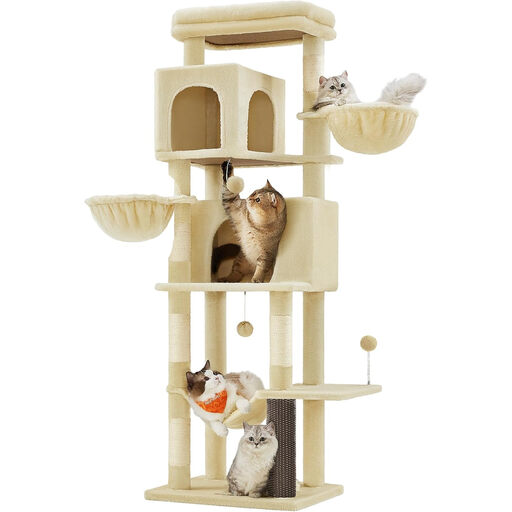
Why it stands out: At 174 cm tall and with a wide array of features, this cat tree offers a complete play and rest area across multiple levels.
Pros:
Who is it for? This model is an excellent choice for multi-cat households or for particularly active cats that love to climb and need a varied environment.
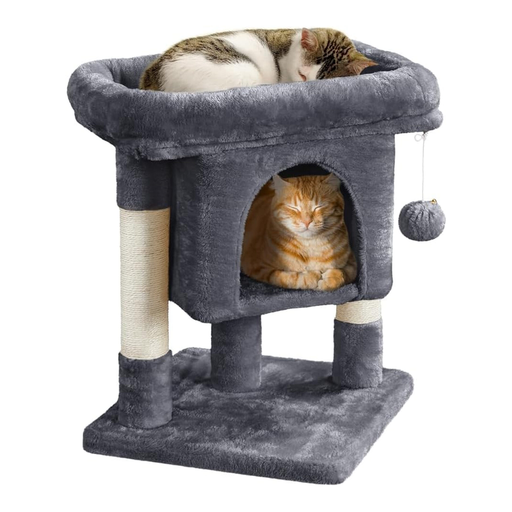
Why it stands out: This compact cat tree is a space-saving solution that still meets a cat's basic needs for scratching and a place to retreat.
Pros:
Who is it for? Ideal for owners of kittens, smaller cat breeds, or as a secondary cat tree in a separate room. It is especially suitable for apartments with limited space.
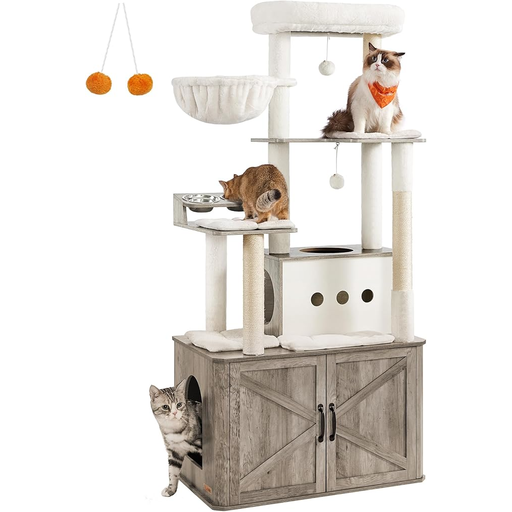
Why it stands out: This model is an all-in-one solution that combines a climbing tree with a feeding station and a litter box cabinet.
Pros:
Who is it for? For cat owners looking for a functional and aesthetically pleasing all-in-one solution to meet all their cat's needs in a compact space.
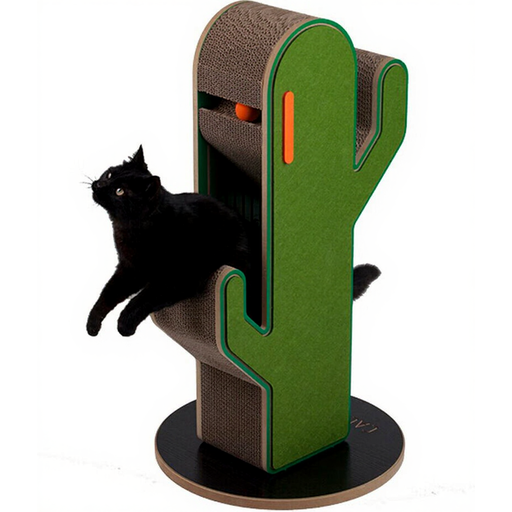
Why it stands out: The unique cactus design makes this cat tree a decorative eye-catcher in any room.
Pros:
Who is it for? For design-conscious cat owners who want a functional cat tree that also serves as a unique decorative element.
A climbing tree provides play and action. For quieter moments, a separate, cosy retreat is often an ideal complement. A sheltered cave can give your cat a sense of security and comfort.
Explore our selection of models if you're looking for a warm cat cave to serve as the perfect sanctuary for your feline friend.
Place the cat tree in an area where the family often gathers, such as the living room. Cats are social animals and enjoy watching what's going on. A spot by a window is also popular, as it offers a view of the outdoors. The location should be free of draughts, and the tree should stand securely on a level surface.
Make the new cat tree interesting. Place toys or treats on the different levels. You can also spray catnip or valerian on the scratching surfaces to pique their curiosity. Praise your cat enthusiastically when it uses the tree. Patience is key, as some cats need a little time to get used to new objects.
The height depends on your cat's preferences and the available space. Many cats prefer high vantage points, so floor-to-ceiling or large, freestanding models are often a great choice. For older or less active cats, a shorter model with easily accessible perches may be sufficient. More important than the absolute height is a stable construction and a varied design.