
Lieferung heute & morgen

Qualitätsgarantie

Willkommens-Angebote freischalten: KOSTENLOSE Lieferung | Bis zu 80 % RABATT | Kostenlose 30-Tage-JoyPlus-Testphase
App herunterladen
A cat tree is more than just a piece of furniture for cats; it's an essential part of ensuring the well-being and proper care of indoor cats. It satisfies their natural scratching instinct, protects your furniture, and provides a dedicated space for playing, climbing, and retreating. However, the selection is vast, and choosing the right model can quickly become overwhelming.
This guide serves as your point of reference. It presents objective criteria to help you find a suitable and durable cat tree that meets your cat's needs and fits your home's layout.
Before you make a decision, several fundamental aspects should be considered. These factors ensure that the cat tree will be accepted by your cat and provide a safe environment.
A stable cat tree is the most important criterion, especially if you are looking for a cat tree for large cats or a cat tree for 2 cats. A wobbly model will be avoided by cats and poses a safety risk. Look for a heavy, wide base plate that serves as a solid foundation. Many taller models, such as a floor-to-ceiling cat tree, also come with a wall mount (anti-tip kit). Installing it is highly recommended to prevent the tree from tipping over during play and jumping. The overall weight of the cat tree can also be an indicator of its stability.
The size of the cat tree should be based on the number, size, and age of your cats.
The longevity of a cat tree depends heavily on the materials used. The scratching posts should be tightly wrapped with durable, natural sisal, as this material can withstand claws and satisfies the scratching instinct. The lounging surfaces are typically covered with soft plush for coziness. Check that all parts are cleanly finished and have no sharp edges or loose threads.
Based on the criteria mentioned, we have compiled a selection of models that cover different requirements.

Why this model stands out: At a height of 206 cm, this XXL cat tree offers an impressive vertical playground. Its extensive features are specifically designed to meet the needs of households with multiple or very active cats.
Advantages:
Who is this model suitable for? This model is an excellent choice for owners of multiple cats, large breeds like Maine Coons or Norwegian Forest Cats, and for very active, climbing-enthusiast pets that need a lot of vertical space.

Why this model stands out: This medium-sized, 143 cm tall cat tree combines a variety of functions on a compact footprint. The thoughtful step-like design makes ascending and descending easier, making it accessible even for less agile cats.
Advantages:
Who is this model suitable for? Ideal for households with one or two small to medium-sized cats. Its design also makes it well-suited for kittens just learning to climb or for senior cats who can no longer make extreme jumps.
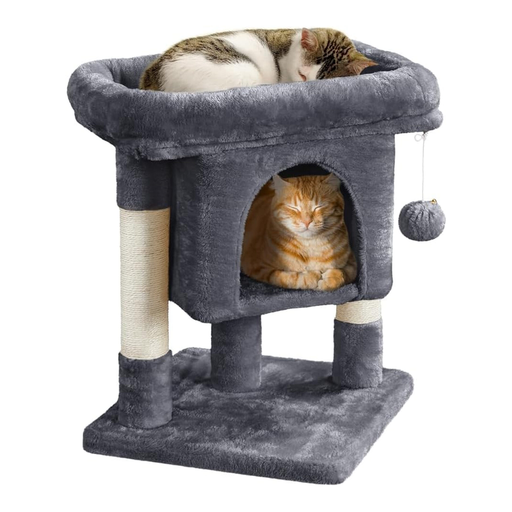
Why this model stands out: This small cat tree is the solution for anyone with limited space or looking for a first cat tree for a kitten. Despite its compact dimensions, it offers all the essential functions.
Advantages:
Who is this model suitable for? Perfect as a cat tree for small cats, kittens, or for cat owners with limited living space. It can also serve as a secondary cat tree in another room.
The models presented here cover common needs. However, if you are looking for specific solutions or have concerns about stability, for example with wobbly cat tree posts, you can find more cat trees and matching accessories in our broader assortment.
1. How do I get my cat used to the new cat tree? Place the cat tree in a spot where your cat likes to spend time, such as near a window or in the living room. Make it interesting with toys or treats on the different levels. You can also rub some catnip on the sisal posts to specifically direct their scratching instinct there.
2. How tall should a cat tree be? The ideal height depends on your cat and your living space. Active and young cats often prefer tall models (over 150 cm) or a floor-to-ceiling cat tree, as they love to climb and survey their surroundings from above. For older cats, kittens, or in case of limited space, a smaller model (up to 120 cm) may be sufficient. More important than the sheer height is that the top lounging area is stable and gives the cat a sense of security.
3. How do I clean a cat tree? Most cat trees are easy to maintain. Pet hair can be regularly removed with a vacuum cleaner or a lint brush. You can spot-clean light stains on the plush surfaces with a slightly damp cloth and, if necessary, a mild soap solution. Make sure the cat tree dries completely.